Ah, the all-important protagonist--the main character in a story, the hero/ine that students are supposed to identify, track, and evaluate. But identifying the protagonist in a story isn't always easy.
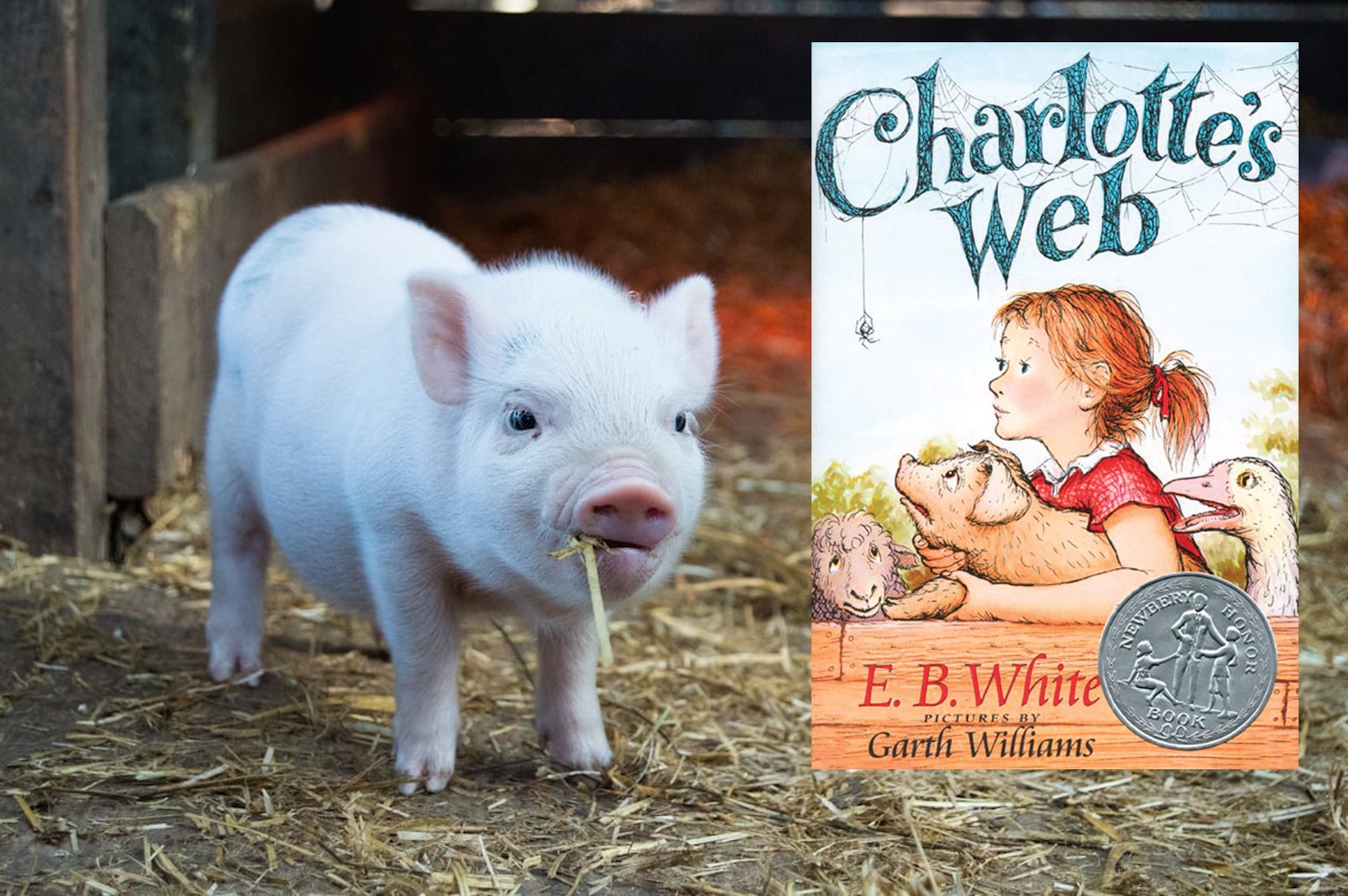
Take Charlotte's Web, for instance. The spider's name is in the title, and the story opens with Fern, a young girl whose passionate pleas and valid arguments save a runt piglet's life. She's likeable, relatable, powerful, and effective. It's easy to see her as a heroine. Once we meet Charlotte, we see that she too shares these qualities, along with wisdom and acceptance, and the power to make an enormous (TERRIFIC!) difference. On the other hand the rescued pig seems to be a side character, a helpless creature at the mercy of others, who never does get control of his destiny.
But he does get control of something else--something very important--that does, after all, make him the protagonist. As in many other novels, the character who doesn't show up right away, or seems ineffectual at first, is often the person (or creature) to watch. What NOT to Look For
Readers often think of the protagonist as "the person with the problem" or "the person whose life/job/love/etc is at stake." But in a well-written book, the supporting characters will also have problems, and be threatened with loss. Looking for problems doesn't always reveal the hero.
It's also easy to assume that the protagonist is the person who makes the most difference to others--slays the most dragons, does the greatest number of good things, helps the most people. But heroic actions don't always reveal the true hero/ine of the story.
What to Look For
Look for the character whose problem leads to the most personal growth. Many characters will have problems of different degrees of intensity or importance. In Charlotte's Web, for instance, Fern's immediate problem is that her dad is going to kill a baby pig. But then she fades from the story, and other characters enter - the sheep, the goose, the rat, and of course, the spider. Each of these characters has his or her problems; Charlotte, in particular, works hard just to survive and is aware she is going to die soon.
But the girl, goose, sheep, rat, spider, and others learn little or nothing--Charlotte herself seems to already know it all. Fern does learn, right away, that farmers make hard decisions, and later she learns a few other things here and there, but there's no steady tracking of growth-- she's not in this story to learn. (New York's top children's librarian was a rare critic of the book, calling Fern's character "underdeveloped," but E.B. White surely knew that a more developed character would compete for the role of protagonist.)
Where to Find It
The protagonist will be the character who learns the most throughout most of the story--and in doing so, can make a difference, even one small one, to someone else. In Charlotte's Web, that's Wilbur, who learns to accept death as part of life, and to focus on helping Charlotte's children, instead of fearing for himself.
Quite importantly, this lesson and its effects bring him peace and joy.
Because, in this and all great books, it's not about living or dying, or winning or losing. It's not about who gets what s/he wants in the end. It's about learning to accept who we are, and doing our best for others with what we have.
Quite importantly, this lesson and its effects bring us peace and joy.
And not only as satisfied readers. As we tell our students, each of us is the protagonist in our own life story. And each protagonist in a book is a partner, helping us learn what s/he learned.
*If you'd like to bring Charlotte's Web's lessons to life in hands-on, creative ways, check out our free teaching ideas right here.