Creative Teaching Resources for

LITTLE HOUSE IN THE BIG WOODS

by Laura Ingalls Wilder (1932)

Fun, hands-on ways to teach this great book!

Plus: Takeaway Topics, Learning Links, and Prop Ideas


In 1871, living in a Little House in the Big Woods  of Wisconsin is a challenge for the Ingalls family, who must provide their own food to get ready for an icy winter. But four-year-old Laura and Pa, Ma, Mary, Carrie, and trusty dog Jack pull it off, and make the most of it all. Though they're always busy planting, reaping the fall harvest, watching out for bears and wolves, making trips to town, or doing household chores, they find time for old-fashioned fun. Their joy is in making simple toys, listening to Pa's fiddle music, attending local gatherings, creating good food, and sharing family time.


LitWits makes a small commission on anything you buy through our Amazon affiliate links.

Explore this book with your kids, LitWits style!

Do some "Jack Frosting"

A LitWits activity from the Conflict

This simple project lets kids “do what Laura and Mary did,” and gives us a great opportunity to talk about frost and the conditions that create it. The coming of winter also represents the Conflict of this story, and the theme of "making the most of little."

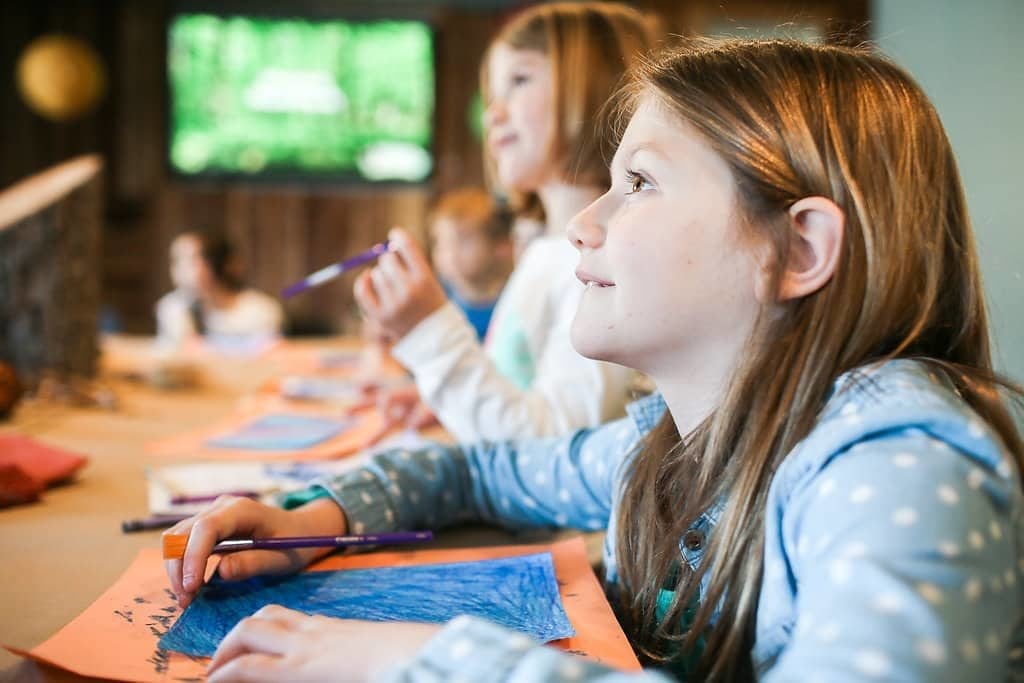
 In our workshop we chose to do a slow-reveal, and not to show the kids a sample or tell them what they were working on until the prep work was finished. They were completely intrigued, and delighted when they realized what we were actually doing.

INSPIRATION

Ma said that Jack Frost came in the night and made the pictures, while everyone was asleep. Laura thought that Jack Frost was a little man all snowy white, wearing a glittering white pointed cap and soft white knee-boots made of deer-skin. His coat was white and his mittens were white, and he did not carry a gun on his back, but in his hands he had shining sharp tools with which he carved the pictures.

Laura and Mary were allowed to take Ma’s thimble and make pretty patterns of circles in the frost on the glass. But they never spoiled the pictures that Jack Frost had made in the night.


SUPPLIES

  • white half-sheets of cardstock for window
  • assorted very dark crayons for sky
  • white tempera paint and brushes, jars of water  for frost
  • toothpicks and/or skewers, paper clips for designs
  • light brown cardstock for cabin walls
  • black and/or brown markers for logs, knotholes
  • glue sticks for paper and wet glue for fabric
  • pocket folders (if you’re using them for storing handouts, as we do) or cardstock for backing
  • dark brown cardstock cut into 1/2 x 8 1/2  strips (2 per) and 1/2 x 5 strips (2 per) for window frames
  • dark brown cardstock cut into 1/4 x 8 1/2  strips (2 per) and 1/4 x 5 strips (2 per) for mullions
  • calico cut into 8 ½ x 5 ½ sections and torn up the middle almost to the top for curtains (yes kids, they do look like pants)
  • raffia in 6″ strands for curtain tiebacks
  • colored paper for title tags, about 1 x 5

DIRECTIONS:  PHASE 1

1.   Have the kids cover a piece of card stock edge to edge with solid crayon in deep sky colors. Don’t tell them why — just ask them to imagine sunrise or night time outside their bedroom window.

2.   Tell them to obliterate their art with a thin layer of white paint — again, don’t explain why.  Let the paint dry while you do another activity or a handout.

3.   Once they’re thoroughly distracted from this project, nonchalantly work in a conversation about frost, and its appearance in the book after “Jack Frost” visited. Talk about how it forms, what conditions are necessary for its formation, share some frost stories. Show them some frosty pictures from our Pinterest collection and be awed, all together, by the unexpected beauty of these intricate patterns. Ask the kids what familiar items from nature Jack Frost seems to be copying – we saw feathers, palm branches, tiny brachia of algae, fern leaves, root systems, and fish skeletons! Then tell them you hope they’re feeling inspired because they get to be Jack Frosts themselves on their very own windowpanes … which they’ve just created! (An excited gasp will fill the room).

FOR DISCUSSION
(while the paint is drying)

You might want to talk more about how the Ingalls make the most of simple, natural, ordinary, and small things:

  • What are some other examples from the story of making ordinary things feel special?
  • Just what is it that makes something special, anyway? 
  • Why did Ma put red felt in the kerosene oil, and go to the trouble to color and mold the butter? 
  • What turns a corncob into a doll, besides a handkerchief? 
  • How do the girls play with the pig’s bladder?
  • Why do they look forward to Pa’s fiddle playing so much? 
  • Would you be excited about just getting mittens and peppermint sticks for Christmas?

Point out that imagination and appreciation can make almost anything wonderful. How else, after all, can one explain headcheese?


DIRECTIONS - PHASE 2
(after the paint is dry)

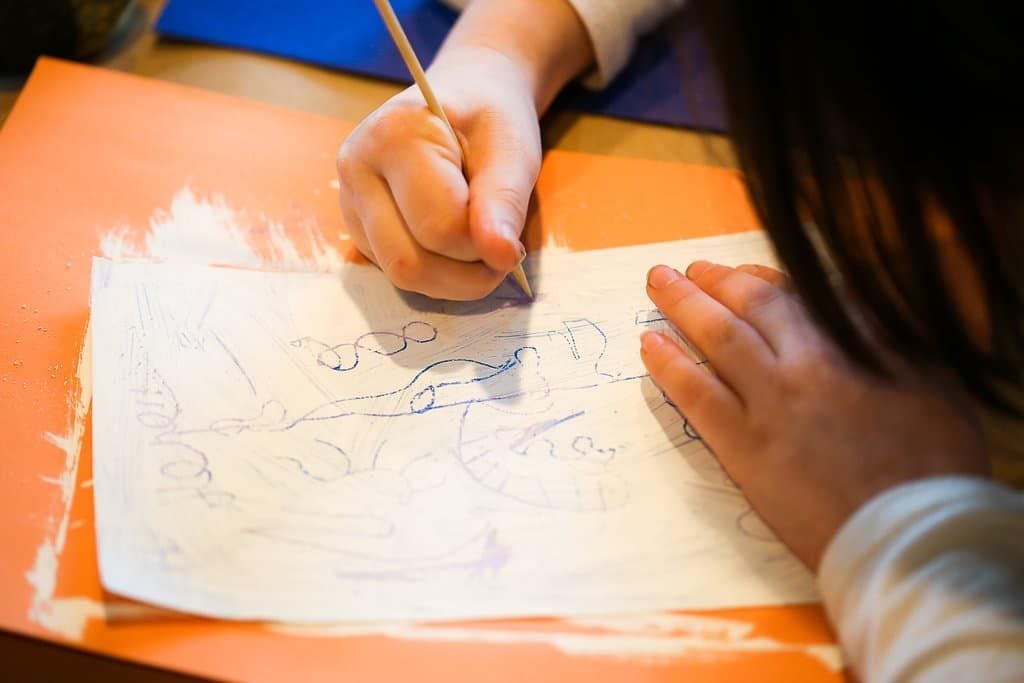
1.   Have the kids get their now-dry “windows.” Demonstrate scraping off thin lines of paint with a toothpick to reveal the dark blues and purples beneath. Show them how they can imitate the frost patterns you’ve been admiring, or do something fanciful of their own design, perhaps imagining the kind of pictures Laura and Mary might have drawn.

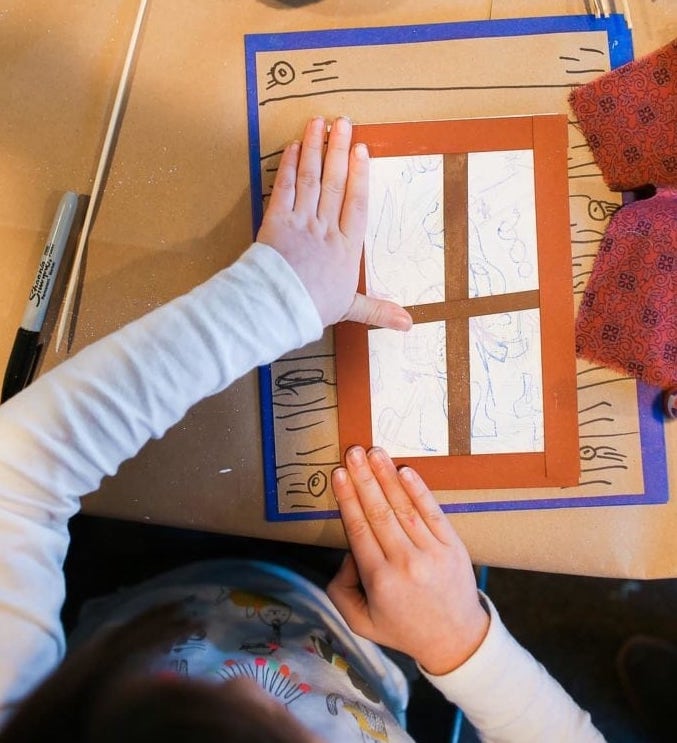
2.   Once the etching is done, have them glue a piece of brown cardstock to a folder (if you’re using folders), glue the window in the middle of it, and use markers to draw logs and knotholes on the cabin wall.

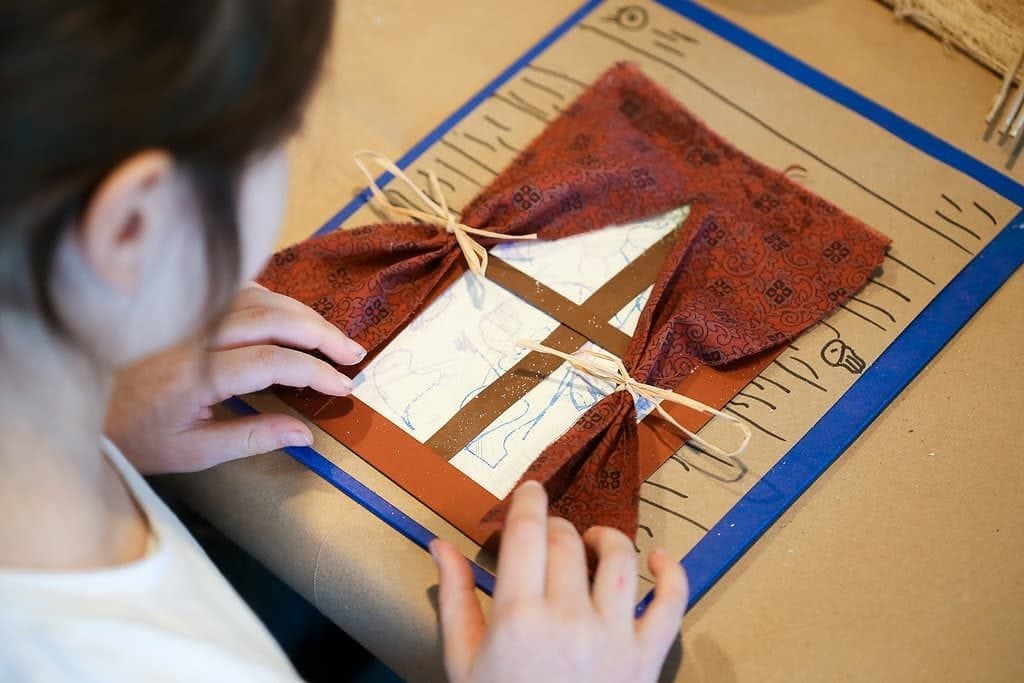
3.   Frame the “frosted window” with brown strips of paper to resemble window panes and trim. Tell the kids their window scene will include something to represent every member of the family (except Jack). The girls helped etch the window, but of course Pa built the log cabin wall and the window frame.

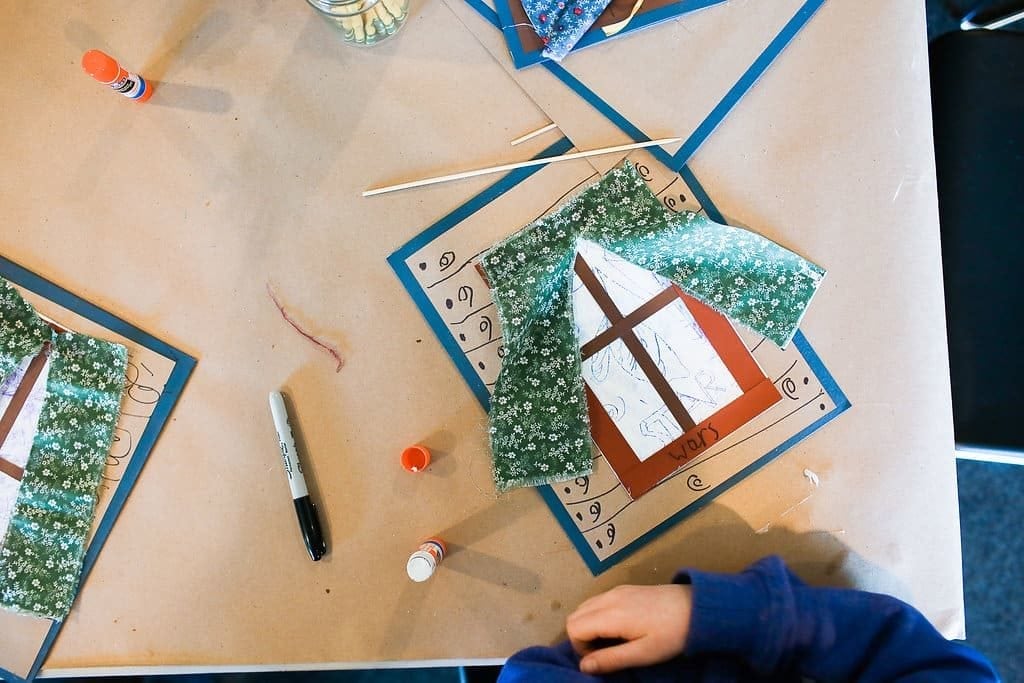
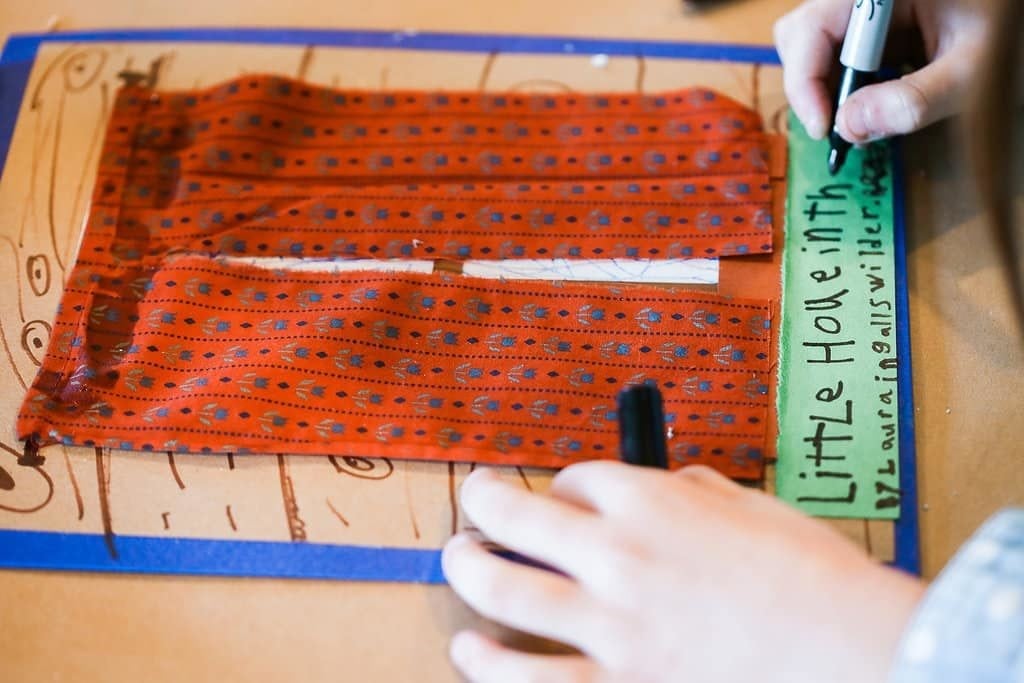
4.   What’s missing? Ma’s curtains! Complete the scene by gluing curtains to the top of the window frame. Tie them back with raffia (representing the wheat harvest).

5.   Add the book’s title at the top or bottom, wherever it best fits.

Compete in "Big Woods Chopped"

A LitWits activity from the Rising Action

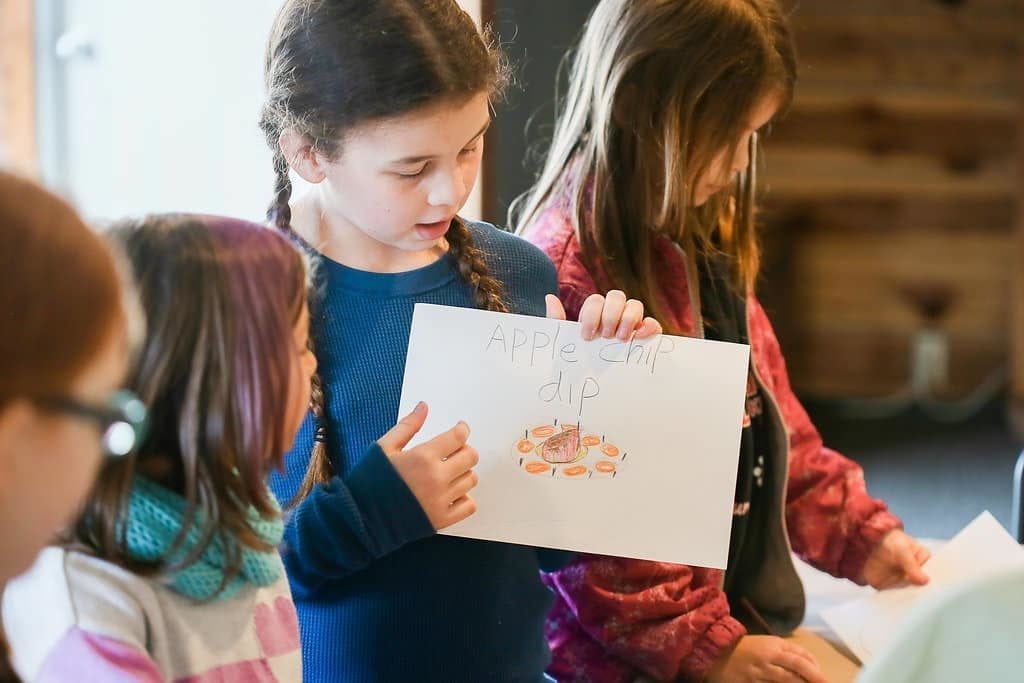
Ma sure does a great job making the most of little — she literally uses that pig from head to tail! She’s also got a knack for making ordinary things quite special. What better way to get in her shoes than with a Big Woods “cooking” competition, making the most of strange (to us) ingredients--all of them straight from nature?

This fast-thinking activity got kids using their imaginations, working as a team, and seeing potential in the ordinary.

SUPPLIES

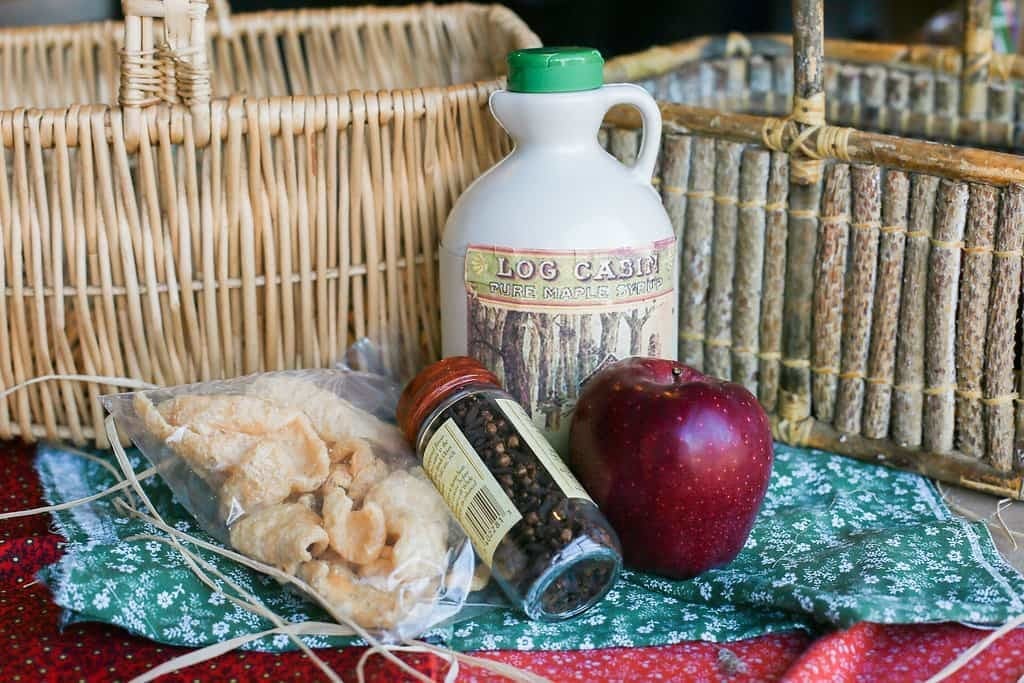
  • metal pan lid
  • two baskets and cloths to cover them
  • two jars or snack bags of cloves
  • two apples
  • two snack bags of cracklings
  • two jars of maple syrup--add an antique label if you like, included with printables
  • recipe/illustration form, 1 per team + pencils--included with printables
  • maple sugar for after-contest treats

SETUP

1.   Tell the kids that Ma’s use of everything (and making the most of it) reminds you of the cooking show Chopped. Explain the show’s concept to the kids:  chefs compete to make a fabulous dish from four weird ingredients in just a few minutes, and the dish that the judges like least gets “chopped” (that chef is eliminated).  Tell them they get to compete in Ma Ingalls’ version!

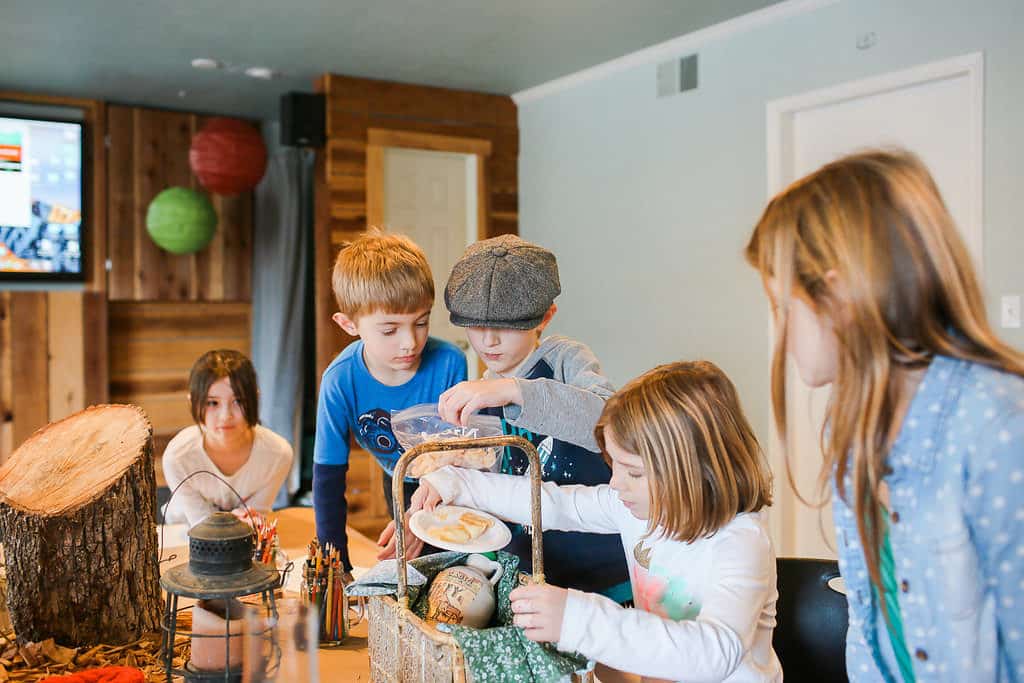
2.   Divide the kids into two teams (or more — it’s fine to all share one basket, since there won’t be any actual cooking; for that matter, each child could participate individually. Whatever works for you!) Place a covered basket in front of each. Tell them that at your signal they’ll whisk off the cover and huddle to brainstorm a dish (we told our kids they could huddle anywhere in the room). They’ll write down the recipe and draw a picture of the completed dish, as imagined. They can add up to five new ingredients, but they must “use” all four in the basket.

3.   Ask each team to choose a book-appropriate name (Wild Wolves? Stinging Wasps? Big Bears?), a recipe writer, and an illustrator.

DIRECTIONS

1.   Say “Chefs, open your baskets!” and watch the fun begin!  You can play some of Pa’s fiddle music (you can purchase the official collection) to keep the mood festive.

2.  After 20 minutes (or however much time you allow), countdown from 10 and say “Hands up! Step back, chefs!” Then ask each team to present their recipe and show their illustration. Give lots of serious judge-like responses to each dish. Pretend to confer with other judges (you can just turn your head and mumble “confer confer confer”), then turn back to the kids and say “We have reached a decision!”

3.  Collect the recipes and put them under a pan lid. Say “Whose dish has been chopped?” and lift the lid, which reveals — nothing, because you have yanked all the recipes away as you lifted the lid, and hidden them behind your back. No one is chopped! It’s a tie! Everyone’s a winner! Pass out maple sugar, one bite of which is easily worth $10,000.

While the kids are nibbling, show them how maple sugar is made, and how nutritious it is!

FOR DISCUSSION

Now that the kids have had their hands on some ingredients from the story, you might want to bring up the idea of nature as both friend and foe. It's obviously a provider! Besides sharing Ma's complete use of the pig, Laura gives us matter-of-fact descriptions of the deer Pa has hung from the trees, and the skins Pa takes to town for things they need. Talk about the meaning of the phrase natural resources, and, as a class, list several from the story. Many, like logs and maple sugar, come from trees. 

But nature is also a threat, as Laura also lets us know through her tales. What role does weather play in their lives? How did the “big woods” both provide and threaten? Use our Learning Links to talk about the animals of the Wisconsin forests.

Speaking of forests, now's a good time to discuss the word chopped in its arboreal sense.  Ask the kids if they noticed the frequent mention of stumps in the story.  Settlers like the Ingalls cut down what they needed to use or to clear land for crops, but by the late 1800s, loggers had cut down far more.  As the Wisconsin Historical Society puts it, the ”amount of pine harvested from the Black River Valley alone [just southeast of the Ingalls’ home] could have built a boardwalk nine feet wide and four inches thick around the entire world.”  Use our Learning Links to learn about the nineteenth century logging industry, which greatly impacted other resources and habitats as well. There's a history worksheet that goes into this in our printables for this book.

Make clove apples

A LitWits activity from the Rising Action

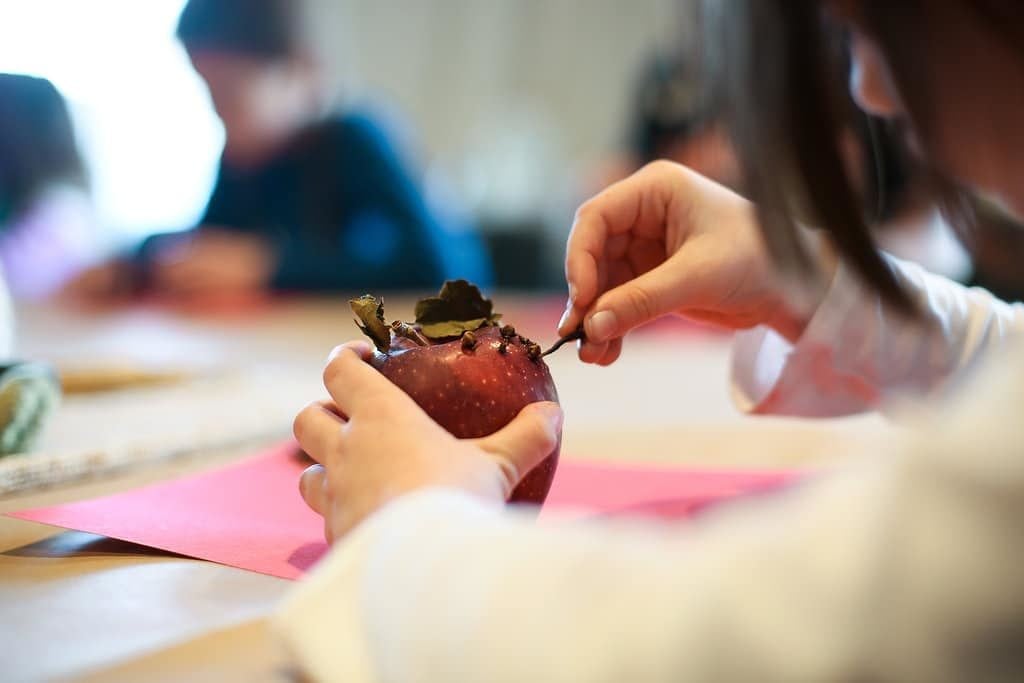
Ma and Aunt Eliza exchanged these spicy-sweet gifts at Christmas, and Grandma had one beside her in her kitchen while she stirred the giant kettle of syrup during the sugaring-off dance. Just as the spicy-sweet aroma of cloves and apples reminds the author of home, Christmas, and sugar-making, so will students be reminded of their experience of this book.

Ask the kids what happy-homemaking need Ma might have been addressing with her clove-studded apple. If they need some help getting the picture, brainstorm together about what the inside of the “Little House” might have smelled like at the end of the week in the middle of winter. Have them think through the things that filled the Ingalls’ lives – the foods, habits and activities that created their daily rituals and environment, from the sausages and cheeses in the larder to the wood smoke, log walls, animal-care duties, Jack the (sometimes wet) dog, kerosene lamps and just-once-a-week baths. A sweet smelling “settlers’ air freshener” would have been pretty and efficient, just like Ma.

When you ask the kids if they’d like to make one their own, they’ll go nuts! They’ll especially enjoy coming up with reasons why the cabin might have been stinky.


DIRECTIONS

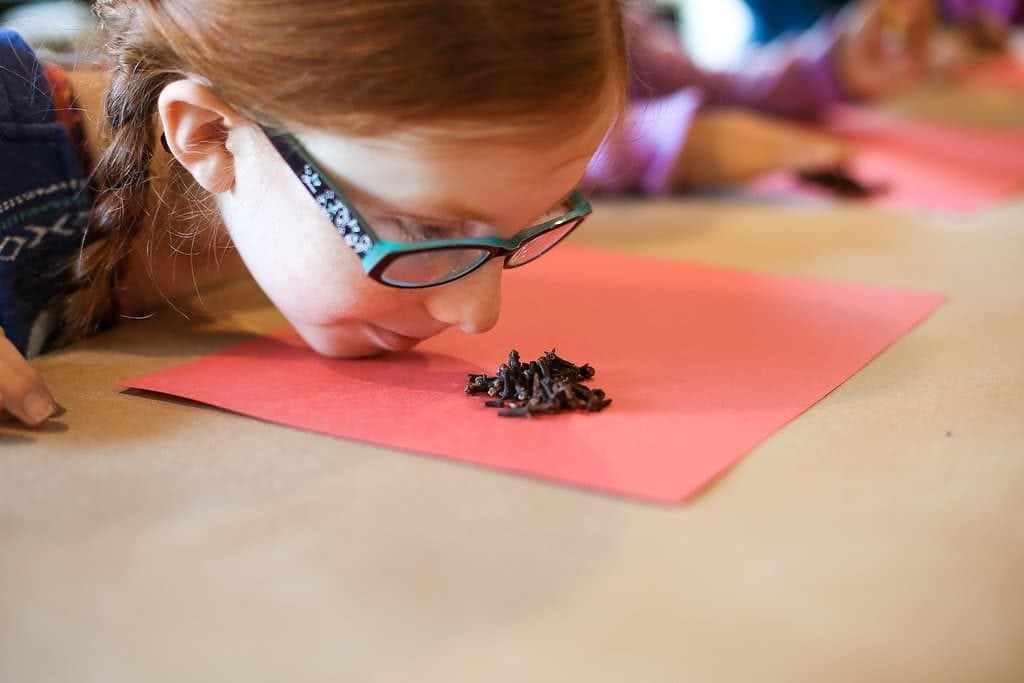
So simple! Give an apple and a pile of cloves to each child. Before starting, ask the kids to take a good look at the cloves, noticing that they’re shaped like little nails. Show them how to push the stem of the clove all the way into the apple skin, and point out how good it will smell while they’re doing it. That’s all they need to know. If tiny fingers are having a hard time poking cloves into hard apples, show the kids how to use toothpicks to make holes for the cloves.

Some of them will figure out on their own that it’s fun to make patterns – we’re pretty sure Ma would have made pretty designs with her cloves.  Play some of Pa’s fiddle music (you can purchase the official collection) and revel in this shared multi-sensory experience!

FOR DISCUSSION

While the kids are making their clove apples, you might want to talk about the bigger idea of making things last.  Ask the kids if they understand why the Ingalls must preserve fresh food, and what it is about salting, pickling, smoking, and canning that keeps food safe to eat without refrigeration. Talk about Ma’s passion for preserving non-food items, too:  her lovely delaine from her “fashionable” days, her china doll from her former life, and her standards of cleanliness and beauty no matter where she lived.

What other non-food items are preserved in (and because of) this story? What kind of preserving does Pa do by telling his stories and playing his songs? Why did Laura remember these kinds of details six decades later? What is it about those things that made them memorable for her? And what did she do to preserve those things forever — along with her life?

Dance Grandma's jig

A LitWits activity from the Rising Action

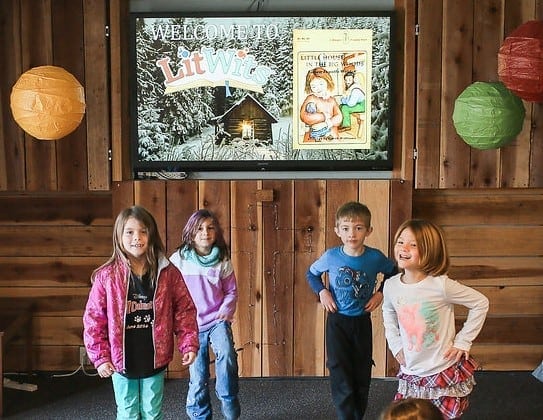
It’s hard to read this book without wanting to dance a jig, even before you hear the happy sound of fiddle music. The scene where Grandma and Uncle George face off and try to out-jig the other is priceless.  Chin up, hands on hips, eyes sparkling, she did him in.

GO GRANDMA!

We told our kids we were pretty sure they couldn’t jig like her, and they happily took us on. So we put on some extra fun fiddle music and let them wear themselves out — it didn’t take long!

BookBites

Have a snack full of "ven & vinegar"

A LitWits activity from the Rising Action

BookBites is the part of our literary experience when we get to “taste the story.”  We choose a food right out of the book, and it has to meet at least one criterion:

  • it’s important to a plot point

  • it has thematic significance

  • it’s unfamiliar for reasons of culture, era, or location

Though there were many, shall we say interesting foods in this story, vinegar pie hit on all three points. It’s definitely unfamiliar to most of us, and it’s important to the conflict in the plot (how will the Ingalls survive the winter? By eating things that don’t tend to rot!). It also exemplifies the themes of “preservation” and “making the most of little."
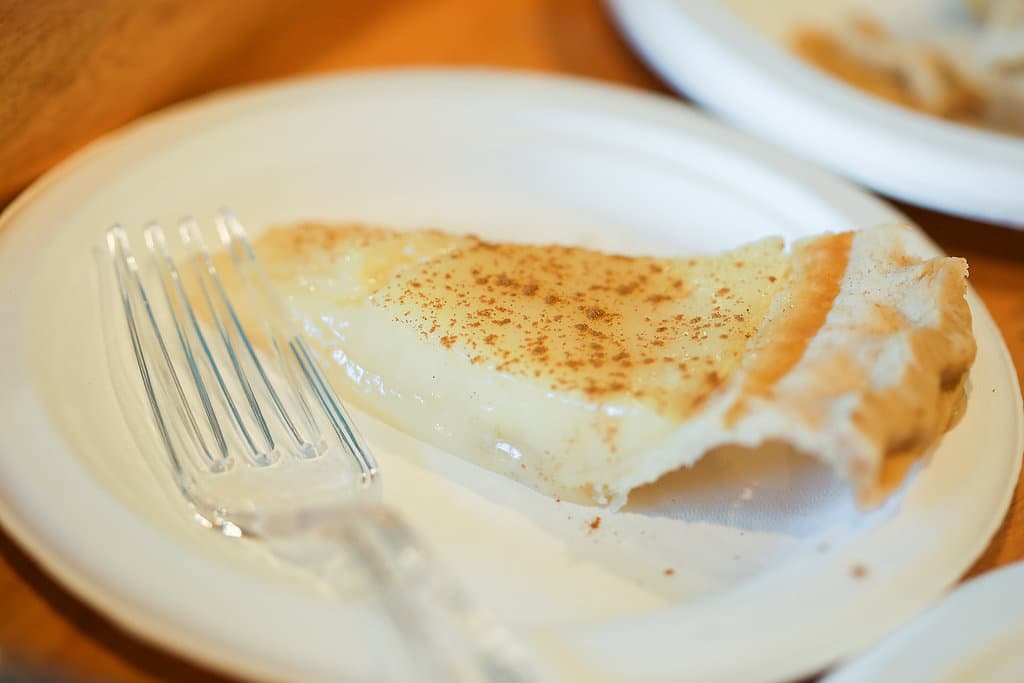
VINEGAR PIE!  Ma Ingalls sure knew how to make the most of little.  Have fun with this and more at LitWits.com!


Vinegar pie was made from inexpensive ingredients anyone might have on hand, and it tastes a lot better than you’d think — sort of like a bland custard. Our fearless kids were relieved — they’re used to us offering them interesting foods, but this one had sounded ickier than most.

You’re not likely to find vinegar pie in your local bakery, so here’s the recipe.

We also offered a taste of venison, because it too was connected to the core conflict and those same two themes, as well as the theme of “nature as friend and foe”--which applies to the vinegar pie too, for that matter. :)  The kids found it quite tasty, though some said they’d rather be friends with living deer — and indeed, so might have the Ingalls. Though the story opens with two deer being slaughtered, it closes with three being spared.
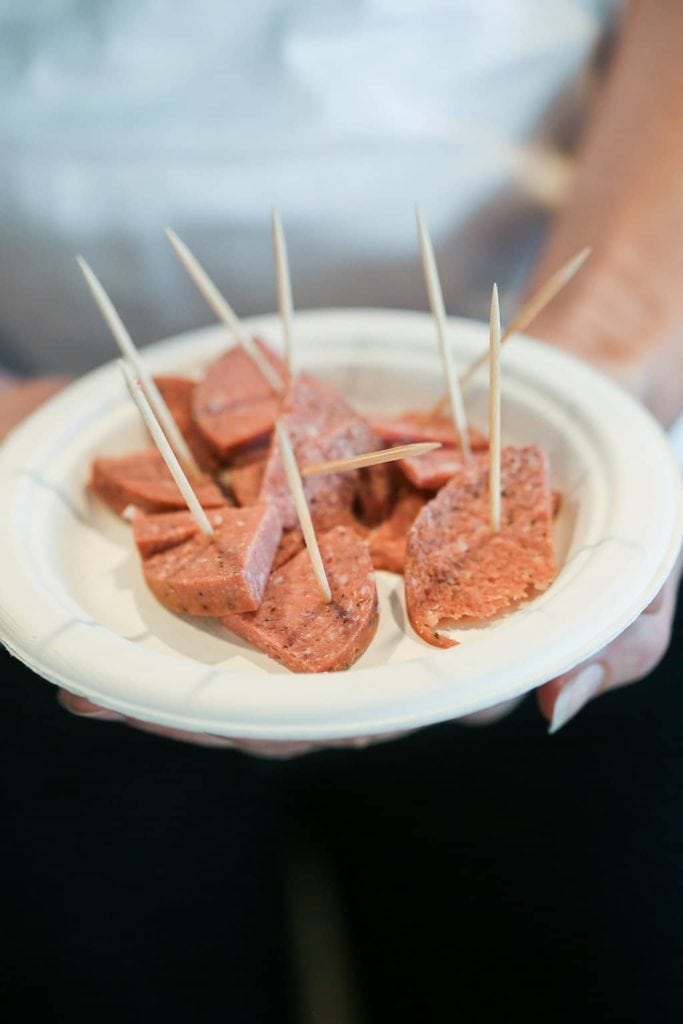

That fact gave us a chance to talk about narrative license, and leaving readers with a happy ending, never mind what we know must happen afterward, as another winter arrives.
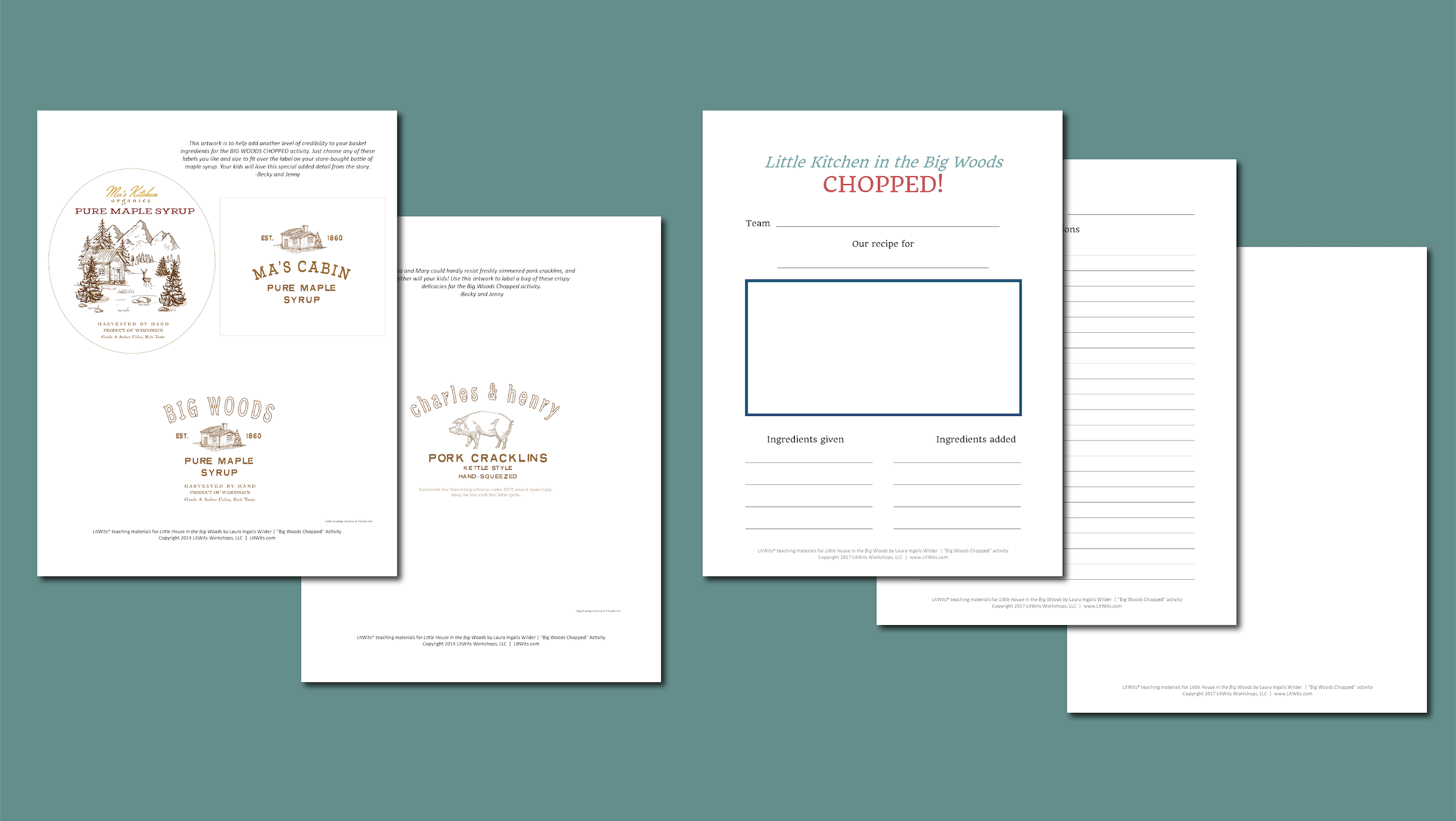
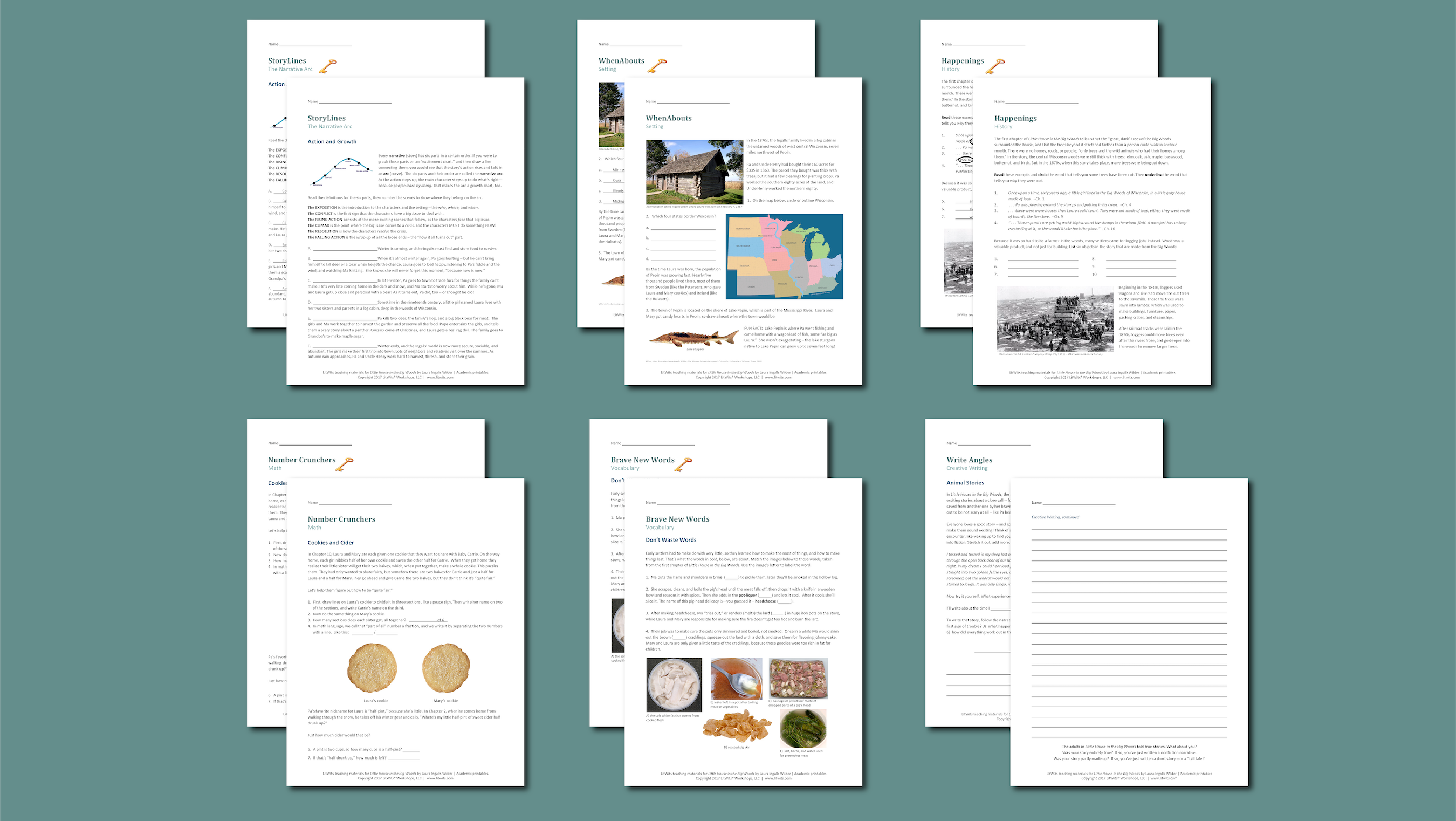
Printables Previews

The worksheets and printables used for our activities are sold as a complete set.

Common Core State Standards Alignment for the comprehensive use of our teaching ideas and materials is also included for grades 3, 4, 5 and 6.

Takeaway Topics

Why we chose this book for a "field trip"

Why did we choose this book?  Well, first, we have fond memories of Mom reading it to us as kids, and of acting out scenes, eating maple sugar, and making clove apples "like they did." (We skipped recreating the headcheese.) The whole pioneer experience sounded so thrilling to us-- from afar, anyway!  And we could just tell the Ingalls were models of admirable qualities and attributes: perseverance, self-discipline, generosity, kindness, coping skills, neighborliness, courage, strength, patience, and more.

Later, as LitWitters, we saw in this book the big, deep ideas we'd unconsciously picked up on as kids. It's packed with great "takeaway topics," which we're sharing below.  So we chose it for one of our experiential workshops, where we made these teaching points tangible, meaningful, and memorable in the kids' hands. It's amazing how much kids can learn while they're "just" having fun!
 
Happy teaching!
Becky and Jenny

Takeaway 1

Preservation

From food to memories to human life to the book itself, this story is steeped in the concept of preserving, which provides a way in to talking about layers of meaning.

Hands-on connections in this guide:   “Cloven Apples” project; “Grandma’s Jig” activity;  BookBites snack; props that convey the idea of making tangible and intangible things last:  the peppermint sticks, fiddle, hickory chips, china doll; creative writing worksheet

Takeaway 2

Making the most of little

The Ingalls' resourcefulness, as well as their appreciation of simple things, is inspiring.  Not that we have to eat EVERYTHING they ate.

Hands-on connections in this guide: “Big Woods Chopped” activity; ““Cloven Apples” project;  Jack Frosting” project; BookBites snack; props that convey the joy in “just enough”:  the peppermint sticks, mittens, fiddle, the kerosene lamp; vocabulary and math worksheets

Takeaway 3

Real life writing

This engaging autobiography reads like a novel, which makes it a wonderful example of creative nonfiction writing.  And of course, as they read, kids are learning some American and natural history, too.

Hands-on connections in this guide:  all projects and activities, because "that's what Laura really did," and props that bring Laura's era to life.  Related printables:  creative writing worksheet, setting worksheet, history worksheet, narrative arc worksheet

Takeaway 4

Nature as friend and foe

This story is barely under way when we’re brought up against the reality of settlers’ lives:  most had to kill to survive. Laura’s tone and tales convey some mixed feelings about this. Talking points galore!

Hands-on connections in this guide:  “Jack Frosting” project,“Cloven Apples” project, BookBites snack, natural resource props like the stump, wood chips, cowbell; lantern as illuminating a foe vs. a friend in the dark; history and creative writing worksheets
This book is chock-full of other subjects to explore, too--from the botany of the Wisconsin woods to the history of fiddle music to animal tracking and more. Scroll down to see our curated Learning Links for more tangential teaching opportunities, and to see how we brought this book and its ideas to life. 

Learning Links

Explore these links to supplement your reading experience, research points of interest, and prompt tangential learning opportunities.

About the Book & Author

Brief bio – Wisconsin Historical Society
Becoming Laura Ingalls Wilder: The Woman Behind the Legend by John E. Miller – New York Times On the Web
Biography – Bio.com
Five Fun Facts” about Wilder – Bio.com 

"A Few Thoughts About Little House" (on the references to Indigenous peoples) - Emily Schneider, Imaginary Elevators blog post
About Wilder’s memoir – The Guardian
Kid-friendly bio of Wilder – Historic Missourians
A modern look at the places Wilder lived in and wrote about – Legacy.com 
Pepin County history and famous people  – Pepin  


Story Supplements

Our Pinterest board for this book
The Mississippi River (including Lake Pepin) – pg 6-7, overview by the National Park Service
Old zoomable map of Wisconsin
Replica of the Wilder cabin in the big woods – Laura Ingalls Wilder Museum
Pepin, Wisconsin official site   
"Untamed Lake Pepin" – NY Times
Pa’s book The Wonders of the Animal World (actually The Polar and Tropical Worlds per LIW Frontier Girl)
"Homemade Headcheese" - The Elliott Homestead Blog
Wolves of Wisconsin – Wisconsin DNR   
Bears of Wisconsin (for kids) – Wisconsin DNR
Cougars of Wisconsin – Wisconsin DNR 
Minks of Wisconsin (for kids) – Wisconsin DNR
Muskrats of Wisconsin (for kids) – Wisconsin DNR 
Foxes of Wisconsin (for kids) – Wisconsin DNR 
Deer of Wisconsin (for kids) – Wisconsin Dept. of Natural Resources
River otters of Wisconsin (for kids) – Wisconsin DNR   
Forest trees of Wisconsin – list and identification – Wisconsin DNR (PDF) 
Lake sturgeon (huge fish) of Lake Pepin – Wisconsin DNR     
Vintage calico – Niesz Vintage Calico Fabric 


Beyond the Book

Laura Ingalls Wilder Museum
1877 maps of townships in Pepin County, WI – Historic Mapworks
“Where the Wilder Things Are” road trip – MPR News
“Beyond Little House” – LIW Legacy and Research (501c, Facebook page)
Laura’s books – LIW Frontier Girl
Pioneer Girl by Laura Ingalls Wilder, rejected when written – South Dakota Historical Society Press
Development of Wisconsin – Wisconsin Historical Society 
Native American History of Wisconsin
Research about (and photos of) the people Wilder wrote about (Google books) – Daniel Peterson
About the real Charles Ingalls – Wikipedia
Wisconsin trees and plants
Forest Literacy for kids - interactive forestry education program - Project Learning Tree
Environmental education activity guide preK-8 - Project Learning Tree
Wisconsin loggers' legend of Paul Bunyan – Paul Bunyan Camp 
Explore Wisconsin museums and historic sites – Wisconsin Historical Society
The Great Lake Forest on the decline of wildlife in the Chippewa Valley, Wisconsin – Google books

Prop Ideas

When choosing props for our live workshops, we always try to focus on two important categories: props that are unique to the setting, because they help kids understand “what that was like,” and props that are symbolic of themes, because they make big ideas visual and tangible. Both kinds of props generate those wide-eyed, “aha!” moments.

Below are the “straight from the story” props we used for our experience of this book.  Some props are easier to find or create than others – don’t feel your collection has to be this complete! (Sometimes we add a printable prop; click below to check the printables list.) Choose props that you think will have the most appeal to your kids and relevance to your goals.

Kerosene lamp

The "bright and shiny" lamp (decorated with red) that lights up the Ingalls' cabin and represents Ma's desire to make things pretty.

Lantern

The lantern Laura carried - the climax of the story and Laura's illuminating role (in and out of her book).

Shepherdess

This shepherdess represents Ma's love of beauty and tradition, and her more cultivated past.

Log

The many stumps in this story represent settlement, and mark the beginning of the end of the Big Woods.

Cowbell

The cowbell, featured in Pa's teaching story about paying attention, and in Sukey's role in the climactic scene.

Clove apple

An apple studded with cloves is a tangible representation of Ma's desire to keep up standards of beauty and freshness.

Wheat

This stalk of wheat symbolizes the  cultivation of Pa's crops, which made settlement and self-sustenance possible.

Hickory chips

Hickory chips soaked in water - used in the smoker, and representing Nature as support for settlement.

Mittens

Red mittens (a Christmas gift in the story) represent the family's circumstances as well as the theme "making the most of little."

Fiddle

The fiddle is a symbol of Pa's gifts of entertaining and family memories.

LitWitty Shareables

Great Quotes

She thought to herself, "This is now." She was glad that the cozy house, and Pa and Ma and the firelight and the music, were now. They could not be forgotten, she thought, because now is now. It can never be a long time ago.
*
They were cosy and comfortable in their little house made of logs, with the snow drifted around it and the wind crying because it could not get in by the fire.
*
Then the fire was shining on the hearth, the cold and the dark and the wild beasts were all shut out, and Jack the brindle bulldog and Black Susan the cat lay blinking at the flames in the fireplace. Ma sat in her rocking chair, sewing by the light.
*
But it had been a wonderful day, the most wonderful day in her whole life. She thought about the beautiful lake, and the town she had seen, and the big store full of so many things. She held the pebbles carefully in her lap, and her candy heart wrapped carefully in her handkerchief until she got home and could put it away to keep always. It was too pretty to eat.
*
Laura had only a corncob wrapped in a handkerchief, but it was a good doll. It was named Susan.
*
“After a long while, a doe and her yearling fawn came stepping daintily out of the shadows. They were not afraid at all. They walked over to the place where I had sprinkled the salt, and they both licked up a little of it.

"Then they raised their heads and looked at each other. The fawn stepped over and stood beside the doe. They stood there together, looking at the woods and the moonlight. Their large eyes were shining and soft.

“I just sat there looking at them, until they walked away among the shadows. Then I climbed down out of the tree and came home.”

Laura whispered in his ear, “I’m glad you didn’t shoot them!”

Mary said, “We can eat bread and butter."

Thanks for being here!

You're literally on our page about inspiring kids to love great books.  YAY! We're eager to share our passion for LitWitting and the work we've done for over a decade.

We're also eager to keep doing it! :)  So if you found this guide-page inspiring and useful,* please share it with your social world. And if you buy our printables for this book, thank you.  We appreciate you helping us keep the lights on at LitWits! 

Happy teaching,
Becky and Jenny
Sisters, best friends, and partners

Terms of Use

The Becky & Jenny version:  Feel free to print pages for teaching use, and make copies of printables for your students. Please don’t use our name, ideas, or materials commercially or share our printables, though we'd love for you to share these free pages with your fellow educators.

The blah legal version: You are granted exclusive use of our products in download or print version as follows: You have the right of reproduction that is limited to your use only in whatever quantity is necessary to meet your needs and those of your student participants. This right is unlimited and extends for as long as you need the materials during which time they cannot be given to or shared with any other person(s) through any means of delivery, materially or digitally via the Internet. As such you have the right to store the product(s) on the hard drive of your computer or as hard copy in your resource file.  Any misuse of these rights is in violation of copyright law.

LitWits® is a registered trademark of LitWits Workshops, LLC.

LitWits teaching ideas and materials for Little House in the Big Woods by Laura Ingalls Wilder.
Copyright 2017 by LitWits Workshops, LLC.  All Rights Reserved.

Want ideas for more great books?