One spring day, instead of spring cleaning, Mole goes boating with Ratty and discovers the wonder and joy of the great outdoors. The Wind in the Willows tells of the relationships between the woodland creatures who share that outdoor world—a world where “animal etiquette” is of utmost importance to survival. The egocentric, reckless Mr. Toad is in constant violation of etiquette rules (and for that matter, laws), but friendship prevails, and when weasels invade Toad Hall, the friends all come together to chase the rascals off. This beautifully written book about nature is also a funny, imaginative adventure tale.
There are many ideas in this Hands-on Fun section—don't feel you have to do them all! Go with whatever works best for you and your kids. If you want to focus on a particular teaching point, our Takeaway Topics section can help you narrow down the activity options. And you can enhance discussions during any activity with audiovisual aids from Learning Links or story objects from Prop Ideas.
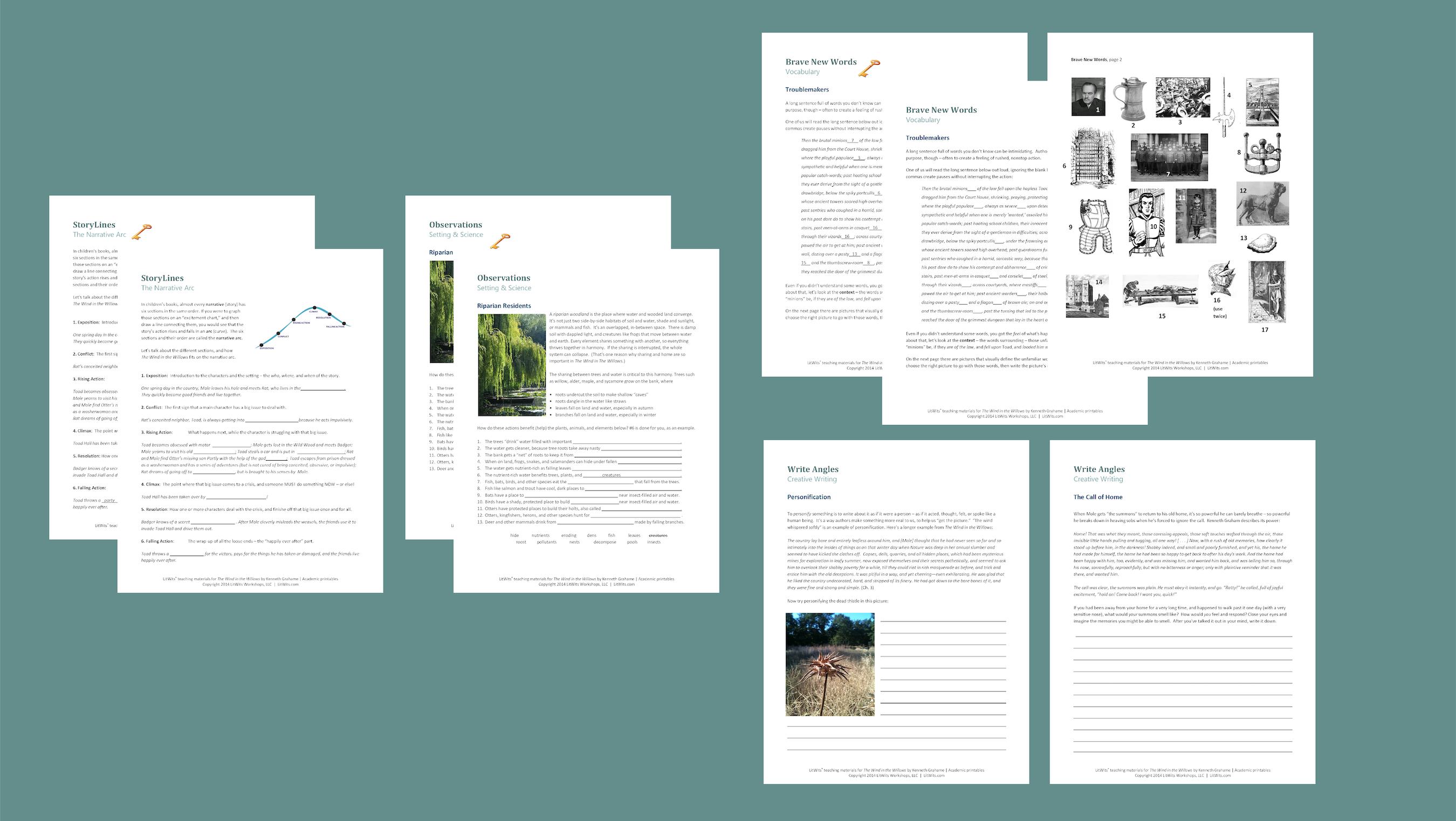
You might find our narrative arc worksheet helpful for sequencing your activities, teaching the important concept of the arc, and helping kids learn how Kenneth Grahame built The Wind in the Willows.
A LitWits activity from the Exposition (and beyond)
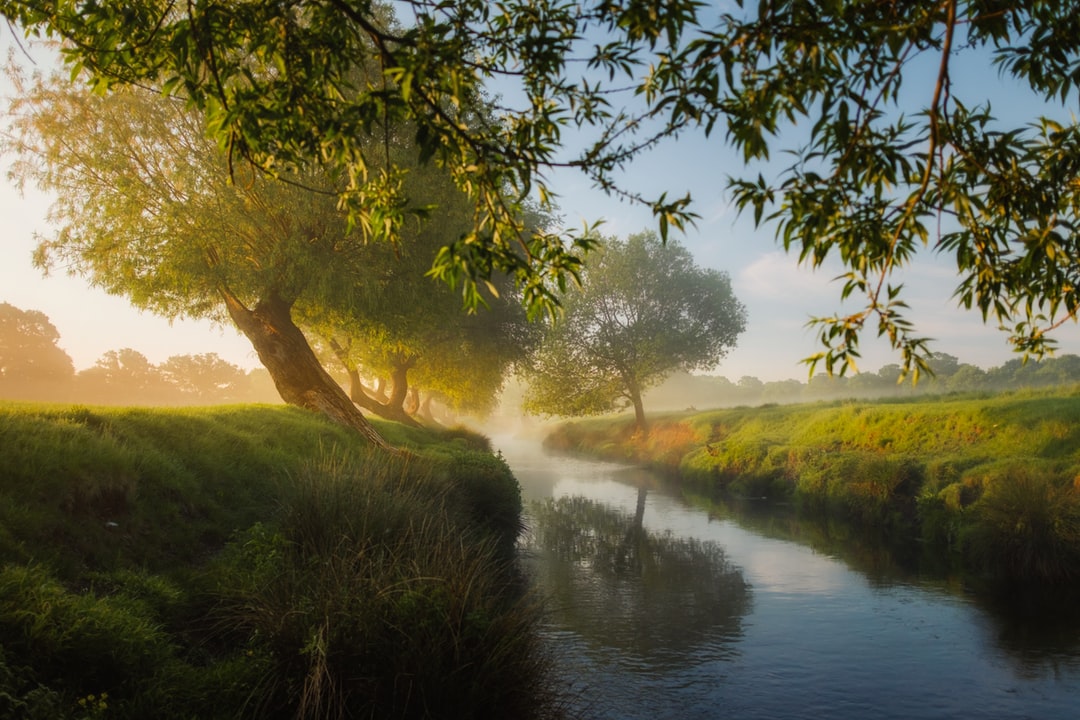
You can’t read this book and not want to go sit down beside a river. We took that yearning one step further. First we asked our kids to close their eyes while we read them Grahame’s mesmerizing description of Mole’s first glimpse (see below). Then, while their eyes were still closed, we told them to imagine they were that river. How would a (nonflooding, nonboisterous, polite English) river move? What would it sound like?
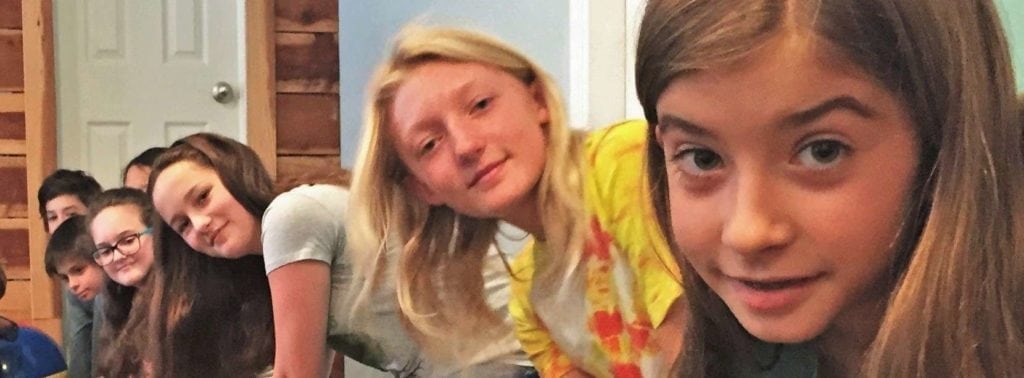
Then we invited them to open their eyes and flow around the room, eddying into bookcase nooks, sloshing over backpack boulders, waterfalling down the cliff-stairs to join the Gymnasium Sea. This activity gets kids “acting out” the idea of personification, animating the river with their own energy instead of words. More importantly, it lets them get into the vitality of this story in a fun, happy way.
INSPIRATION
Never in his life had he seen a river before—this sleek, sinuous, full-bodied animal, chasing and chuckling, gripping things with a gurgle and leaving them with a laugh, to fling itself on fresh playmates that shook themselves free, and were caught and held again. All was a-shake and a-shiver—glints and gleams and sparkles, rustle and swirl, chatter and bubble. The Mole was bewitched, entranced, fascinated. By the side of the river he trotted as one trots, when very small, by the side of a man who holds one spell-bound by exciting stories; and when tired at last, he sat on the bank, while the river still chattered on to him, a babbling procession of the best stories in the world, sent from the heart of the earth to be told at last to the insatiable sea. – Ch. 1
While many things about the animals in this story may wander from the realm of realism, the ecosystem described in the first few pages is a biology teacher’s paradise. What at great chance to do something hands-on while learning what makes a riverbank the perfect place for a water rat to live, and how tree roots contribute to the ecosystem there, and the interplay (or enmity) between forest and river life!
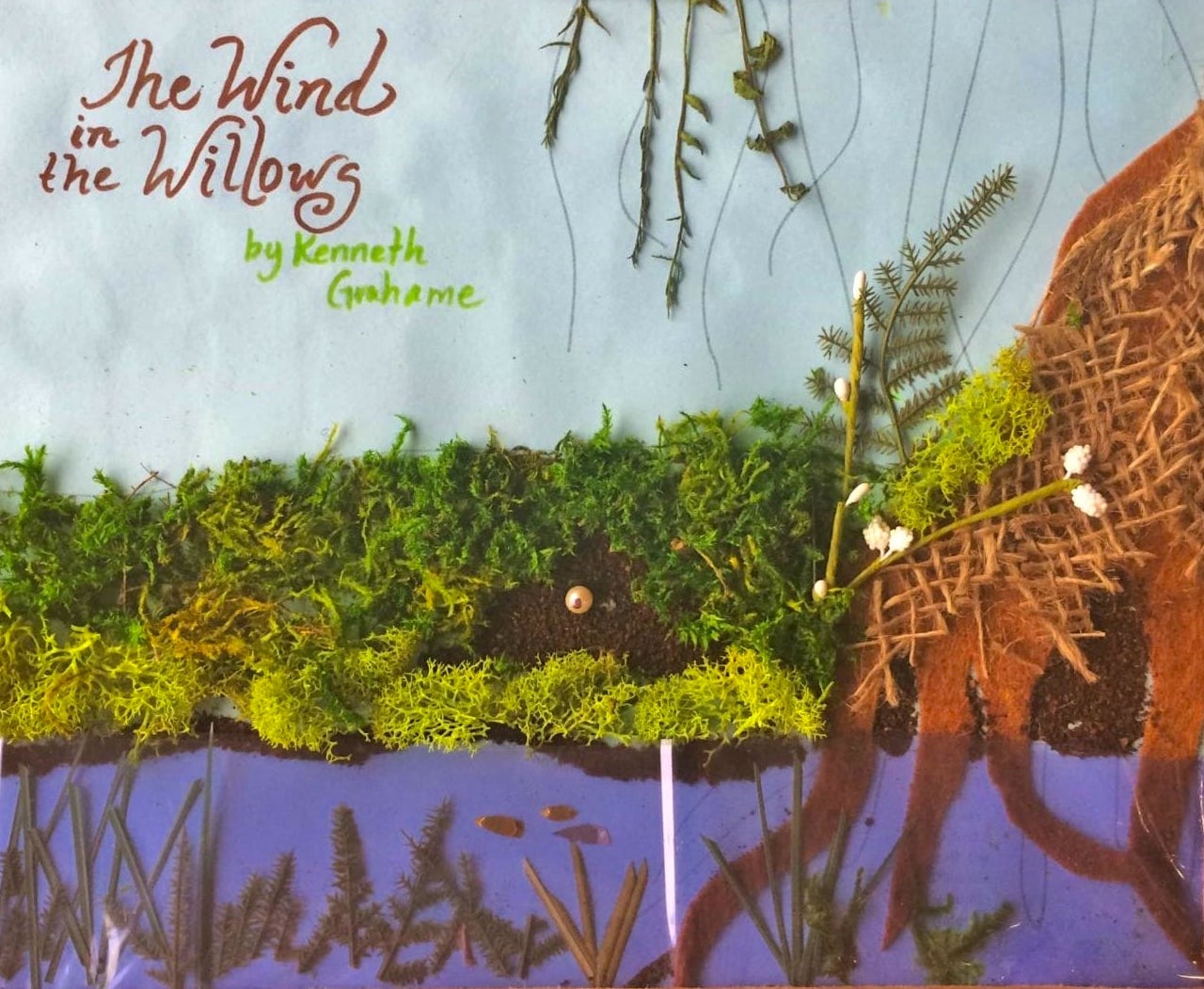
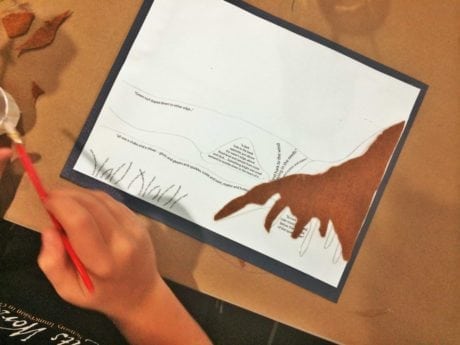
We were itching to get our hands dirty, literally. Following Grahame’s descriptive prose, we created a textural collage of a lush riverbank habitat, complete with roots and rushes, and the peeking, twinkling eye of one curious water rat.
This project gave our kids a sensory appreciation for the riparian setting right before we did the related worksheet (included in printables), and made the science of it all the more fascinating.
INSPIRATION
As [Mole] sat on the grass and looked across the river, a dark hole in the bank opposite, just above the water’s edge, caught his eye, and dreamily he fell to considering what a nice snug dwelling-place it would make for an animal with few wants and fond of a bijou riverside residence, above flood level and remote from noise and dust. As he gazed, something bright and small seemed to twinkle down in the heart of it, vanished, then twinkled once more like a tiny star. But it could hardly be a star in such an unlikely situation; and it was too glittering and small for a glow-worm. Then, as he looked, it winked at him, and so declared itself to be an eye; and a small face began gradually to grow up round it, like a frame round a picture. – Ch. 1
Here's a step by step video of how it all goes together. Scroll down for written directions and things to talk about during this project.
1. SET THE STAGE. Glue the template to a piece of cardstock, color or paint the “sky” area of the template blue (if it's not blue already) then write the name of the book and the author in the sky (see the model above). Of course if watercolor is used it will have to dry before that space can be written in.
While the kids are doing that, you might want to define these words from the template: riparian, roaches, rushes, and osiers.
2. PLAN THE SCENE. Then have them take turns reading the prose, and talk about what they will glue over and around the lines. For instance, over “slushy green undergrowth where the roach swim” they will want to glue grasses and reeds (see the model). Willow tendrils coming down from the top of the page will complete the concept of the tree, whose trunk shows on the right.
3. ADD THE ELEMENTS. Encourage the kids to be careful and thoughtful as they select their materials from a “bits buffet” and construct their collages. (Below are some things to talk about while they're doing this.*)
They’ll get the best results if they assemble their pictures in this order:
Tree and roots of felt (add burlap for bark texture)
Underwater elements – reeds, fishes
Cellophane water, glued just at edges and along the "surface"
Soil
Moss and above-ground elements, including willow boughs
As they create, read the inspiration for this project aloud (it's included above, under Inspiration).
4. PUT RATTY IN PLACE. When they're finished building the riverbank, have them add Ratty's eye in his "nice snug dwelling-place."
*FOR DISCUSSION while the kids are adding the elements
There's potential for conflict when different types of anything run up against each other, but there are also valuable benefits. Use the science/setting worksheet (included in printables) and this USDA site (more Learning Links below) to share more about riparian habitats.
What is it about a forest that could be threatening to river life? (fire, falling trees, predators)
What about the forest is good for river life? (leaf litter, shade, fallen logs, roots, stabilizing banks)
What is it about the river that could be threatening to forest life? (flooding, predators)
What about the river is good for them? (drinking and bathing water, food source)
To bring the story into these facts, ask the kids:
What makes a riverbank the perfect place for Ratty's home?
What makes the woods welcoming for Mole?
What is Mole afraid of?
All the animals know that “sudden trouble or danger” is inevitable, and that life is short and unpredictable. Read the animal-etiquette excerpts in the “Animanners” activity, and ask:
Why do these rules matter to the animals?
What does it mean to "go with the flow"?
Are all the characters content to be what and where they are?
What happens when a character strays from (or pushes) his boundaries?
Read the excerpt below and ask the kids why Mole thinks it's wise to "keep to the pleasant places."
As he hurried along, eagerly anticipating the moment when he would be at home again among the things he knew and liked, the Mole saw clearly that he was an animal of tilled field and hedge-row, linked to the ploughed furrow, the frequented pasture, the lane of evening lingerings, the cultivated garden-plot. For others the asperities, the stubborn endurance, or the clash of actual conflict, that went with Nature in the rough; he must be wise, must keep to the pleasant places in which his lines were laid and which held adventure enough, in their way, to last for a lifetime. – Ch. 4
BookBites is the part of our literary experience when we get to “taste the story.” We choose a food right out of the book, and it has to meet at least one criterion:
it’s important to a plot point
it has thematic significance
it’s unfamiliar for reasons of culture, era, or location
All the glorious repasts in this book made it hard to choose just the right BookBite, but Rat’s introductory picnic with Mole was irresistible. It includes foods unique to the setting, it establishes Rat’s magnanimous, cultivated character, and it exemplifies the theme of friendship.
After the kids tried to guess what BookBites might be, we put on some old English country dance music, produced our "fat, wicker luncheon-basket" (still closed) and read this aloud:
INSPIRATION
“What’s inside it?” asked the Mole, wriggling with curiosity.
“There’s cold chicken inside it,” replied the Rat briefly; “coldtonguecoldhamcoldbeefpickledgherkinssaladfrenchrollscresssandwichespottedmeatgingerbeerlemonadesodawater——”
“O stop, stop,” cried the Mole in ecstacies: ‘This is too much!’ – Ch. 1 Then we opened the basket for the big reveal of pickled gherkins, salad, french rolls, and ginger beer, and if you heard their whoops you'd have thought we just offered them a trip through Wonka's chocolate factory.
While the kids were eating they did the creative writing worksheet about Mole's home (worksheet included in printables), as it was described in Chapter 5. When they were finished we invited volunteers to read their writing aloud.
FOR DISCUSSION
After the writing and reading, we talked about the scene that follows Mole's yearning for home, focusing on Rat's care for him: The Rat, astonished and dismayed at the violence of Mole's paroxysm of grief, did not dare to speak for a while. At last he said, very quietly and sympathetically, "What is it, old fellow? Whatever can be the matter? Tell us your trouble, and let me see what I can do."
Poor Mole found it difficult to get any words out between the upheavals of his chest that followed one upon another so quickly and held back speech and choked it as it came. "I know it's a—shabby, dingy little place," he sobbed forth at last brokenly: "not like—your cosy quarters—or Toad's beautiful hall—or Badger's great house—but it was my own little home—and I was fond of it—and I went away and forgot all about it—and then I smelt it suddenly—on the road, when I called and you wouldn't listen, Rat—and everything came back to me with a rush—and I wanted it!—O dear, O dear!—and when you wouldn't turn back, Ratty—and I had to leave it, though I was smelling it all the time—I thought my heart would break.—We might have just gone and had one look at it, Ratty—only one look—it was close by—but you wouldn't turn back, Ratty, you wouldn't turn back! O dear, O dear!"
Recollection brought fresh waves of sorrow, and sobs again took full charge of him, preventing further speech.
The Rat stared straight in front of him, saying nothing, only patting Mole gently on the shoulder. After a time he muttered gloomily, "I see it all now! What a pig I have been! A pig—that's me! Just a pig—a plain pig!"
He waited till Mole's sobs became gradually less stormy and more rhythmical; he waited till at last sniffs were frequent and sobs only intermittent. Then he rose from his seat, and, remarking carelessly, "Well, now we'd really better be getting on, old chap!" set off up the road again over the toilsome way they had come.
"Wherever are you (hic) going to (hic), Ratty?" cried the tearful Mole, looking up in alarm.
"We're going to find that home of yours, old fellow," replied the Rat pleasantly; "so you had better come along, for it will take some finding, and we shall want your nose."
"Oh, come back, Ratty, do!" cried the Mole, getting up and hurrying after him. "It's no good, I tell you! It's too late, and too dark, and the place is too far off, and the snow's coming! And—and I never meant to let you know I was feeling that way about it—it was all an accident and a mistake! And think of River Bank, and your supper!"
"Hang River Bank, and supper, too!" said the Rat heartily. "I tell you, I'm going to find this place now, if I stay out all night. So cheer up, old chap, and take my arm, and we'll very soon be back there again."
And they were! If there's one word that defines this friendship, it's sacrifice--putting the other's comfort and safety first. We talked about how Mole felt, before and after his needs were met by his friend, and asked our kids to share times they've given and received aid themselves.
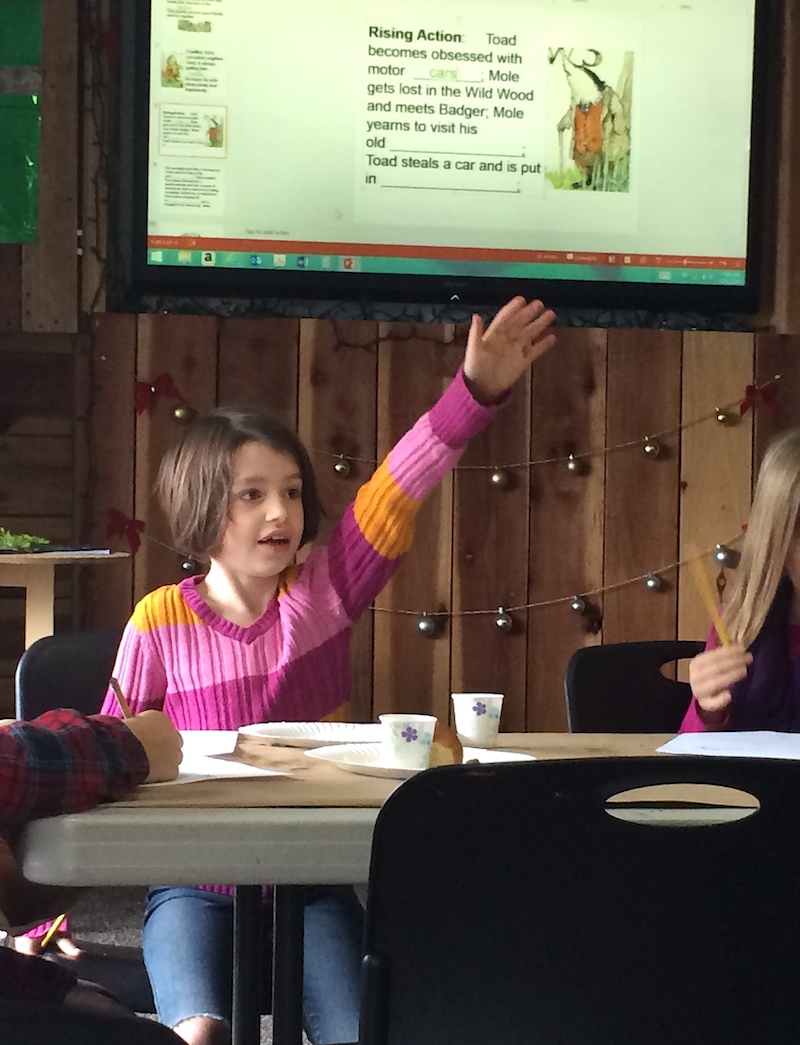
We’re always looking for ways to make worksheets a sensory experience, too. Acting appeals to lots of kids, so we often ask for actors to demonstrate discussion points. This always leads to laughter, which often inspires the shy kids to give it a go. Regardless, kids on both sides of the limelight have fun! So we “activated” our narrative arc worksheet (included in printables), pausing whenever someone, or a pair, volunteered to act out a scene. Heads-up: there was an overabundance of weasel-battle actors.
We added a challenge this time, though. In keeping with the "animal-etiquette” of the Wild Woods, we allowed only “here and now” conversations, with no reference to past or future allowed. It wasn’t easy to stay in the present (is it ever?) but the kids got the idea right away and had fun with it. Their efforts also gave us a chance to throw in some simple grammar reminders.
INSPIRATION
Mole recollected that animal-etiquette forbade any sort of comment on the sudden disappearance of one’s friends at any moment, for any reason or no reason whatever. – Ch. 1
The Mole knew well that it is quite against animal-etiquette to dwell on possible trouble ahead, or even to allude to it; so he dropped the subject. – Ch. 1
No animal, according to the rules of animal-etiquette, is ever expected to do anything strenuous, or heroic, or even moderately active during the off-season of winter. – Ch. 4
From the first “Poop poop!” to the final round of “Toad’s Last Little Song” this relay really puts the “wild” in Wild Wood!
We have great affection for all of the citizens of Mr. Grahame’s wonderful world, but none of them seem to have as much fun — or as much trouble learning their lessons — as Mr. Toad. We decided to gather all his ridiculous shenanigans into one hilarious relay race, so our kids could experience the insatiable pleasure of being a toad absolutely out of his right mind.
Of course this activity also provides a chance to talk about character development (or lack of it), the author’s use of soliloquy, and what makes Toad so obsessed, obstinate, and irascible — and why we like him that way.
DIRECTIONS
To set up, gather supplies and prep each station as described below.
Before starting the relay, explain all the stations (read each Inspiration excerpt out loud, and demonstrate each of Toad’s Tasks).
Divide the kids into two teams, then have each team line up behind the starting line.
Start Team 1 first, and use a stopwatch to record the time from start to finish.
Start Team 2 after the first child on Team 1 has completed Station 4 (and returned the washerwoman outfit).
Station 1: Toady Goes Bonkers
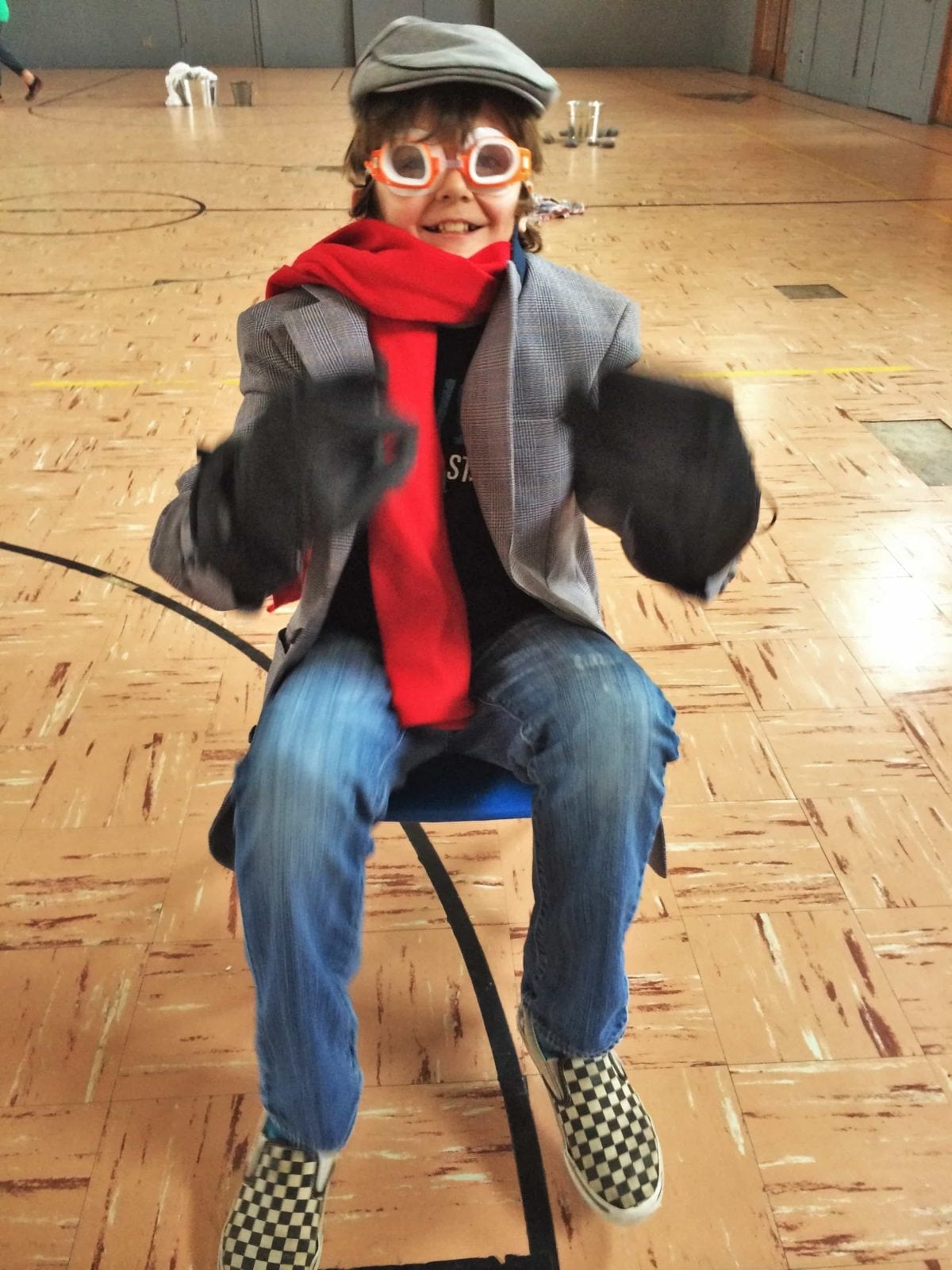
Inspiration: When his violent paroxysms possessed him he would arrange bedroom chairs in rude resemblance of a motor-car and would crouch on the foremost of them, bent forward and staring fixedly ahead, making uncouth and ghastly noises, till the climax was reached, when, turning a complete somersault, he would lie prostrate amidst the ruins of the chairs, apparently completely satisfied for the moment. – Ch. 6
Supplies & Prep:
two chairs arranged to resemble a car
Toad outfit (goggles, scarf, and/or driving hat)
Toad’s Task: Put on the Toadish outfit and sit in the car. Make lots of “uncouth and ghastly noises,” including at least 3 “poop-poops,” then turn a somersault. Remove outfit and head to Station 2.
Station 2: Toady’s Locked-Up Lament and Clever Escape
Inspiration: When Toad found himself immured in a dank and noisome dungeon, and knew that all the grim darkness of a medieval fortress lay between him and the outer world of sunshine . . . where he had lately been so happy . . . he flung himself at full length on the floor, and shed bitter tears, and abandoned himself to dark despair. – Ch. 8
Supplies & Prep:
length of chain (we used a chandelier chain)
washerwoman outfit (apron and bonnet, or a cloth tied over the head and under the chin)
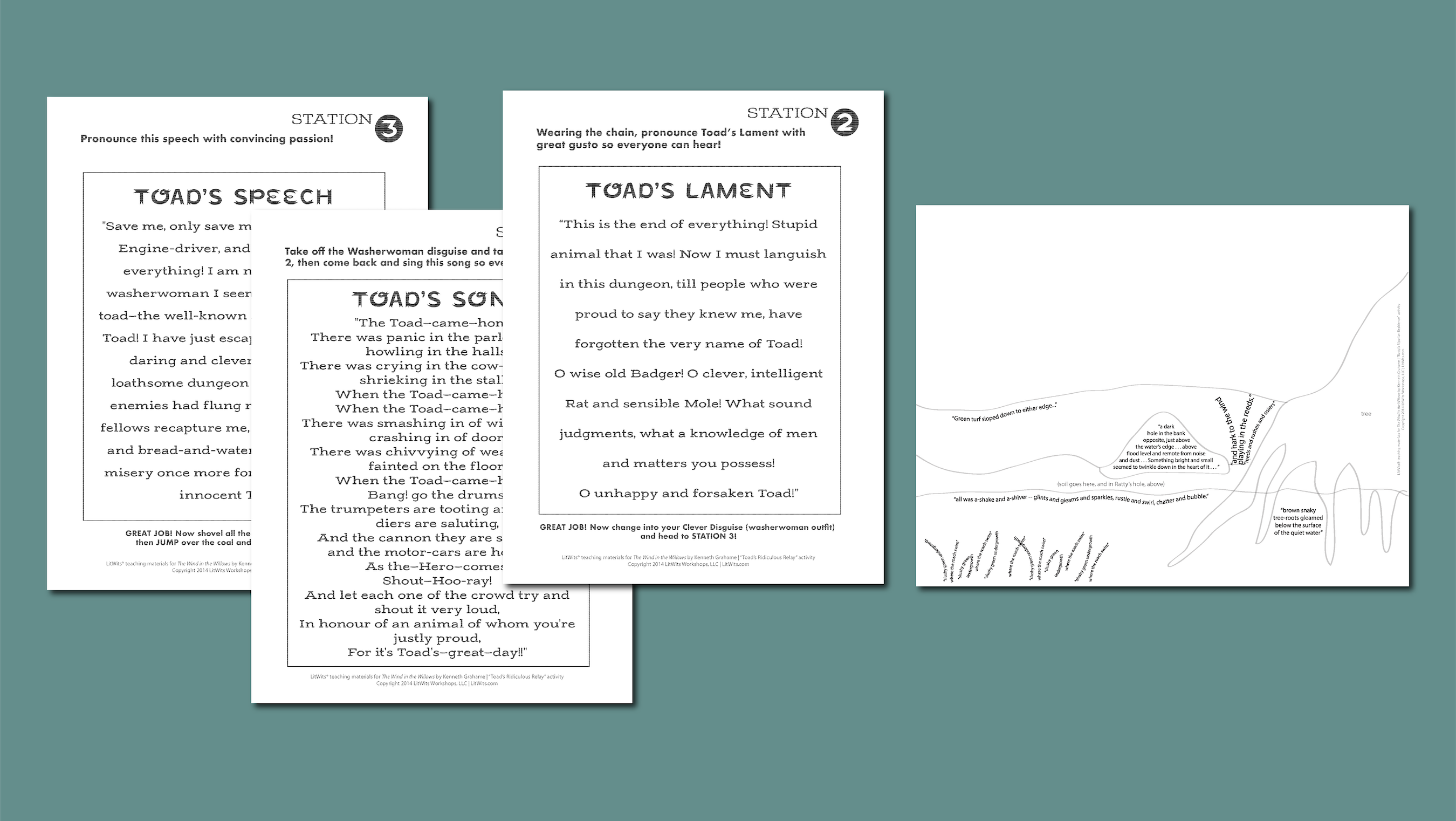
instructions + Toad’s “end of everything” lament, printed (included in printables)
Toad’s Task:Wearing chain, pronounce Toad’s lament with great gusto, then change into your Clever Disguise (washerwoman outfit). Head to Station 3. Station 3: Toad on the Train
Inspiration: Then Toad fell on his knees among the coals, and, raising his clasped paws in supplication, cried, [speech]….. They piled on more coals, and the train shot into the tunnel, and the engine rushed and roared and rattled, till at last they shot out at the other end into fresh air and the peaceful moonlight… The driver shut off steam and put on brakes, the Toad got down on the step, and as the train slowed down to almost a walking pace he heard the driver call out, “Now, jump!’” – Ch. 8
Supplies & Prep:
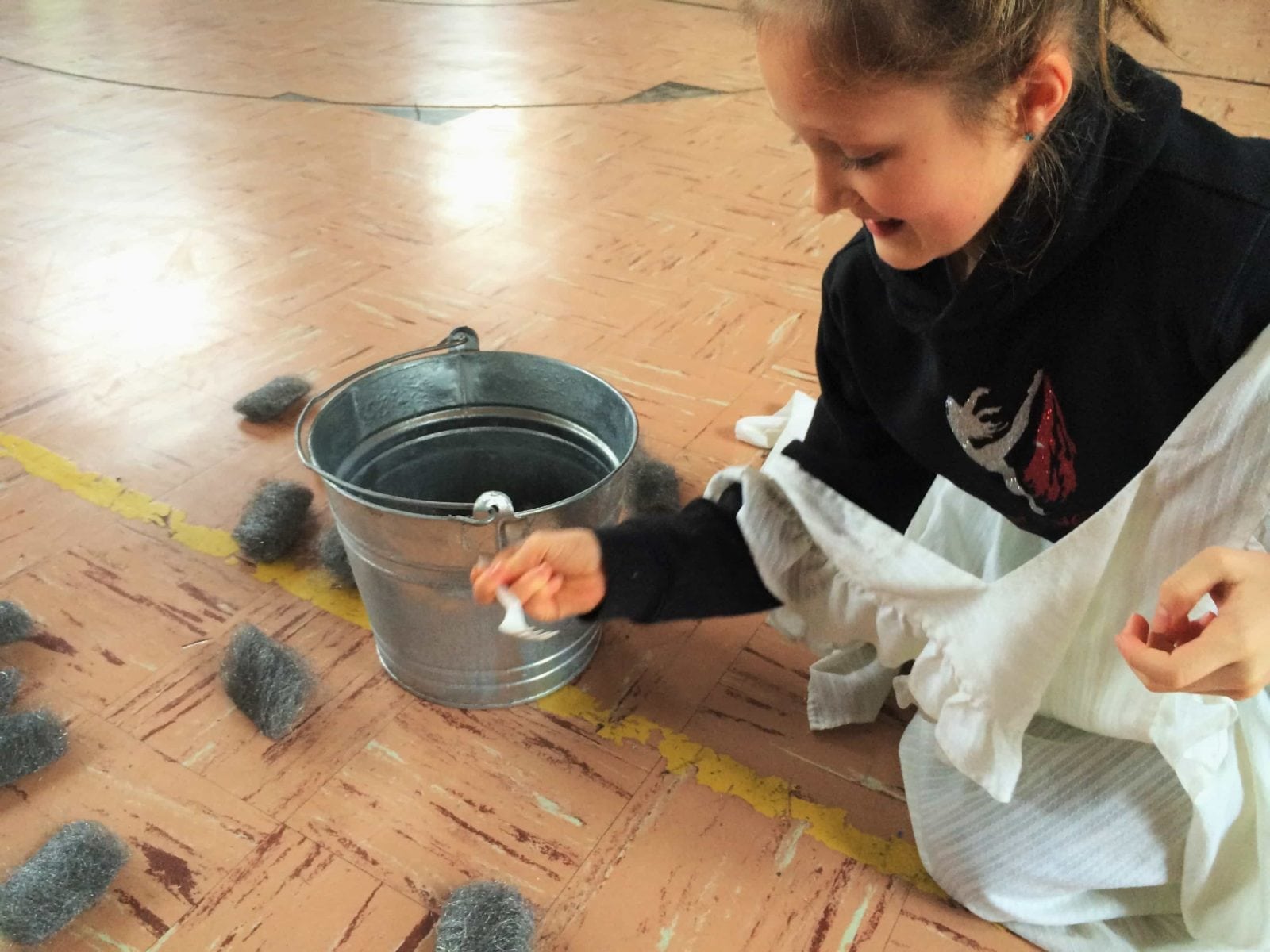
coal – crumpled wads of black construction paper on the floor (we used steel wool but paper would’ve been better)
furnace – a bucket or wastebasket
shovel – this could be a large serving spoon or a plastic sand shovel
instructions + Toad’s “Save me, only save me” speech, printed (included in printables)
Toad’s Task: Still wearing the washerwoman disguise, pronounce “Save me, only save me” speech with convincing passion. Then shovel all the coal into the furnace. (Toad didn’t really help, but he should have.) One you’ve completed this task, you may JUMP over the coal and head for Station 4! Station 4: Toad Does the Laundry
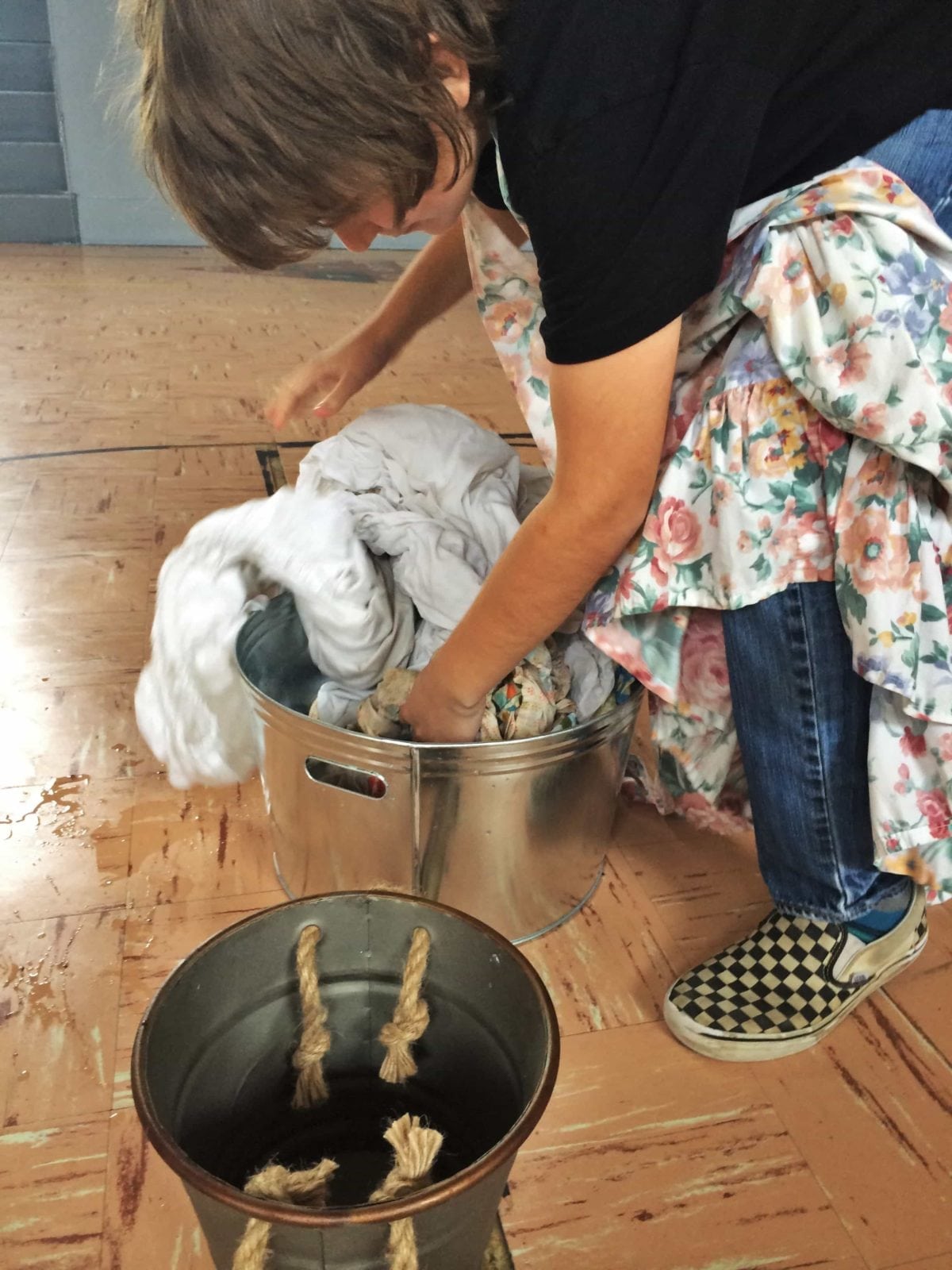
Inspiration: A long half-hour passed, and every minute of it saw Toad getting crosser and crosser. Nothing that he could do to the things seemed to please them or do them good. He tried coaxing, he tried slapping, he tried punching; they smiled back at him out of the tub unconverted, happy in their original sin. … His back ached badly, and he noticed with dismay that his paws were beginning to get all crinkly. Now Toad was very proud of his paws. And then he lost the soap, for the fiftieth time. – Ch. 10
Supplies & Prep:
washbucket filled with water, clothes and 3 slivers of slippery soap
separate bowl or bucket to hold soap when it’s found
Toad’s Task: Still wearing the washerwoman disguise, find one bar of soap in the washtub. Use it to scrub/punch/slap some item of clothing three times before putting the soap in the bowl and searching for the next bar. Wash and repeat! When you’ve found and used all three, dump the bars back in the tub and head for Station 5.
Station 5: Toad Sings About Toad
Inspiration: At last the hour for the banquet began to draw near, and Toad, who on leaving the others had retired to his bedroom, was still sitting there, melancholy and thoughtful. His brow resting on his paw, he pondered long and deeply. Gradually his countenance cleared, and he began to smile long, slow smiles. Then he took to giggling in a shy, self-conscious manner. At last he got up, locked the door, drew the curtains across the windows, collected all the chairs in the room and arranged them in a semicircle, and took up his position in front of them, swelling visibly. Then he bowed, coughed twice, and, letting himself go, with uplifted voice he sang, to the enraptured audience that his imagination so clearly saw. – Ch. 12
Supplies & Prep: instructions + “Toad’s Last Little Song!” printed (included in printables)
Toad’s Task: Take off the Washerwoman disguise and take it to Station 2, then come back and sing “Toad’s Last Little Song!” (this can sound more like a riotous cheer) so everyone can hear.
A LitWits Kit is a bag or box of supplies you pack up and give to each child right before you begin your "field trip" through the story. You might be doing one-off projects as you read through the book together, or you might do everything in this guide from top to bottom after the book has been read. However you explore this book in LitWitty ways, kids love the anticipation of opening their kit.
If you'd like to build LitWits Kits for your kids, you could easily arrange the items in a bag, basket, or story-relevant container. Honestly, it's just as much fun to create a kit as it is to open one!
To make it all the more fun, our printables for many books include special "story packaging" for certain activity supplies, including BookBites. Click the button below for a specific list of contents for this book.
The Wind in the Willows was read to us many times when we were little; it was our Dad's favorite novel, and we can still hear him laughing at Toad's puffery. Furthermore, its foresty, waterside setting was one we immersed in with Dad, whether at home in the woods, on hikes by streams, or camping next to lakes. With the story and its riparian setting so connected to memories of him, it was a "natural" choice for one of our experiential workshops. And it's packed with great takeaway topics, which we're sharing below.
In our workshops, we did our best to make these teaching points tangible, meaningful, and memorable in the kids' hands. It's amazing how much kids can learn while they're "just" having fun!
Happy teaching! Becky and Jenny
Takeaway 1
Literary Devices
Personification and anthropomorphism are sometimes derided, but Kenneth Grahame's excellent use of them makes this book work. After all, If the woods and river and sky didn’t have human qualities, we’d just see them as trees, water, and air, and if the animals didn’t speak and act like people, we’d never relate to them the way we do! In our workshop we brought out Mr. Toad (you could use this clip instead), and told the kids to stare at him for a minute or two. He waddled a few inches and blinked. We told them that’s about how interesting The Wind in the Willows would be without the author's skillful use of these devices. And then we let them Be the Toad, in all his rascally glory, in a relay race about his wild ride.
Hands-on connections in this guide: “Be the River” activity; “Mr. Toad’s Ridiculous Relay” activity; the real Mr. Toad, if you have him; creative writing/personification worksheet
The setting of this story is a riparian zone, the place where land and river meet. We first see it through the Mole’s eyes, as he spies the Rat’s eye in the bank--so we thought, wow, what an intriguing science lesson setup! There's also a lot to pull out about cooperation with others and acceptance of what is--"going with the flow" and "blooming where you're planted," so to speak.
Hands-on connections in this guide: “Ratty’s Riparian Hideaway” project; “Animanners” activity; “Be the River” activity, the real Mr. Toad, if you have him; science/setting worksheet
In the same scene, when Ratty becomes aware of his friend’s distress, he sacrifices his own needs for his friend. His constant care, here and through the story (along with many other examples among other creatures), exemplifies true friendship--and that's always worth talking about.
Hands-on connections in this guide: “Animanners” activity; “ BookBites activity
Is there anything more important, beyond mere survival? This book is rich with ideas of home--what it looks, smells, feels like and means. One of the most memorable and heartwarming scenes is when the Mole, treading wearily along behind the Rat through the frozen woods, suddenly feels pulled back home. The description of his home is absolutely glorious, giving us a great chance talk about what makes a home a home, and to practice descriptive writing skills.
Hands-on connections in this guide: “Ratty’s Riparian Hideaway” project; “Animanners” activity; science/setting and creative writing/description worksheets
The Wind in the Willows is chock-full of other subjects to explore, too,from floodplain ecosystems to the psychology of Toad to British culture. Scroll down to see our curated Learning Links for more tangential teaching opportunities, and to see how we brought this book and its ideas to life.
Learning Links
Explore these links to supplement your reading experience, research points of interest, and prompt tangential learning opportunities.
When choosing props for our live workshops, we always try to focus on two important categories: props that are unique to the setting, because they help kids understand “what that was like,” and props that are symbolic of themes, because they make big ideas visual and tangible. Both kinds of props generate those wide-eyed, “aha!” moments.
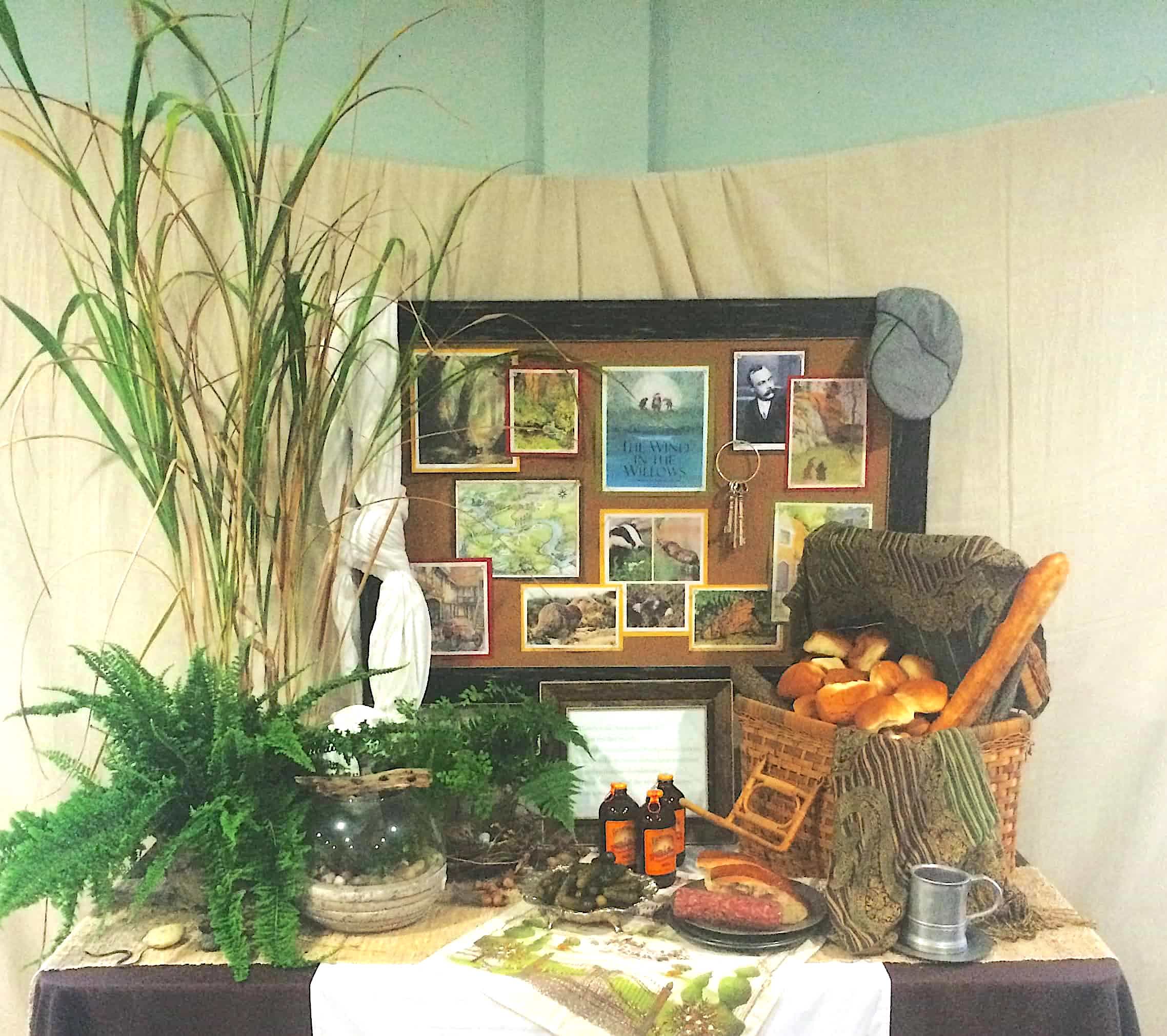
Here's an overview of our display; details are in the section below. You could easily have your kids contribute items to a table over time, as the book is being read.
Sometimes we create a printable prop; click the button to see the list for this book.
"He is indeed the best of animals," replied Rat. "So simple, so good-natured, and so affectionate. Perhaps he's not very clever—we can't all be geniuses; and it may be that he is both boastful and conceited. But he has got some great qualities, has Toady." - Ch. 2
A terrarium served as Toad Hall.
Nest
Hither and thither through the meadows he rambled busily, along the hedgerows, across the copses, finding everywhere birds building, flowers budding, leaves thrusting—everything happy, and progressive, and occupied. - Ch. 1
Ring of keys
...they reached the door of the grimmest dungeon that lay in the heart of the innermost keep. There at last they paused, where an ancient gaoler sat fingering a bunch of mighty keys. - Ch. 6
Loaded picnic basket
"What's inside it?" asked the Mole, wriggling with curiosity. "There's cold chicken inside it," replied the Rat briefly: "coldtonguecoldhamcoldbeefpickledgherkinssaladfrenchrolls– cresssandwichespottedmeatgingerbeerlemonadesodawater—" "O stop, stop!" cried the Mole in ecstasies. "This is too much!" - Ch. 1
This part of the display was also our straight-from-the-story snack. For the supplies list and details of what we did, see "The Too-much Picnic" under BookBites, above.
Knotted sheet & story images
...and next, knotting the sheets from his bed together and tying one end of the improvised rope round the central mullion of the handsome Tudor window which formed such a feature of his bedroom, he scrambled out, slid lightly to the ground, and, taking the opposite direction to the Rat, marched off light-heartedly, whistling a merry tune. - Ch. 6
A knotted sheet and matted images, many available on our Pinterest board for this book
Old textile & mug
...the Rat was very pleased to indulge him, and to sprawl at full length on the grass and rest, while his excited friend shook out the table-cloth and spread it, took out all the mysterious packets one by one and arranged their contents in due order, still gasping: "O my! O my!" at each fresh revelation. - Ch. 1 ...a little mulled ale goes a long way... - Ch. 5 [just the mug]
A bird piped suddenly, and was still; and a light breeze sprang up and set the reeds and bulrushes rustling. - Ch. 7 "Then it was all up, up, up, gradually, as seeds grew to saplings, and saplings to forest trees, and bramble and fern came creeping in to help." - Ch. 4
LitWitty Shareables
Great Quotes
‘Beyond the Wild Wood comes the Wide World,’ said the Rat. ‘And that’s something that doesn’t matter, either to you or me. I’ve never been there, and I’m never going, nor you either, if you’ve got any sense at all. Don’t ever refer to it again, please.’ – Ch. 1 *
The Mole was bewitched, entranced, fascinated. By the side of the river he trotted as one trots, when very small, by the side of a man who holds one spellbound by exciting stories; and when tired at last, he sat on the bank, while the river still chattered on to him, a babbling procession of the best stories in the world, sent from the heart of the earth to be told at last to the insatiable sea. – Ch. 1 *
“Believe me, my young friend, there is nothing – absolutely nothing – half so much worth doing as simply messing about in boats.” – Ch. 1 *
Home! That was what they meant, those caressing appeals, Those soft touches wafted through the air, those invisible little hands pulling and tugging, all one way. – Ch. 5 *
He saw clearly how plain and simple – how narrow, even – it all was; but clearly, too, how much it all meant to him, and the special value of some such anchorage in one’s existence. He did not at all want to abandon the new life and its splendid spaces, to turn his back on sun and air and all they offered him and creep home and stay there; the upper world was all too strong, it called to him still, even down there, and he knew he must return to the larger stage. But it was good to think he had this to come back to, this place which was all his own, these things which were so glad to see him again and could always be counted upon for the same simple welcome. – Ch. 5 *
“It’ll be all right, my fine fellow,” said the Otter. “I’m coming along with you, and I know every path blindfold; and if there’s a head that needs to be punched, you can confidently rely upon me to punch it.” – Ch. 4 *
Toad, with no one to check his statements or to criticize in an unfriendly spirit, rather let himself go. Indeed, much that he related belonged more properly to the category of what-might-have-happened-had-I-only-thought-of-it-in-time-instead-of-ten-minutes-afterwards. Those are always the best and raciest adventures; and why should they not be truly ours, as much as the somewhat inadequate things that really come off? – Ch. 11 * No animal, according to the rules of animal-etiquette, is ever expected to do anything strenuous, or heroic, or even moderately active during the off-season of winter. – Ch. 4
You're literally on our page about inspiring kids to love great books. YAY! We're eager to share our passion for LitWitting and the work we've done for over a decade.
We're also eager to keep doing it! :) So if you found this guide-page inspiring and useful,* please share it with your social world. And if you buy our printables for this book, thank you. We appreciate you helping us keep the lights on at LitWits!
Happy teaching, Becky and Jenny Sisters, best friends, and partners
*We hope we've inspired you! If you're feeling a little overwhelmed (we hear that sometimes), remember, you're LitWitting whether you do a lot or a little. You can't go wrong! The learning is happening, trust us. Just take the pressure off and do what works for your kids, time, and budget. It's all about inspiring kids to read for fun, so they want to read more—because kids who read more great books learn more great things.
Now get ready for a bunch of wide-eyed kids having “aha!” moments . . . and you, grinning ear to ear because your kids are happily engaged with a great book.
Terms of Use
The Becky & Jenny version: Feel free to print pages for teaching use, and make copies of printables for your students. Please don’t use our name, ideas, or materials commercially or share our printables, though we'd love for you to share these free pages with your fellow educators.
The blah legal version: You are granted exclusive use of our products in download or print version as follows: You have the right of reproduction that is limited to your use only in whatever quantity is necessary to meet your needs and those of your student participants. This right is unlimited and extends for as long as you need the materials during which time they cannot be given to or shared with any other person(s) through any means of delivery, materially or digitally via the Internet. As such you have the right to store the product(s) on the hard drive of your computer or as hard copy in your resource file. Any misuse of these rights is in violation of copyright law.
LitWits® is a registered trademark of LitWits Workshops, LLC.
LitWits teaching ideas and materials for The Wind in the Willows by Kenneth Grahame. Copyright 2014 by LitWits Workshops, LLC. All Rights Reserved.

%20banner.jpg)