Creative Teaching Ideas for

CHARLOTTE'S WEB

by E.B. White (1952)


ON THIS PAGE: LitWits hands-on activity ideas and instructions, teaching topics, learning links, and more. Scroll on!

About the story

Wilbur is a runt piglet saved first by a farmer’s daughter, and then by a spider named Charlotte. How she manages to do this, and why, is the focus of this much-loved story by E.B. White. It’s not just that words “magically” appear in the silk and story of Charlotte’s Web, but that we discover selflessness, friendship, and death to be the meaning of life.  Small pig, small spider, small book—but enormous lessons.

Read reviews / buy the book here
We make a small commission on anything you buy through our Amazon affiliate links. 

Hands-on Fun

Making a plan . . .


There are many ideas in this Hands-on Fun section—don't feel you have to do them all! Go with whatever works best for you and your kids. If you want to focus on a particular teaching point, our Takeaway Topics section can help you narrow down the activity options. And you can enhance discussions during any activity with audiovisual aids from Learning Links or story objects from Prop Ideas.

In our workshops, we do all the activities on this page, in order of the story's narrative arc. You might find our narrative arc worksheet helpful for sequencing your activities, teaching the important concept of the arc, and helping kids learn how E.B. White spun Charlotte’s Web.

BookBites

Table-to-Farm

A LitWits activity from the Rising Action

BookBites is the part of our literary experience when we get to “taste the story.”  We choose a food right out of the book, and it has to meet at least one criterion:

  • it’s important to a plot point
  • it has thematic significance
  • it’s unfamiliar for reasons of culture, era, or location
For this book we served Wilbur’s favorite table-to-farm meal: a slop of warm milk, potato skins, wheat middlings (bran), and assorted vegetable peelings. Wilbur loved slop so much, in fact, he was willing to trade his freedom for it!  All Mr. Zuckerman had to do was stand quietly beside him, and Wilbur stopped in his tracks, then followed the farmer right back to the pigpen’s trough.

Read the inspiration for this “taste” from Chapter 3, then haul out the bucket of slop. Tell them that for authenticity’s sake, you swung by the Zuckerman farm this morning and picked up their Wilbur-y snack. The kids’ eyes will widen in a mix of astonishment and horror. “What? We’re not really . . . we are? Seriously? No waaaay!  Do I have to?”

Once you tell them it’s FRESH slop that’s more like cold soup, they’ll love the idea. Still, they probably won’t want more than a bite, so it’s fun to serve their slop in miniature buckets. (If you like, you can supplement the slop with a food that represents the missing leftover popover and Kellogg’s® Corn Flakes:  Kellogg’s® Pop Tarts.)

One Bad Egg

A LitWits activity from the Rising Action

Ohhh what a wonderful thing is a stinky rotten egg! Especially to a rat, or a bunch of imaginative kids. We had to capitalize on the sensational dialogue and ickiness factor of Templeton’s prized “stink bomb” by holding a very SPECIAL egg hunt.

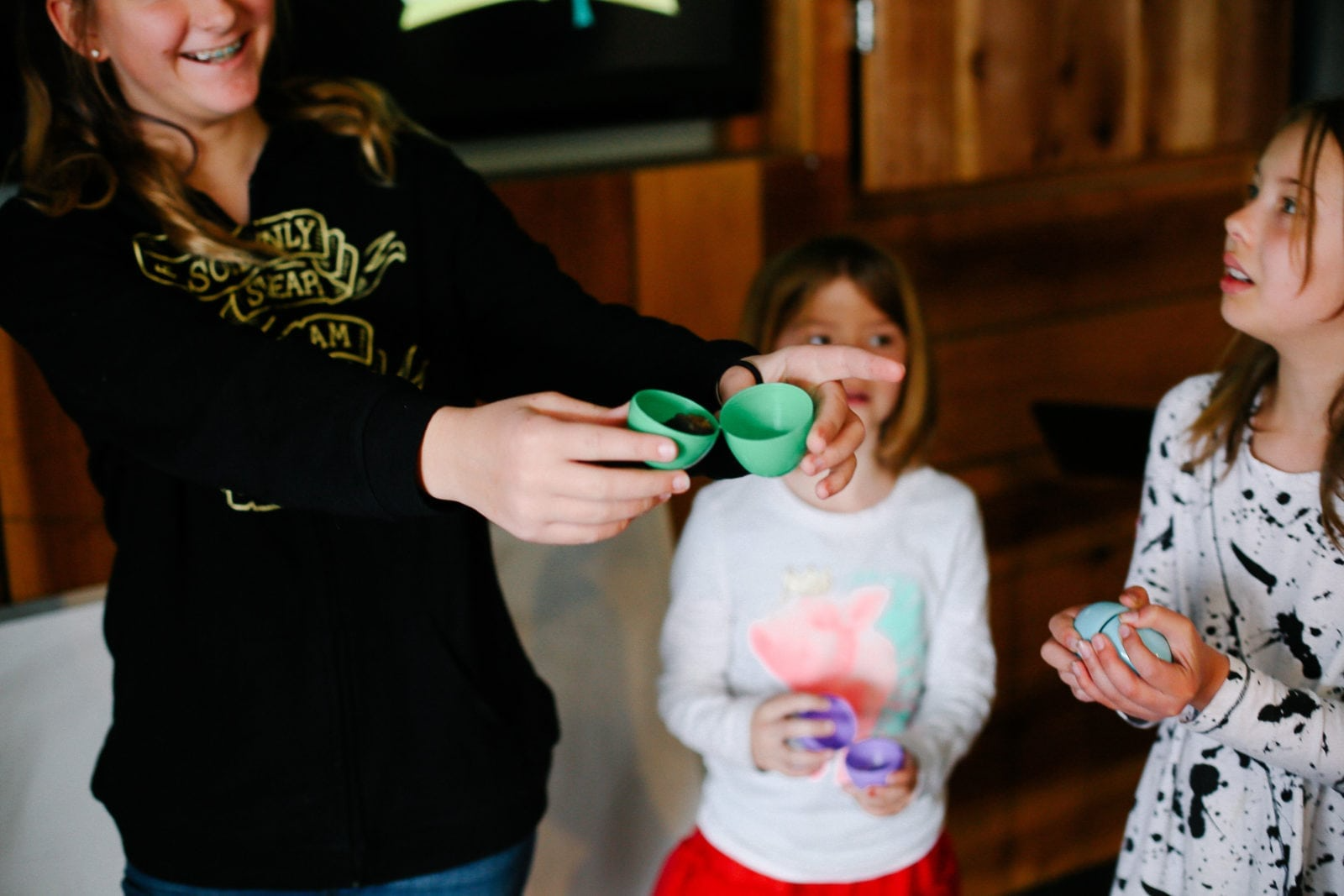
Before the kids arrived, we hid goose-sized plastic Easter eggs throughout the room in places they wouldn’t see (or so we hoped) before we were ready to send them hunting. We were sure to hide exactly one egg for each child to find. Then we told them the goose had been through the room earlier and had laid some eggs in out-of-the-way places. They should go find them but NOT open them!
Once everyone had found one egg and gathered in a circle, we read that wonderful part of the story where Templeton begs to keep the goose’s rotten egg. Wilbur is disgusted, but Charlotte laughs her “tinkling” laugh, warning that if that egg ever breaks, the barn will be “untenable.” That is, no one will be able to live there! A rotten egg, she says, is a “regular stink bomb.” We talked about why this is so, and even brought in a little science.

Of course the egg DOES break, when Avery topples Wilbur’s trough on top of it, and the smell is truly overwhelming (untenable, as Charlotte predicted). “Good night,” exclaims Avery, ” What a stink! Let’s get out of here!”

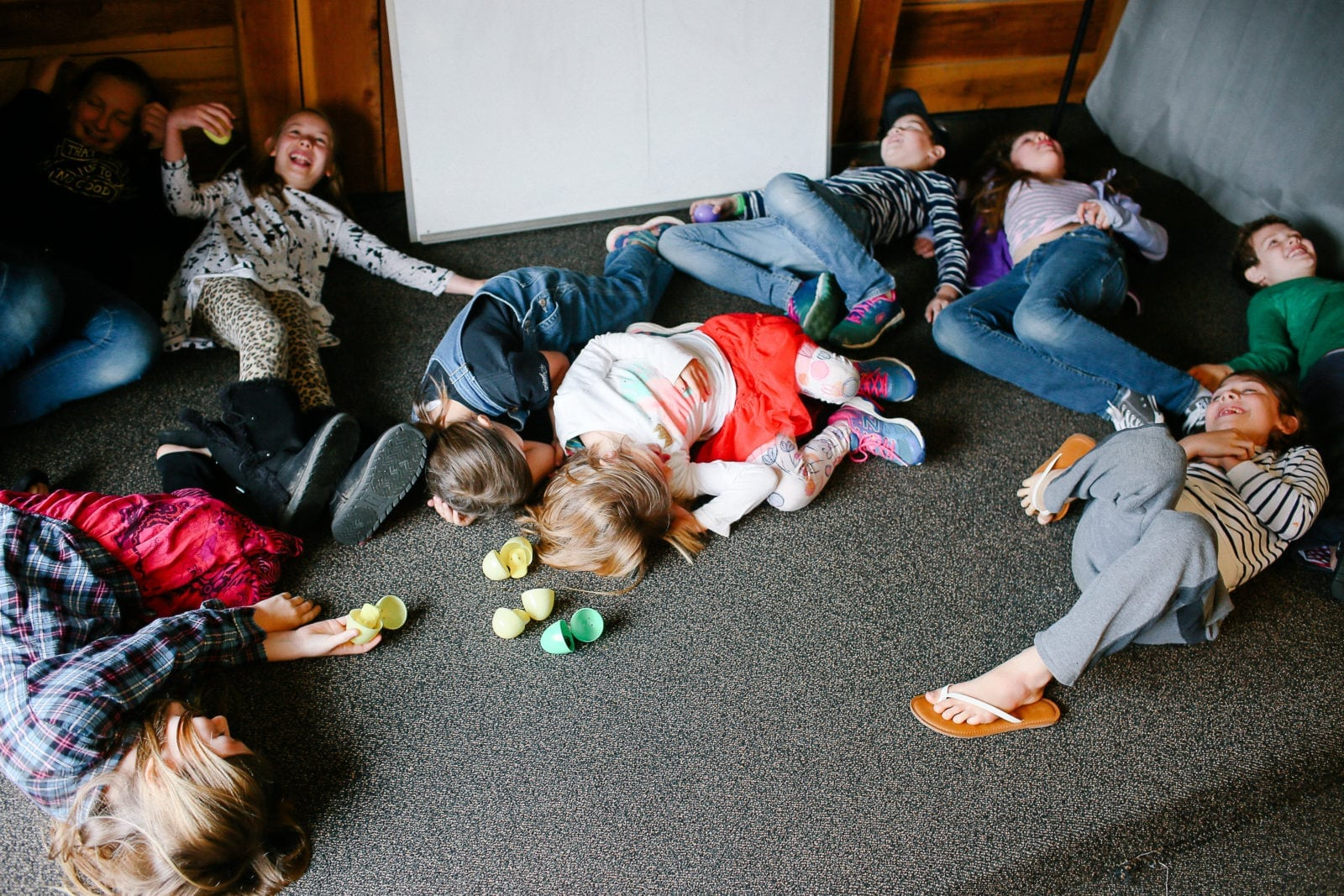
Once we’d had some fun with reading about and discussing rotten eggs,  we asked them to open them ONE AT A TIME and peek inside. Which they did, in great suspense. Most of the eggs had candy inside. But one egg… one very special BAD egg, had a sampling of horse manure in it, from the prop table.

Of course aged horse manure doesn’t smell that bad, but we had such a great time acting as if it did. Gagging, flailing our arms about, covering our noses… you can just imagine.

SUPPLIES

- giant plastic Easter eggs, one per child
- a small amount of something farmish and stinky but relatively harmless (like dried horse manure.)

A Web with a View

A LitWits activity from the Rising Action

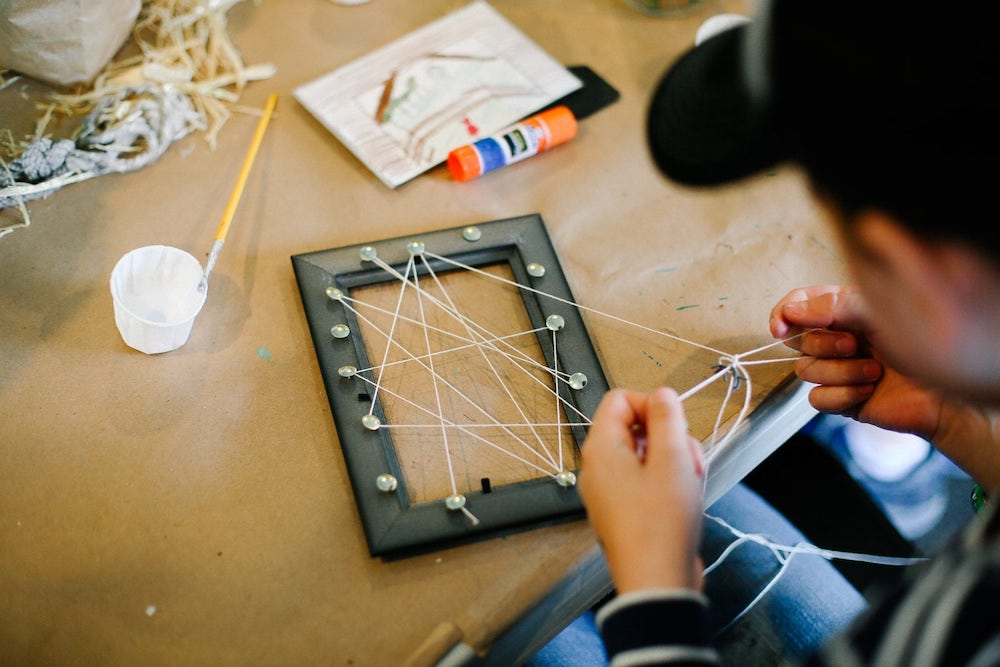
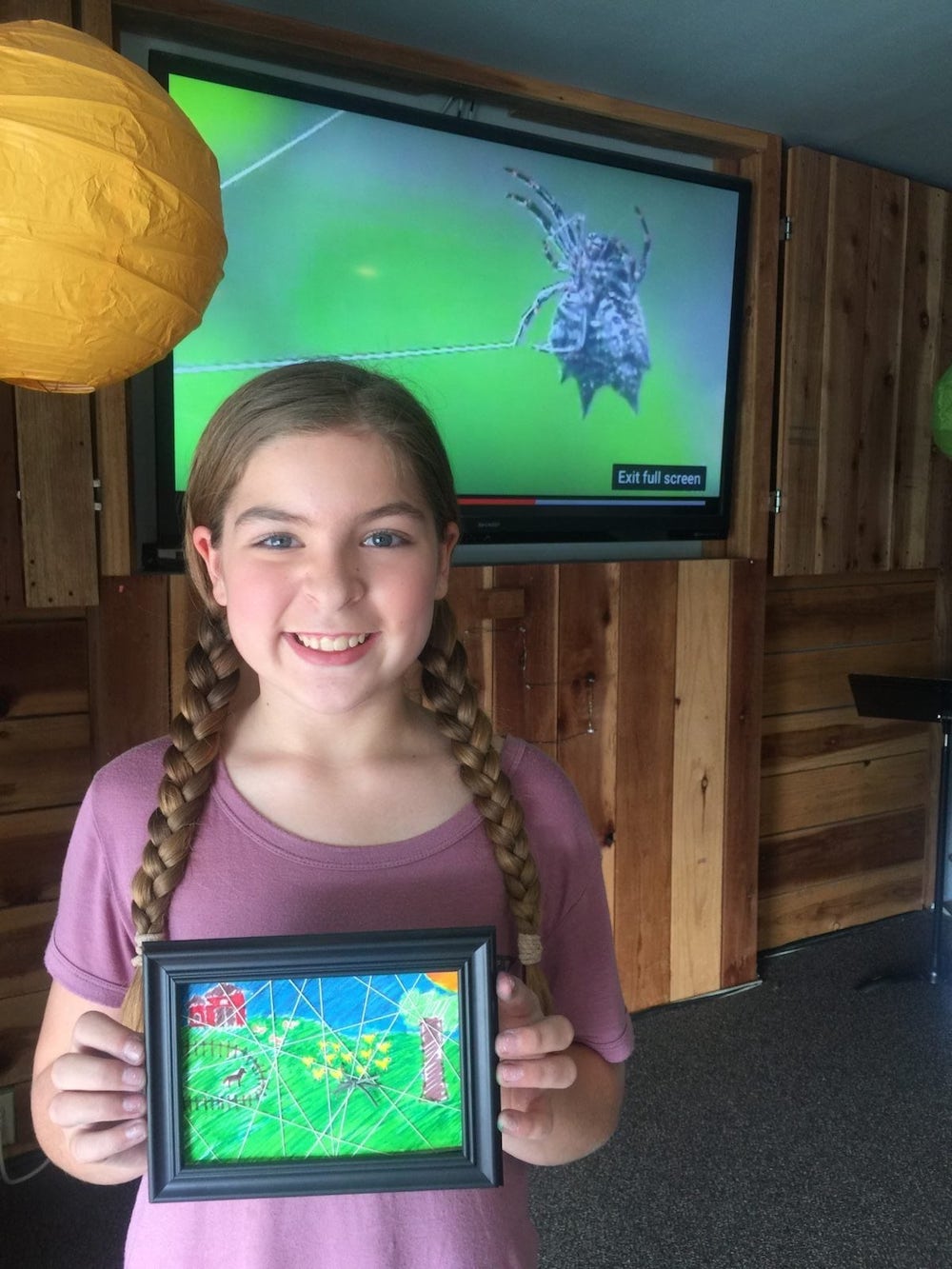
Point of view is an important concept in this story (see Takeaway Topics, below). For this project we focused on Wilbur’s view of the world from his pigpen. It’s a perspective much enhanced by his friendship with Charlotte, whose web stretches across the upper corner of the barnyard doorway. To show how significantly she impacted his view (especially after he learned of his destiny!) we criss-crossed his view with a web, complete with a tiny gray spider.

Every child’s picture was different (drawn from their own point of view!) but conveyed the same sense of whimsy, and love of nature, that E.B. White shares in words.

SUPPLIES

PREPARATION

Remove and discard the glass from the frames, and keep the cardboard.

Cut the string into 2-yard lengths, one for each child. On each string, attach a "spider" by folding the black yarn in half twice, knotting this bundle tightly around the length of string, then snipping the loops to make eight legs. The kids could do this part, but since it’s a little tricky and our group was young, we did it ourselves ahead of time.

DIRECTIONS

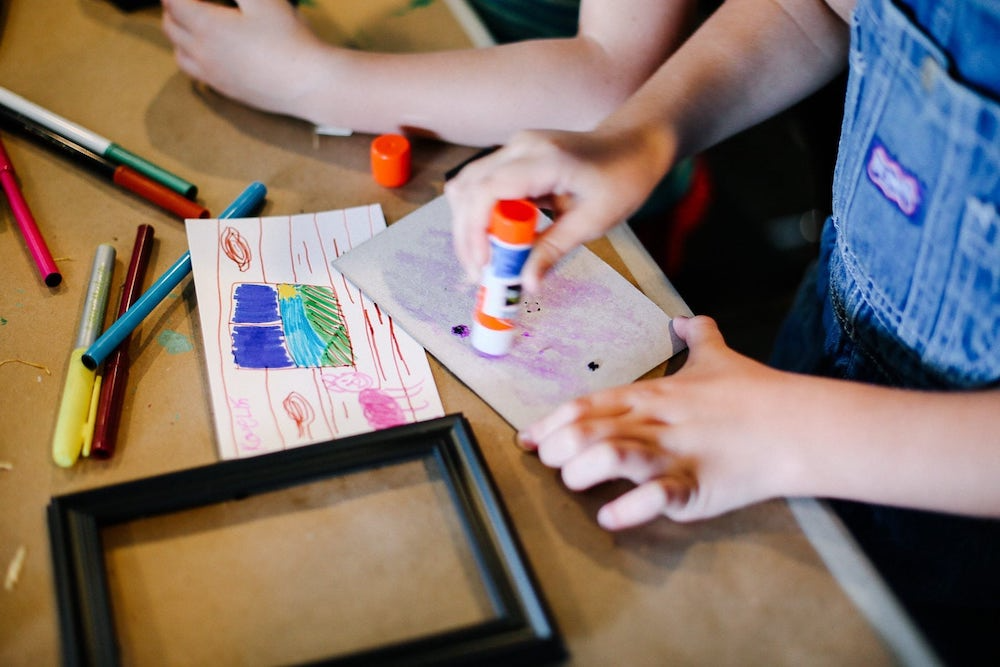
1. Ask the kids to brainstorm about what they think Wilbur saw when he looked out at the barnyard from the window of his pen. Talk about the descriptions in the book of the different animals he might have seen, what kinds of plants or structures could have been in his line of sight. You might even ask what they think was his favorite thing to look at. Hand out 4×6 cards and ask them to draw that scene using colored pens.

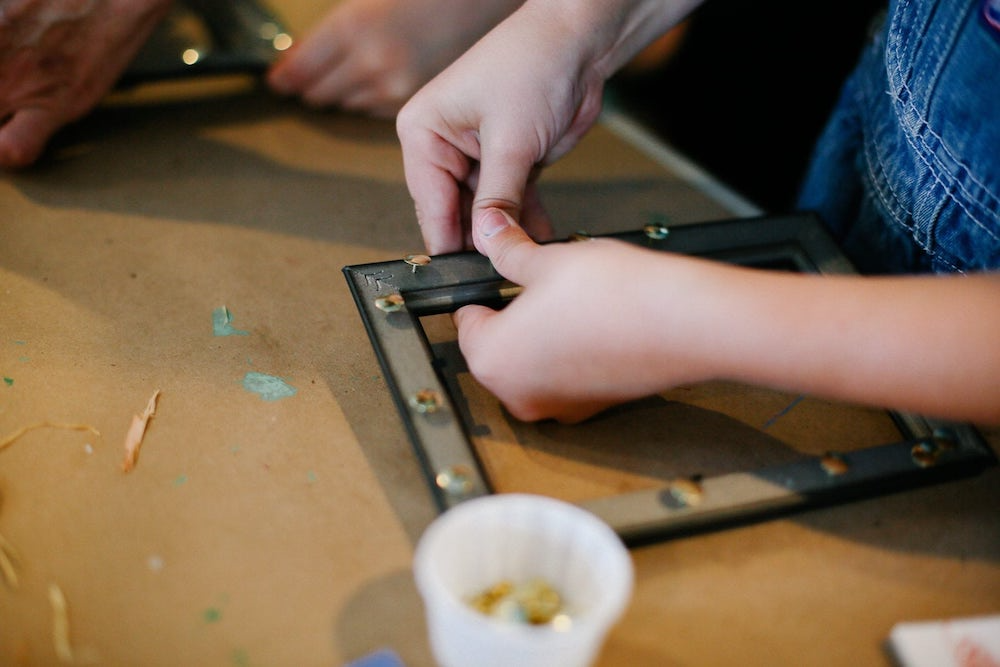
2. Have the kids turn over the frames and push the thumbtacks into the back side as shown. DON’T PUSH THEM IN ALL THE WAY. Just most of the way.

3. Wind one end of the string-with-spider around one thumb tack, then proceed to loop string around the rest of the thumbtacks, weaving a web. 

This is super fun if, when demonstrating, you cheer Charlotte-ish things, such as “Up we go! Attach! Descend! Pay out line. Whoa, girl! Steady now! Attach! Climb! Attach! Over to the right! Pay out line! Attach! Now right and down and swing that loop and around and around! Climb! Repeat! Ok!”  Keep it up . . the kids will love it.

When you’ve finished the string, loop it around the last thumbtack and press the first and last tacks down securely.  It doesn’t matter where “Charlotte” ends up, she’ll be somewhere on her web, enjoying the view along with Wilbur.

4. Glue the landscape picture to the cardboard that came with the frame and secure it inside the frame, behind the web.

Academic worksheets & activity printables

My Fair Piggy

A LitWits activity from the Rising Action

. . . and away went everybody to the Fair.  -Ch. 16

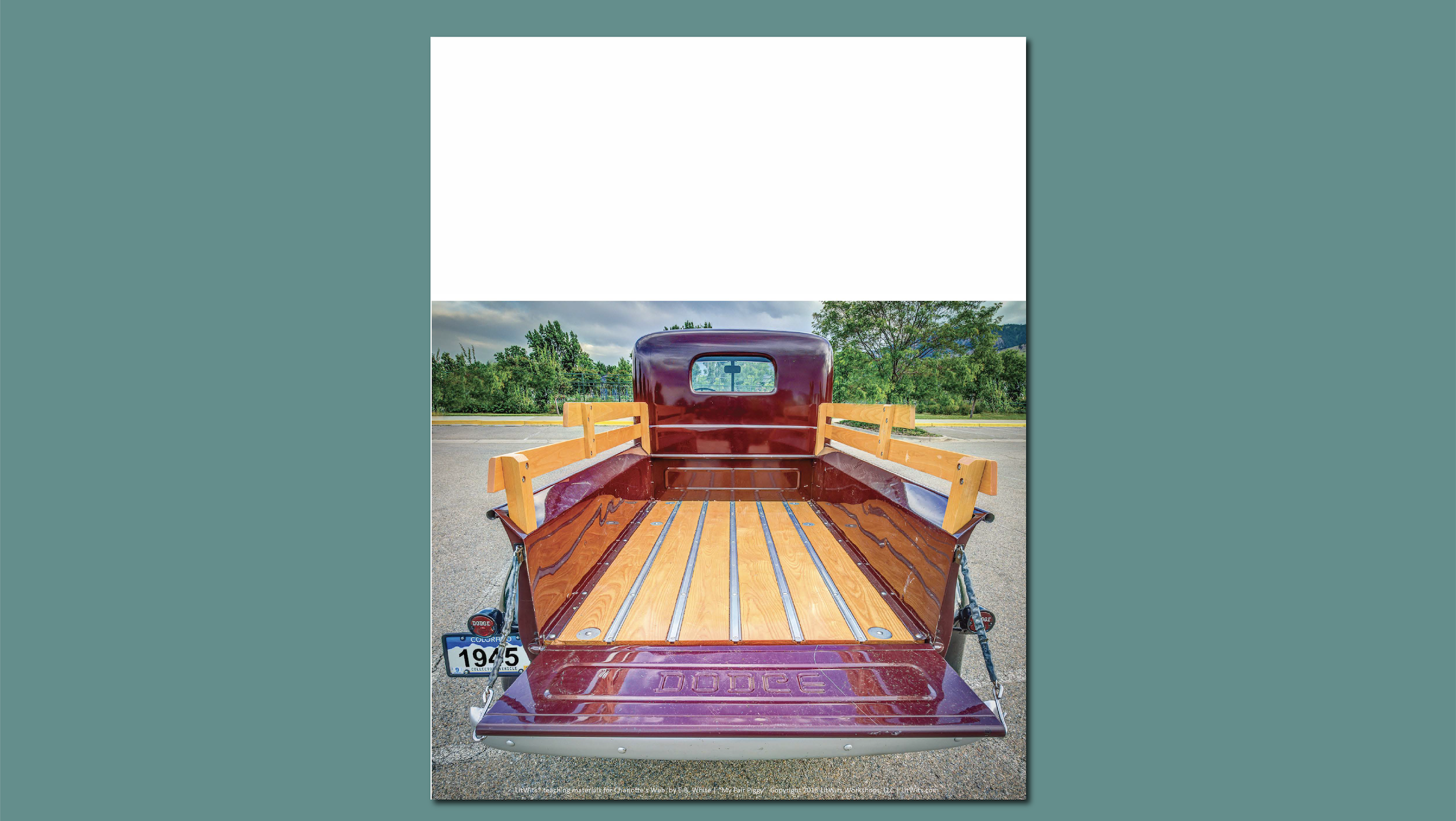
Pack up the pig! This “tailgating” project captures a significant moment on the narrative arc, where the rising action in the farmyard is shifting to the story’s climax at the fair.

At the end of Chapter 16, freshly-scrubbed Wilbur is in his fancy green-and-gold crate, having just recovered from fainting after hearing himself referred to bacon and ham. (Notice that Fern doesn’t scream about her dad’s comment? Her own narrative arc is shifting too, her attention moving from her piglet to possible romance.) Templeton, greedy for fair scraps, has just tucked himself under the straw. Charlotte has hidden herself in a knothole, because Wilbur may need her and her writing talents. All three are in position to take on their mightiest and most important tasks ever, in the chapters to come. 

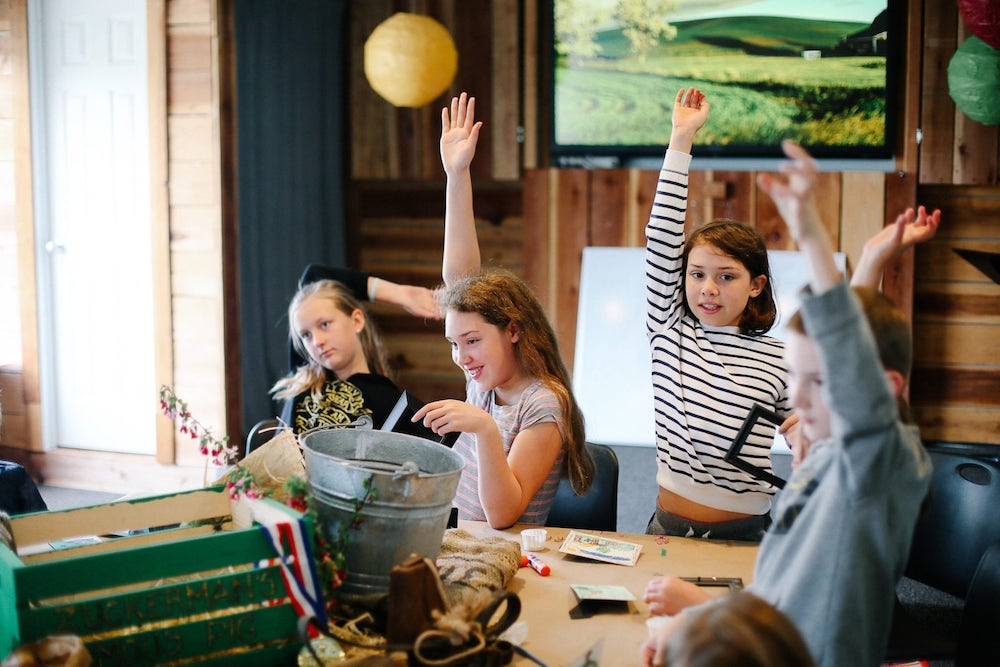
Our LitWitters had a blast building a crate, painting it, filling it with critters, and loading it in the back of a lovely old Dodge pickup. While they were working, we read Chapter 16 aloud for inspiration and laughs.
SUPPLIES

We glued this project to a pocket folder for storing worksheets – if you’d like to do that too, add pocket folders to the list.

  • marker pens in earthy colors
  • gold ink or gold glitter pens
  • popsicle sticks – 2 halves and 4 whole each
  • green paint
  • paintbrushes and water
  • rectangles of green construction paper
  • pink and gray construction paper
  • glue
  • a copy of the template for each child

DIRECTIONS
  1. Glue the pickup image to the card stock or folder.
  2. Write “Charlotte’s Web” in decorative style in the white space above the  truck. Some kids will enjoy emulating Garth Williams’ style, complete with webs. Others will want to put their own twist on this space.

3. Glue the popsicle sticks to the green rectangle as shown below.

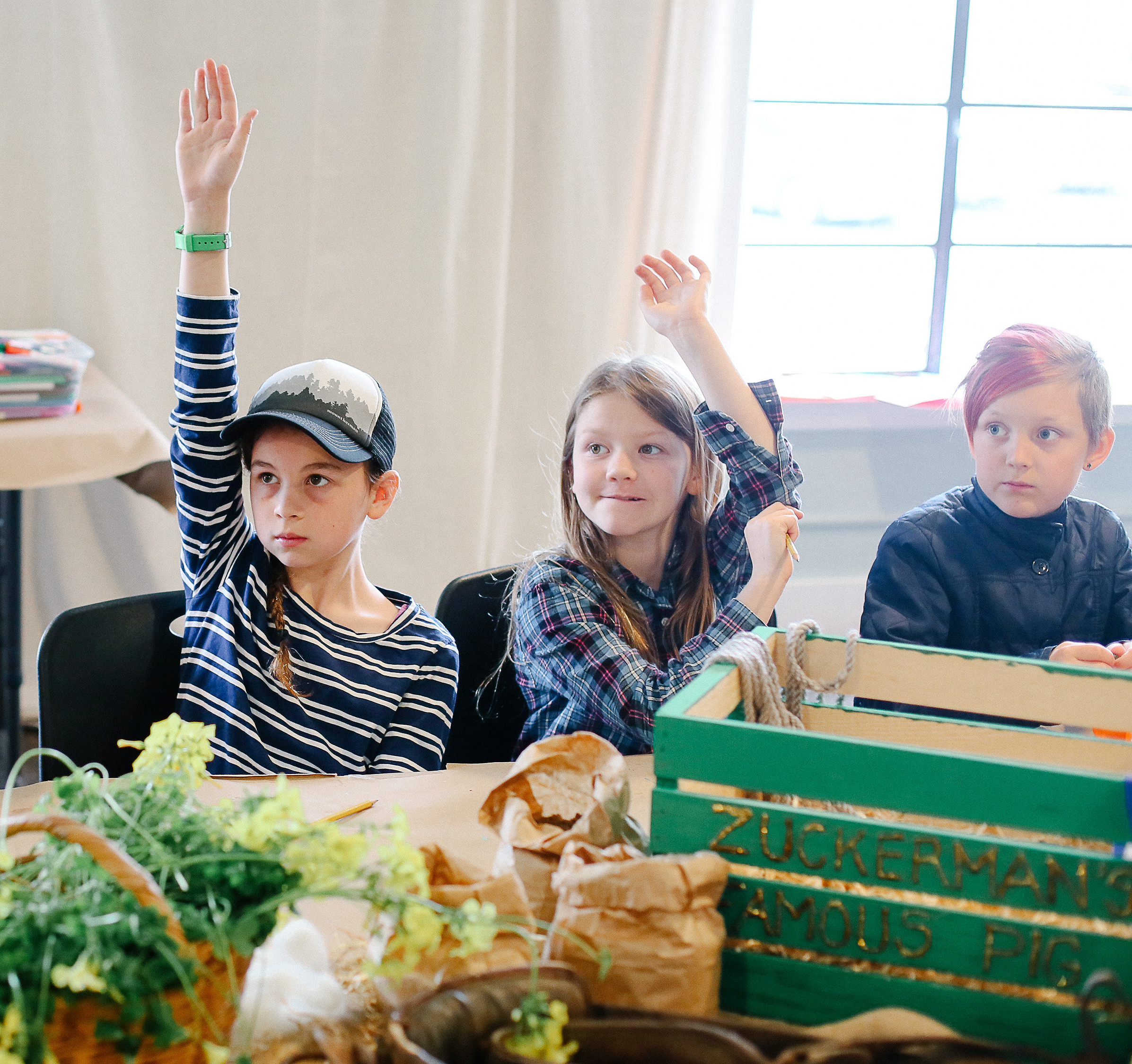
4. Paint the sticks green and, when dry, label “Zuckerman’s Famous Pig” with gold marker.

5. Glue Wilbur’s green crate into the back of the pickup.

6. Cut Wilbur and Templeton out of construction paper (or use white paper and color the critters) and tuck them inside. Don’t forget to draw Charlotte in a knothole!

Dump Run

A LitWits activity from the Rising Action

When Charlotte needs a final word to weave at the fair, she sends Templeton out to find one. After all, that’s his job—the only reason she talked him into stowing along is to “run errands and do general work.”  He’s awfully cranky about his assignment, but he comes through with “humble” just in time.

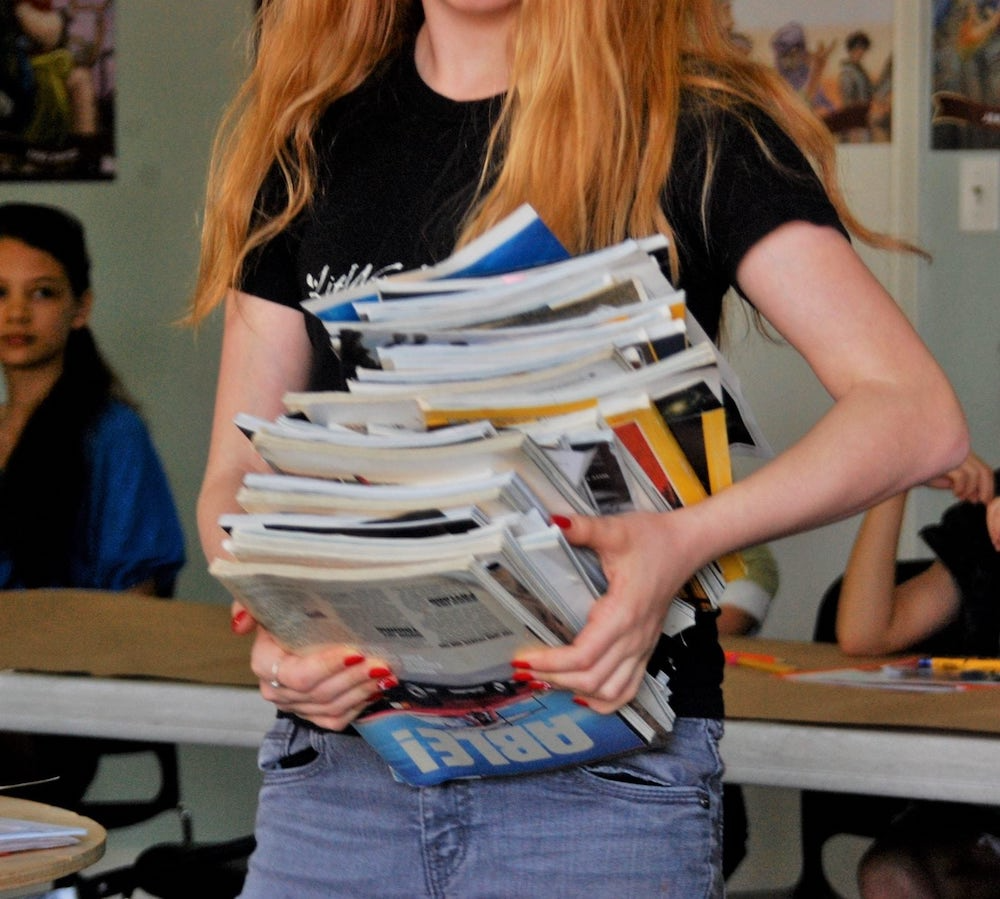
Templeton may not like “fetching and carrying,” and “being treated like a messenger boy,” but our kids sure did! First, we gathered them on the floor by a huge pile of wadded-up magazines and newspapers (pre-selected for remarkable adjectives and the absence of objectionable verbage).  

Then we asked someone to be Templeton—really BE the rat, in attitude and posture. We also took volunteers for the roles of Charlotte and Wilbur. Then we had Charlotte ask Templeton to scuttle to the dump and get her a word. Each time he returned, Charlotte asked Wilbur to prove he is worthy of that word.

Printables Previews

The worksheets and printables used for our activities are sold as a complete set.

Common Core State Standards Alignment for the comprehensive use of our teaching ideas and materials is also included for grades 3, 4, 5 and 6.

The LitWits Kit

Pack up for the field trip!

A LitWits Kit is a bag or box of supplies you pack up and give to each child right before you begin your "field trip" through the story.  You might be doing one-off projects as you read through the book together, or you might do everything in this guide from top to bottom after the book has been read. However you explore this book in LitWitty ways, kids love the anticipation of opening their kit.

If you'd like to build LitWits Kits for your child/ren, you could easily arrange the items in a bag, basket, or story-relevant container.  Honestly, it's just as much fun to create a kit as it is to open one!

To make it all the more fun, our printables for many books include special "story packaging" for certain activity supplies. Click the button below for a specific list of contents for this book. 

Takeaway Topics

Why we chose this book for a "field trip"
"Where's Papa going with that ax?"

That first line was all it took to captivate our hearts and our imaginations when we were kids.  And to this day, E.B. White's prose-- simple but profound, hilarious but deeply poignant--is at the very top of our very short list of favorites. Maybe it's because we grew up on a farm like Wilbur's, or because we always sensed that spiders and even rats had their purpose in the world - but this book and its author found its way into our hearts early on and has never left.

So we chose Charlotte’s Web  for one of our experiential workshops. Not only is the story captivating and beautiful, but it's packed with AT LEAST three great takeaway topics, which we're sharing below. It's amazing how much kids can learn while they're "just" having fun! 

Happy teaching!
Becky and Jenny

Takeaway 1

Worthiness

From the first sentence, we know that the idea of personal value is central to this book—especially as perceived by humans. Mr. Arable believes that a “little girl is one thing, a little runty pig is another,” but Fern believes Wilbur’s life is just as important as her own. Why might she feel this way? Ask the kids to name some of the ways she treated him like a baby.

But the fact is, he’s a pig, and his worth to adults is measurable. At five weeks old, Wilbur is worth six dollars; by December, he’ll be worth his weight in bacon and ham.  Of course he wants to live, but what makes him worth keeping around?  Ask the kids why Mr. Arable and Mr. Zuckerman keep their other livestock around. From a farmer’s perspective, those animals have more to give: they give birth to new livestock, lay eggs, provide wool, and give milk.

Ask if the pig, at the time he hears of his doom, is of value to anyone, even the other animals, in any way. What purpose does he serve for the sheep, the goose, and the rat? What good does he do Charlotte? Was she doing all right before he came along? (Point out that Charlotte has always had a strong sense of value, and makes neither apology nor excuse for her bloodthirsty, murderous ways. “It’s how I’m made,” she says. Read her confident”self-talk” as she does her weaving in Chapter 13, and tell the kids to keep it in mind when they’re facing a challenge of their own.) 

What makes Wilbur special? Until he finds out he’s destined to be breakfast meat, he’s just a carefree, childish pig with an undiscovered purpose. His fear of death sends him into hysterics, and Charlotte accuses him of carrying on like a child. Later he says he’s only average, not “terrific.” Ask the kids what makes him feel more valuable. With Charlotte’s reassurance and overnight spinning, he really does feel terrific standing under her web, swelling with pride, swinging his snout from side by side with newfound self-assurance. With others’ support, his sense of worthiness grows.

The fair prize proves Wilbur’s “living value” to others, but it’s his devotion to Charlotte that proves his real worth. Near the end, when he tosses Templeton into the air and commands him to get Charlotte’s sac, he’s proving he can take charge to do what’s right for a friend. (He also tells the rat to stop acting like a child, just as Charlotte had once said to Wilbur.) His purpose is no longer to save his own hide, but to care for his dear friend’s children for generations. If Charlotte had had one more word left in her, she might have ended by weaving WORTHY in her web.

Hands-on connections in this guide:  “My Fair Piggy” project, “A Web with a View” project, “One Bad Egg” activity, props that convey the idea of worthiness (medal, crate) or unworthiness (ax), creative writing handout 

Takeaway 2

Arachnids

This book seems like it ought to be called Wilbur’s Pen, except that there would be no Wilbur without Charlotte’s web! Such a noble, industrious spider deserves a closer look.


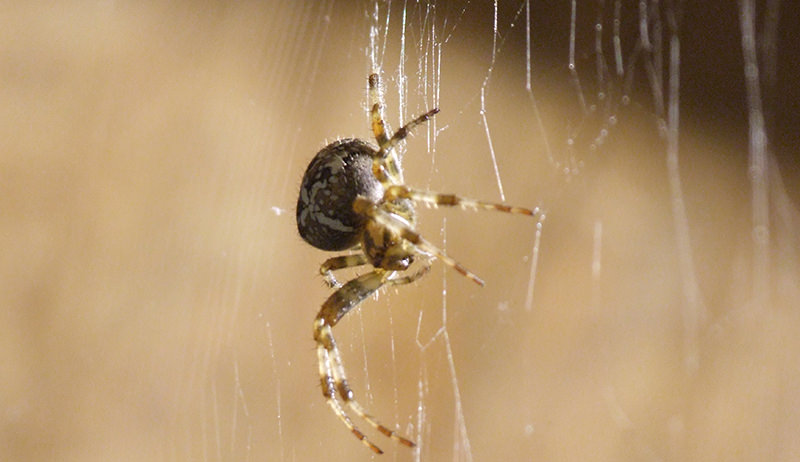
Ask the kids what they already knew about spiders before they read this book. They’ll probably say they knew that spiders have eight legs and weave webs to catch flies. (They might be surprised to learn that some eight-legged bugs aren’t spiders, and only about half of spiders catch their prey in webs.)  What did they learn about Charlotte A. Cavatica, short for the scientific name Araneus cavaticus?

Charlotte tells Wilbur lots about herself throughout this story:

  • she’s near-sighted
  • she “knocks out” her prey
  • she eats—or rather, drinks—a long list of careless bugs
  • her hairy legs have seven parts
  • she has spinnerets that dispense silk

Araneidae, or orb spiders, share even more fascinating (and gruesome) characteristics. You might want to go over some of the facts about that family, as given here by the entomology department at Iowa State. You might NOT want to point out that dear Charlotte would have two rows of eight eyes each, and vomit digestive fluid on her prey before sucking the dissolving bug guts in and out until they’re gone. Yum!

Let the kids know that E.B. White did research for a year before he began writing about Charlotte. He consulted with the curator of spiders at New York’s Museum of Natural History; he studied anatomical drawings; and he took the time to understand the barn spider’s habits and “temperament,” as he called it. He wanted to tell the truth about a barn spider’s life, including the fact that the female will die soon after laying her eggs. Still, even he couldn’t read his own book without crying when Charlotte dies! And we love him even more for that.  (Source: “Charlotte A. Cavatica: Bloodthirsty, Wise, and True” – NPR)

Hands-on connections in this guide: “A Web with a View” project, science handout

Takeaway 3

Point of View


Each character in this story has a unique point of view with which others in the story might heartily disagree. Eight-year-old Fern, for instance, believes that animals have as much value as people do. Ask the kids if her father believes that as well. If not, why does he let Wilbur live? Point out that when we can see an idea from someone else’s point of view, we might change a decision even if we don’t change our minds about the bigger idea.


Charlotte, for instance, guzzles bug blood as if it were cider—from her point of view, there’s no tragedy in that. Ask the kids how Wilbur felt about that. Though the spider is “everything I don’t like,” he wants “to learn to like her” (Chapter 5). What changes his point of view of her bloodthirsty ways? How might we feel if a family of flies had been included in the story, and one of their children had been caught in Charlotte’s web?

Objects, too, are perceived very differently depending on the point of view. Ask the kids if all the animals like slop or rotten eggs, or even enjoy lying down on a hill of manure. Who likes and doesn’t like these things, and why?
It’s fun to act these ideas out, with the goal of understanding the opposing point of view—not necessarily agreeing with it, but understanding. For instance, you could ask one child to be Wilbur explaining why he loves slop, and have another be Fern explaining why it’s so gross. Then ask each actor to rephrase the other’s point of view reflectively.
Fern: “You love slop because it has so many textures, smells, and tastes, and it’s different every day.”

Wilbur: “You hate slop because it’s made up of leftovers that other people’s mouths have touched, and it’s all mixed up together.”

Voila! The art of understanding, while not necessarily agreeing, is a critical real-life skill.

Hands-on connections in this guide: “A Web with a View” project, “One Bad Egg” activity, “My Fair Piggy” project, BookBites slop, props that could be repulsive or appealing (manure, rat, spider, animal food)

Learning Links

Explore these links to supplement your reading experience, research points of interest, and prompt tangential learning opportunities.


About the Book & Author

The LitWits Author Chat:


Some Writer! The Story of E.B. White – review (NPR)
“Some Book! Charlotte’s Web Turns 60″ – interview with biographer Michael Sims (NPR)
Biography (Biography.com)
Biography (Notable Biographies)
“A Letter from E.B. White” about the book (The Marginalian)
“Along Came a Spider” – review (Eudora Welty, New York Times, 1952)
“Stuart, Wilbur, Charlotte:  A Tale of Tales” (Ursula Nordstrom, New York Times)
E.B. White Papers at Cornell University – guide here
Obituary (New York Times)
“Andy” – posthumous tribute to E.B. White (The New Yorker)
Charlotte A. Cavatica: Bloodthirsty, Wise And True” (NPR)
E.B. White’s house and barn for sale (New York Times)
E.B. White’s home and barn with great photos (New England Living)
“A Neighbor’s Farewell: Remembering E.B. White” (New England Living)
Book Trailer for Martha White’s IN THE WORDS OF E. B. WHITE: Quotations from America’s Most Companionable of Writers (Cornell University)
“E.B. White, The Art of the Essay” (Paris Review, 1969)
Article about Garth Williams, illustrator (The New Yorker) 
 
Story Supplements

Overview of pigs with cute pics (Nat Geo Kids)
What Wilbur would have looked like eating slop (YouTube)
Recipe for lavender buttermilk bath
Info about Navajo blankets (PBS)
History of the Ferris Wheel (Smithsonian)
What are middlings? (University of Kentucky)
What is provender? (Dictionary.com)
From gosling to goose – 8m of cuteness (YouTube)
Spider wrapping and eating its prey (YouTube)
Up-close detail of a barn spider weaving (YouTube)
Time lapse of garden orb spider (BBC Earth)
About the Eastern Phoebe, with calls (Cornell Lab of Ornithology)
About the White-throated Sparrow, with calls (Cornell Lab of Ornithology)
About Barn Swallows (Cornell Lab of Ornithology)
About the Whippoorwill (Cornell Lab of Ornithology)
Info about spittlebugs (the “little ball of spit on the weed stalk”) –  (Jim Long’s Garden)
Article: “Yes, Animals Think and Feel. Here’s How We Know” (National Geographic)
How spiders make a web, info with video (Smithsonian)
Why spiders spin webs (Wonderopolis)

Beyond the Book

Prop Ideas

When choosing props for our live workshops, we always try to focus on two important categories: props that are unique to the setting, because they help kids understand “what that was like,” and props that are symbolic of themes, because they make big ideas visual and tangible. Both kinds of props generate those wide-eyed, “aha!” moments.

You could easily have your kids contribute items to a table over time, as the book is being read.  Sometimes we create a printable prop;  check the list for this book.

Ax

``'Where's Papa going with that ax?' said Fern . . .`` -Ch 1

Grass and flowers

``The grass was wet and the earth smelled of springtime.`` - Ch 1

Manure, buckets, sacks

``Wilbur . . . went to live in a manure pile in the cellar of Zuckerman’s barn. - Ch. 2 The barn was full of things like ``empty water buckets `{`and`}` old grain sacks`` - Ch. 3 

Straw and string

``Mr. Arable . . . gave him a large wooden box full of straw`` - Ch. 2 and ``Templeton . . . returned with an old piece of dirty white string`` to tie to Wilbur's tail - Ch. 9

Cow bell

``The barn smelled of . . . the wonderful sweet breath of patient cows`` -Ch. 3

Animal feed

``The barn . . .  smelled of grain . . .
- Ch. 3 

Old tack

". . . and of harness dressing . . .- Ch. 3 

Rope

 . . . and of new rope.`` - Ch. 3

Spider

“My name” said the spider “is Charlotte.” - Ch. 5 

Wilbur's crate

`'Make the crate large and paint it green with gold letters! . . . they should say Zuckerman's Famous Pig.” - Ch. 13

Gold medal

``Then he tied the medal around Wilbur’s neck.`` - Ch. 20

LitWitty Shareables


Great Quotes

“Why did you do all this for me?" he asked. II don't deserve it. I've never done anything for you." 
*
"You have been my friend," replied Charlotte. "That in itself is a tremendous thing.” 
*
"By helping you, perhaps I was trying to lift up my life a trifle. Heaven knows anyone's life can stand a little of that.” 
Wilbur never forgot Charlotte. Although he loved her children and grandchildren dearly, none of the new spiders ever quite took her place in his heart. She was in a class by herself. It is not often that someone comes along who is a true friend and a good writer. Charlotte was both.”
*
“Trust me, Wilbur. People are very gullible. They'll believe anything they see in print.” 
*
“Never hurry and never worry!” 
*
“Children almost always hang onto things tighter than their parents think they will.” 
*
"What's miraculous about a spider's web?" said Mrs. Arable. "I don't see why you say a web is a miracle-it's just a web."
"Ever try to spin one?" asked Dr. Dorian.” 
*
The crickets felt it was their duty to warn everybody that summertime cannot last for ever. Even on the most beautiful days in the whole year - the days when summer is changing into autumn - the crickets spread the rumour of sadness and change.
*
“Don't write about Man; write about a man.” 
*
"Fern was up at daylight, trying to rid the world of injustice. As a result, she now has a pig. A small one to be sure, but nevertheless a pig. It just shows what can happen if a person gets out of bed promptly.” 
*
“It is quite possible that an animal has spoken to me and that I didn't catch the remark because I wasn't paying attention.” 
*
Wilbur didn't want food, he wanted love. 
*
“I’ve got a new friend, all right. But what a gamble friendship is! Charlotte is fierce, brutal, scheming, bloodthirsty—everything I don’t like. How can I learn to like her, even though she is pretty and, of course, clever?” 
*
“I don't understand it, and I don't like what I don't understand.” 
*
“Life is always a rich and steady time when you are waiting for something to happen or to hatch.” 
*
It is deeply satisfying to win a prize in front of a lot of people. 
*
The crickets sang in the grasses. They sang the song of summer's ending, a sad monotonous song. "Summer is over and gone, over and gone, over and gone. Summer is dying, dying." A little maple tree heard the cricket song and turned bright red with anxiety.
We're glad you're here!

You're literally on our page about inspiring kids to love great books.  YAY! We're eager to share our passion for LitWitting and the work we've done for over a decade.

We're also eager to keep doing it! :)  So if you found this guide-page inspiring and useful,* please share it with your social world. And if you buy our printables for this book, thank you. We appreciate you helping us keep the lights on at LitWits! 

Happy teaching,
Becky and Jenny
Sisters, best friends, and partners
*We hope we've inspired you!  If you're feeling a little overwhelmed (we hear that sometimes), remember, you're LitWitting whether you do a lot or a little. You can't go wrong!  The learning is happening, trust us. Just take the pressure off and do what works for your kids, time, and budget.   It's all about inspiring kids to read for fun, so they want to read more—because kids who read more great books learn more great things.

Now get ready for a bunch of wide-eyed kids having “aha!” moments . . . and you, grinning ear to ear because your kids are happily engaged with a great book.

Terms of Use

The Becky & Jenny version:  Feel free to print pages for teaching use, and make copies of printables for your students. Please don’t use our name, ideas, or materials commercially or share our printables, though we'd love for you to share these free pages with your fellow educators.

The blah legal version: You are granted exclusive use of our products in download or print version as follows: You have the right of reproduction that is limited to your use only in whatever quantity is necessary to meet your needs and those of your student participants. This right is unlimited and extends for as long as you need the materials during which time they cannot be given to or shared with any other person(s) through any means of delivery, materially or digitally via the Internet. As such you have the right to store the product(s) on the hard drive of your computer or as hard copy in your resource file.  Any misuse of these rights is in violation of copyright law.

LitWits® is a registered trademark of LitWits Workshops, LLC.

LitWits teaching ideas and materials for Charlotte’s Web  by E.B. White 
Copyright 2017 by LitWits Workshops, LLC.  All Rights Reserved.

Want ideas for more great books?