Creative Teaching Resources for
by Scott O'Dell (1960)
Plus: Takeaway Topics, Learning Links, and Prop Ideas
Left alone for years on an island while waiting to be rescued and reunited with her people, a young girl learns how to survive on her own. building shelters, seeking food, fighting off the wild dogs and eventually befriending one—Rontu, whose trust she earns, and who earns hers too.
But Island of the Blue Dolphins is not about hardship or abandonment — it’s about the discoveries Karana makes, about life and the natural world, only because she must figure things out for herself..
LitWits makes a small commission on anything you buy through our Amazon affiliate links.

This short video shares kid-friendly, interesting aspects of Scott O'Dell's life. Once they've read his book, kids will be far more interested in learning about its creator, and finding out what made him tick. They'll also notice the ways he shows up in his book.
You'll find a worksheet for author note-taking and conversation-starting in our printables set.
Set includes all worksheets and activity printables

A LitWits activity from the Exposition
Anyone who reads Island of the Blue Dolphins imagines going there and seeing the places mentioned. What a fantastic field trip that would be! We can at least get there virtually, and take an online tour.
Have the kids find San Nicolas Island off the coast of southern California, either on the web or on paper. Use these National Park Service interactive maps to explore the island, its creatures, its natural features, and locations from the book. You might also watch this 2-minute NPS video about the Nicoleño people of the island, and Karana's village.
Our setting and vocabulary worksheets also cover the geography and natural features of San Nicolas Island.
Set includes all worksheets and activity printables

A LitWits activity from the Exposition
What if Karana's island were shaped like a labradoodle? This writing activity is inspired by Scott O'Dell's adept use of similes and metaphors, beginning in the Exposition. It helps kids pick up some excellent writing skills, straight from the author's pen!
DIRECTIONS
Point out that the author often compares one thing to another, starting with a simile in the second sentence (the ship seemed like a small shell afloat on the sea) and a metaphor in the third (the ship was a gull with folded wings.) Ask the kids why he didn't just write “a ship was sailing closer and closer,” and "its sails were triangular."
Explain that a) that would be BORING, and b) Karana had never seen a ship or sails before, so it would have been natural for her to describe them as being similar to things she had seen. The story's much more interesting and believable because it's told from Karana's point of view, not the author's own modern view. Scott O'Dell's skill is in choosing comparisons that suit her time and place.
What if he had compared the ship to “a wooden salad bowl bobbing on the sea,” or said it “looked like a plastic bottle with a red logo on it”?
What if the elephant seals were "as big as pyramids"?
What if the Island of the Blue Dolphins had actually "looked a lot like a Labradoodle lounging on the lawn"?
Have the kids come up with modern, funny alternatives to other comparisons made in this story, and explain, specifically, why those wouldn't work. (Or you can distribute our creative writing worksheet titled "Comparisons.") The kids can do this individually or in pairs, groups, or teams.
Set includes all worksheets and activity printables
A LitWits activity from the Rising Action
In Chapter 10, Karana sets out in her canoe at night to try and reach the mainland and her people. The sea is so black she can’t tell the difference between it and the sky, and she’s frightened.
But then a green star appears in the east, “in the figure that we call a serpent,” and she feels less afraid. Focusing on that familiar star keeps her from getting lost. This is the night she conquers fear and acquires more wisdom.
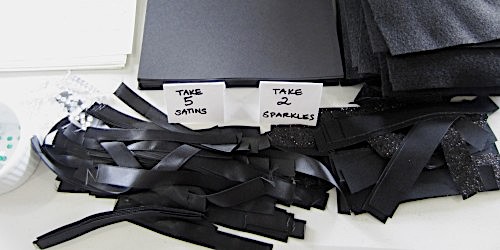
This scene so beautifully captures the essence of Karana’s story – both her intense solitude and her indomitable spirit – that we immediately envisioned this textural, black-on-black rendition of sky and sea, lit up by Karana’s “green star” and its constellation. The project is contemplative to do, too, and the finished art inspires contemplation.
SUPPLIES
black 8.5×11 cardstock, one per child
black 6×9 felt (a half-sheet)
copies of the constellation (in our printables), one each or to share
DIRECTIONS
Begin by reading the powerful Chapter 10 passage aloud before beginning the project. (You may want to type it up and have the kids glue it to the back; we can’t provide it here for copyright reasons). Then give the kids this introduction:
This project draws us closely into that beautiful, important scene in the story. There isn't a lot of color in it; in fact, it's mono-chromatic. Does anyone know what that means? (It means it's all made up of one color.) Karana says that there was "no difference between the sky and the sea"--yet she could tell which was which. Why? (Because the water reflected the light that shone from the stars.) The sky is soft and black, the stars are bright and clear, the sea is shiny and reflective. We're going to represent that scene in an art piece that lets us think about what that moment would have been like, and learn a little bit about astronomy and navigation, too.
1. Glue the black felt to the black card stock.
2. Trim satin and sparkle ribbons to the width of the felt, then glue to the bottom of the felt in your own pattern, representing the black shiny/sparkly sea.


3. Create the constellation out of rhinestones, using the image on the template as a guide (the green star is circled).
Star Facts to Share
Our planet spins under the sky once each day. Earth’s spin causes the sun in the daytime – and the stars at night – to rise in the east and set in the west. But the North Star, because it lies almost exactly above Earth’s northern axis, is a special case. Instead of appearing to move, it stays put, like the hub of a wheel, in the northern sky. This makes it useful for navigation.
By the time Karana’s green star had risen, the North Star had appeared, and by keeping this star on her left hand, she was able to keep moving eastward. Humans can’t actually see stars as green, because of the way our eyes work. (NASA provides a good explanation of this.) Karana’s green star could have been a planet crossing the constellation, but the author makes it sound like it’s a familiar part of the constellation, and the only planets that would be bright enough (Venus, Mars, Jupiter and Saturn) aren’t green either.
For our purposes, it makes the most sense to assume that the constellation is Serpens, one that was known to many ancient world cultures, including China and the Middle East. The “green” star then is Unakalhai, since it has the brightest apparent magnitude. We can surmise that O’Dell is using poetic license when he describes this pale yellow star as being green.
4. Finish by setting the North Star in the upper left-hand corner of the black felt sky. Tell the kids its placement is not to scale! It's just there to remind us of its place in the story, and of what we learned about its use in navigation.
For more about the astronomy, see our Learning Links section.
Set includes all worksheets and activity printables
A LitWits activity from the Rising Action
We like Karana’s style — being alone is no reason to wear something drab! The real Lone Woman of San Nicolas Island, when discovered in 1853, was wearing a feathered skirt, the inspiration for Karana’s beautiful cormorant-feather skirt in Chapter 18. Making such an elaborate skirt took time and effort — and an eye for design, don’t you think?
This activity emulates and emphasizes Karana's ability to make the most of what she had on hand. While we didn't want the kids to make an actual feather-skirt, for many reasons, we did want to honor her resourcefulness, ingenuity, and desire for beauty. So we had our kids design their own skirts in teams, giving each team 15 minutes to dress their model using black crepe paper, masking tape, and whatever they could grab from a pile of belts, ties, sashes, and other waistband materials.
SUPPLIES for each team:
brown paper bags
a few “waistband” items (sashes, belts)
a roll of black crepe paper
scissors
a roll of masking tape
Here are five teams’ best efforts! It was a fast-paced, high-energy competition, with the winning design selected by applause.

DIRECTIONS
Divide the kids into teams and have each choose a model on whom to create their skirt.
Tell them they’ll just have ten minutes to come up with a winning design, then send them to their stations and countdown to “GO!”
When the design time is up, have the models walk down a “runway” to show off their skirts.

Set includes all worksheets and activity printables
BookBites
A LitWits activity from the Resolution
BookBites is the part of our literary experience when we get to “taste the story.” We choose a food right out of the book, and it has to meet at least one criterion:
it’s important to a plot point
it has thematic significance
it’s unfamiliar for reasons of culture, era, or location
Our choice for this book hit on all three. In honor of Karana's leadership and survival skills we served:
dried devilfish, aka squid
dried seaweed, known as nori
You might want to package up these marine munchies with Karana and Rontu's specimen label, shown below--our kids loved that. It's included in our printables.

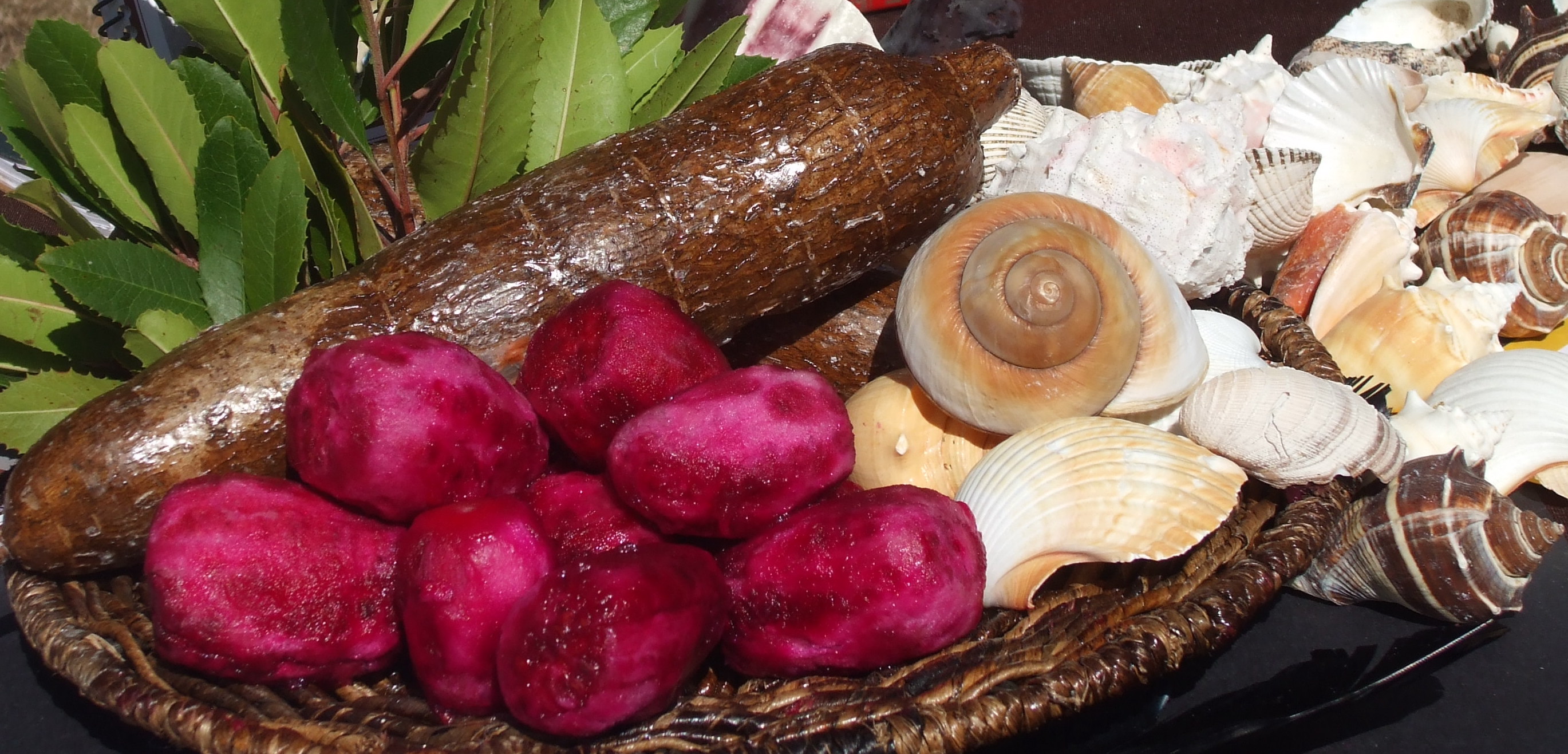
In another workshop, we served fresh cooked squid along with:
“tunas apples,” or prickly pears
yucca we had cooked the night before.
pieces of cactus paddle


While the kids were enjoying the tastes of the book, we had them do our Mystery Creature creative writing activity, which you'll find in the next section.
FOR DISCUSSION
Rontu's a very important part of this devilfish-hunting scene, in Chapter 14--but he almost wasn't around for it, was he! Why do you think Karana saved the leader of the dogs that had killed her little brother?
Sure, she might have wanted a companion; that's a universal human need. But what makes a good companion?
Any good relationship has to be based on mutual respect. Once she earns Rontu’s respect, the two can be friends.
What do you think the author wanted us to know about Karana, by having her save the leader and earn his respect?
The author is helping us see Karana as a leader, since both respect and compassion are necessary for good leadership.
When do we see Karana save Rontu again?
When she risks her own life to save him from the devilfish.
Through Rontu, the author is showing us Karana's respect, compassion, and courage. And it's her leader-quality weapon-making and hunting skills that save his life the second time... and bring us this delicious devilfish.
The specimen label is in our printables.
Set includes all worksheets and activity printables

A LitWits activity from the Falling Action
We had the kids make a friendship circlet like the one Karana made for Tutok--but without having to grind holes in abalone with thorns and sand. This activity celebrates Karana’s and Tutok’s brief friendship as well as the broader human need for friendship. It also honors the significance of gift-giving, and the gifts of nature.
SUPPLIES
faux sinew approx. 7' per child
cowrie shells 10 per child
shell button 3 per child
small linen bags (to distribute supplies and for the kids to use as a gift bag)
DIRECTIONS
Begin by reading the description of Karana’s circlet project in Chapter 22.
Attach the shells to the sinew (in the order of your choice) by folding the sinew in half first, then threading the ends through each shell from opposite directions and knotting the sinew in between each shell.
Set includes all worksheets and activity printables
The worksheets and printables used for our activities are sold as a complete set. Activity instructions and CCSS for the comprehensive use of our teaching ideas and materials is also included for grades 3, 4, 5 and 6.
Island of the Blue Dolphins left a deep, lasting impression on ten-year-old Jenny, because her teacher, while reading it aloud, paused to show films of what had happened to Karana's people, and of real, modern seal hunters in action. She remembers slipping over to her teacher in the dark as the reel-to-reel film whirred, to tearfully ask her "WHY? How could people do such awful things?" Her teacher gave her a hug, but no answer. For Jenny, that fourth-grade moment of realization that "this isn't just a story" would lead to letter-writing campaigns and other environmental efforts for decades to come; the book also got her reading lots more historical fiction. So of course it was a "natural" choice for one of our experiential workshops. It's gripping, and it's packed with great takeaway topics, which we're sharing below.
In our workshops, we did our best to make these teaching points tangible, meaningful, and memorable in the kids' hands. It's amazing how much kids can learn while they're "just" having fun!
Happy teaching!
Becky and Jenny

Takeaway 1
Takeaway 2

Takeaway 3

Takeaway 4
Explore these links to supplement your reading experience, research points of interest, and prompt tangential learning opportunities.
About the Book & Author
The author’s website: www.ScottODell.com
1983 interview with author (video, 15m)
Scott O'Dell author page - National Park Service, hereafter NPS
Interactive “Island of the Blue Dolphins” page - NPS
Photo of Rattlesnake Island, where Scott O’Dell grew up, now called Terminal Island.
Video of dolphins leaping beside a boat (After Scott O’Dell died and his ashes were scattered over the Pacific Ocean, a pod of dolphins leaped beside the boat of mourners all the way back to the bay.)
Story Supplements
For resources about the true story of the Lone Woman, see "Beyond the Book" below
Highly recommended "Follow the Story" with fact checks and primary/secondary evidence about the true story - Channel Islands National Park Site
"Visiting San Nicolas Island" - a (rare) visitor's blog and beautiful photos - Nightborn travel blog
Gorgeous photos of the island by William Reid at Stormbruiser.com
History and Culture
The history and culture of the Channel Islands - NPS
The Russian fur trade in the Channel Islands - NPS
The Nicoleno Indians - NPS
Geography
Interactive maps of San Nicolas island - NPS
San Nicolas Island map and information (PDF) - NPS
Nature
Toyon
Cactus (“tunas”) fruit
Kelp
Sea otters eating, playing, grooming (video)
Channel Island fox
Mi Pueblo markets for cactus pear, yucca, dried ginger, fresh and cooked octopus
How to cook yucca root
Astronomy
Serpens Caput - Constellations of Words
History of Unukalhai - Constellations of Words
Why green stars are rare - Live Science
Santa Barbara Mission
History of the Santa Barbara mission
Beyond the Book
History & culture of San Nicolas Island and Juana Maria, the "Lone Woman"
"Juana Maria . . . of San Nicolas Island" - about the moment the Lone Woman was discovered - PBS SoCal
Beautiful art of the Lone Woman by Holli Harmon - HolliHarmon.com
Extensive teacher resources about the book's setting and basis in history - NPS
"The Lone Woman’s Nicoleño Language" - Journal of California and Great Basin Anthropology | Vol. 40, No. 1 (2020) | pp. 7–37
Lone Woman teaching resources - archaeologist Steven Schwartz on Teach Channel Islands
About the photo thought to be of the Lone Woman - NPS
"Voices from the field" - many experts on the story and Juana Maria - NPS
Discovery of wild dogs’ bones on Channel Islands - Smithsonian
Lone Woman and Last Indian Digital Archive - University of South Carolina
“The Lone Woman and the Cave of the Whales” – Lone Woman and Last Indians Digital Archive, USC
Redwood boxes found by archaeologists on San Nicolas Island - NPS
“What Archaeologists and Historians Are Finding About the Heroine of a Beloved Young Adult Novel” – Smithsonian Magazine, 2017
Scholarship by Travis Hudson including the song The Lone Woman was singing when found - Journal of California and Great Basin Anthrolopogy (1981)
Scholarship: “Some Observations on the Material Culture of the Nicoleño” - includes specific details of Nidever's discovery of the Lone Woman (Schwartz)
“Stranded on the Island of the Blue Dolphins: The True Story of Juana Maria” (Blakemore, JSTOR)
Video presentations of scholarship, including the Lone Woman’s cache (California Islands Symposium 2012)
Discovery of the Lone Woman’s cave - LA Times
Scholarship: “The Lone Woman of San Nicolas: A New Hypothesis on Her Origin” (Daily)
Scholarship: “Original Accounts of the Lone Woman of San Nicolas Island” (ed. Heizer & Elsasser, UC Berkeley)
Visit the Channel Island - NPS
Wildlife conservation on San Nicolas Island
Gabrielino Indians, most closely related to the Nicoleno
Gabrielino Tribe Facts for Kids - Native Languages of the Americas
Gabrielino-Tongva website
"A Brief History of the Tongva Tribe" - (PDF) - Claremont University
"The Indians of Los Angeles County" - (PDF) - Southwest Museum Papers
Curriculum for teaching about Southern California Indians - Bowers
Chumash History & Cave Art
Wishtoyo Chumash Foundation
Chumash Painted Cave State Historic Park site
360 Virtual Tour of the Chumash Caves
Photo and description of a possible solar eclipse in a Chumash cave painting
Close-ups of individual figures in Chumash cave art
Chumash games and activities
Chumash language resources
Two Chumash songs
Voices of the Channel Islands – oral history project with residents’ images
Set includes all worksheets and activity printables
