Creative Teaching Ideas for
by Jules Verne (1864)
ON THIS PAGE: LitWits hands-on activity ideas and instructions, teaching topics, learning links, and more. Scroll on!
A LitWits activity from the Exposition
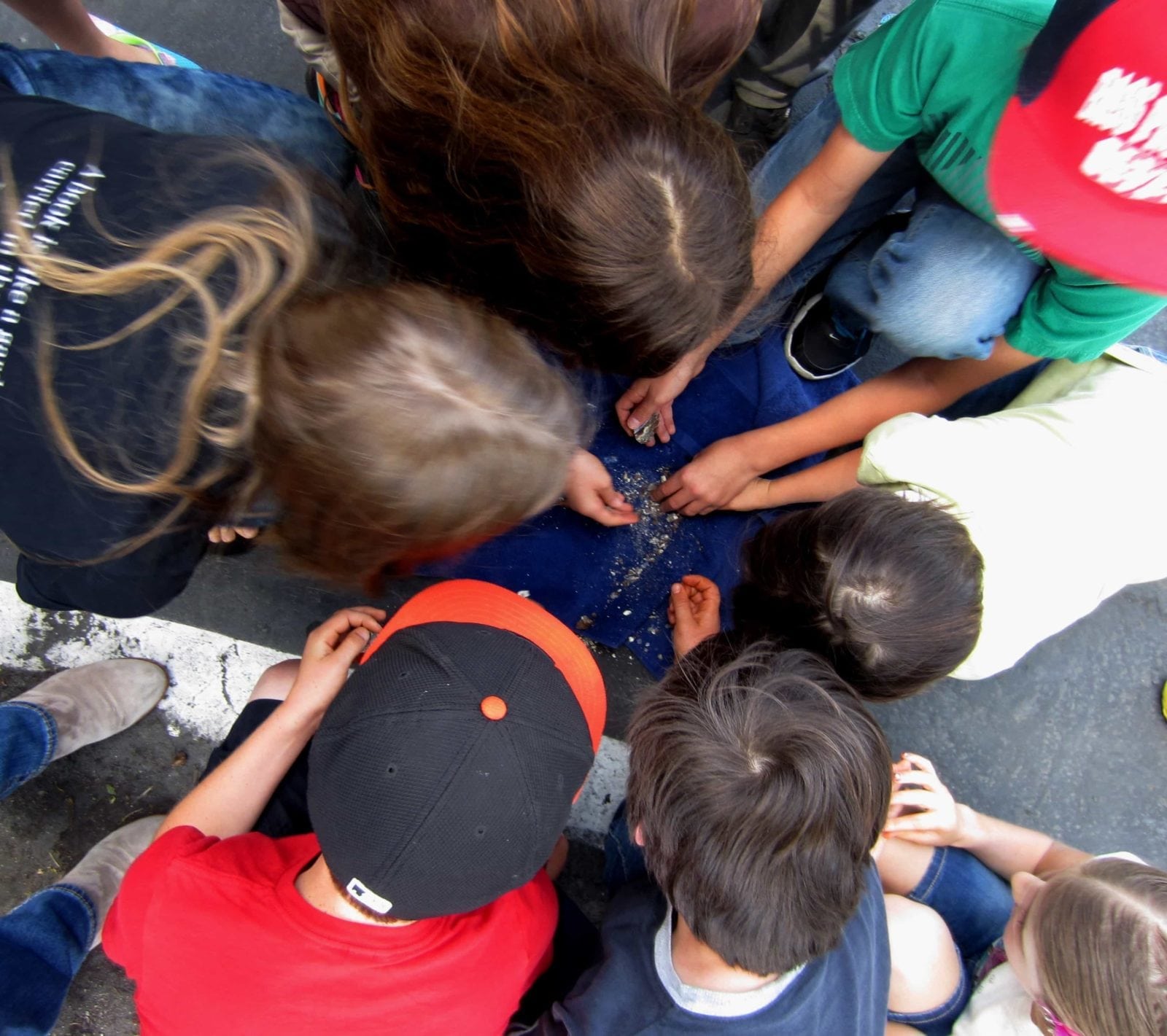
We can't take kids inside the earth but we can at least show them the inside of a thunderegg! What's that, you ask? Thundereggs, or lithophysae, look like humble, lumpy, oblong rocks or chunks of cement. They don’t look very important at all. But, just like the world described by Jules Verne, they're full of mystery and beauty inside.
AND, they're straight out of this story! Axel may not actually crack thundereggs, but he does sort and label them right before he cracks the code:
INSPIRATION
A mineralogist at Besançon had just sent us a collection of siliceous nodules, which I had to classify: so I set to work; I sorted, labelled, and arranged in their own glass case all these hollow specimens, in the cavity of each of which was a nest of little crystals.
But this work did not succeed in absorbing all my attention. That old document kept working in my brain. My head throbbed with excitement, and I felt an undefined uneasiness. I was possessed with a presentiment of coming evil. -Ch. 4
Axel's attempt to allay his growing fear doesn't work; in fact, his fears grow., leading to The Conflict of this story. He'll discover the courage inside him later.
But your kids can discover what's inside those nodules right now! And you can point out that there's always more to us inside than we (or someone else) might think.
DIRECTIONS
For a “smashing” experience getting to know these geological marvels, order some thundereggs online ahead of time and let the kids break them open with a hammer. Wrap the thundereggs in a towel first so no one gets hurt.
About thundereggs: Thundereggs begin to form when chunks of lava are catapulted from the depths of an active volcano. Over time, gasses locked inside these “lava bombs” seep out, leaving hollow spaces that are later filled with water carrying and depositing rich layers of minerals. Not all thundereggs are geodes. Learn more about thundereggs and how they form here, or watch this video about thunderegg hunters:
A LitWits activity from the Conflict
Everyone loves secret codes! Arne Saknussemm’s not the only one with serious coding skills. Let’s leave our own mysterious messages lying around to inspire future adventures!
This activity helps kids “be” a character for a bit, and it challenges their brains, too.

INSPIRATION
“What’s this?” he cried.
And he laid out upon the table a piece of parchment, five inches by three, and along which were traced certain mysterious characters. – Ch. 2
“Undoubtedly it is Runic,” said the Professor, bending his brows; “but there is a secret in it, and I mean to discover the key. [ . . . ] This is what is called a cryptogram, or cipher,” he said, “in which letters are purposely thrown in confusion, which if properly arranged would reveal their sense. Only think that under this jargon there may lie concealed the clue to some great discovery!” – Ch. 3
SUPPLIES
parchment paper cut into in 5″ x 3″ pieces
encoding sequence (from the Translations worksheet in our printables)
DIRECTIONS
Have the kids encode a message in runes, then write it on parchment. Tear the edges and wrinkle it up for an aged effect. Suggest they tuck this ancient fragment in a book that a friend or sibling is reading, and discreetly watch as s/he discovers it.

FOR DISCUSSION
"Descend, bold traveller, into the crater of the jokul of Sneffels, which the shadow of Scartaris touches before the kalends of July, and you will attain the centre of the earth; which I have done, Arne Saknussemm." - Ch. 5
Ask the kids to describe Axel's reaction when he first deciphers the code, in Chapter 4. Why does he react this way? What is he afraid of?
Now ask them to describe the professor's reaction when he figures it out, in Chapter 5. What kind of reaction does he have? Why is it so different from Axel's? What motivates him?
As a group, list all the differences between the two men, and discuss how those differences might affect the way each one feels about the message from Arne.
Point out that Axel's resistance creates the Conflict in this story--the main Conflict is always what will take most of the story to resolve. He's afraid, but we know he's going to take that journey anyway, or the book would be just five chapters long. So we know he'll have to overcome his fear--not likely before the journey starts, but by the time it ends.
Obviously surviving a dangerous journey is a big conflict too, so you might talk about the difference between outer (plot) and inner (character) conflict. The outer conflict is more exciting, ,but our focus is on the inner, because what the protagonist learns about himself or herself is much -- well, deeper. :)
A LitWits activity from the Rising Action
Axel doesn't want to go on this journey, but Professor Liedenbrock can hardly wait. Such an opportunity for exploration and discovery is one of his greatest dreams.
Without dreams, no one would get anywhere – let alone to the center of the earth. If Jules Verne hadn’t had any, the world would feel a smaller place today. But dreaming and doing need to be connected, starting with the dream’s expression! Finding the language for a dream makes it seem more real.
This activity gets kids exercising their imaginations, writing creatively, and practicing verbal expression of their dreams. It might even mark the beginning of an odyssey or two . . .
INSPIRATION
But is it not a dream? Whither is it carrying me? My feverish hand has vainly attempted to describe upon paper its strange and wonderful details. I have forgotten everything that surrounds me. The Professor, the guide, the raft—are all gone out of my ken. An illusion has laid hold upon me. – Ch. 32
DIRECTIONS
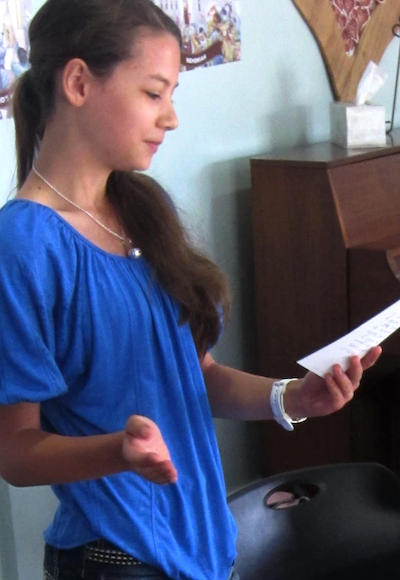
Have the kids write down a dream--a daydream, life dream, or a sleeping dream. Ask volunteers to read their dream aloud with Verne-worthy drama. (We always offer to read kids’ writing out loud for them if they’d like — even the shyest writers are enormously pleased at hearing their words read aloud, with inflection and drama.)
A LitWits activity from the Rising Action
BookBites is the part of our literary experience when we get to “taste the story.” We choose a food right out of the book, and it has to meet at least one criterion:
it’s important to a plot point
it has thematic significance
it’s unfamiliar for reasons of culture, era, or location
We had fun convincing the kids that their snack was going to be our travelers’ “last topside meal” of lichen soup and fish in sour butter, with blanda to drink. Blaaaaccchh!! We read the Chapter 13 excerpt aloud, and stressed the importance of trying something new that was significant to the plot. We actually had them talked into it! They were such TROOPERS!
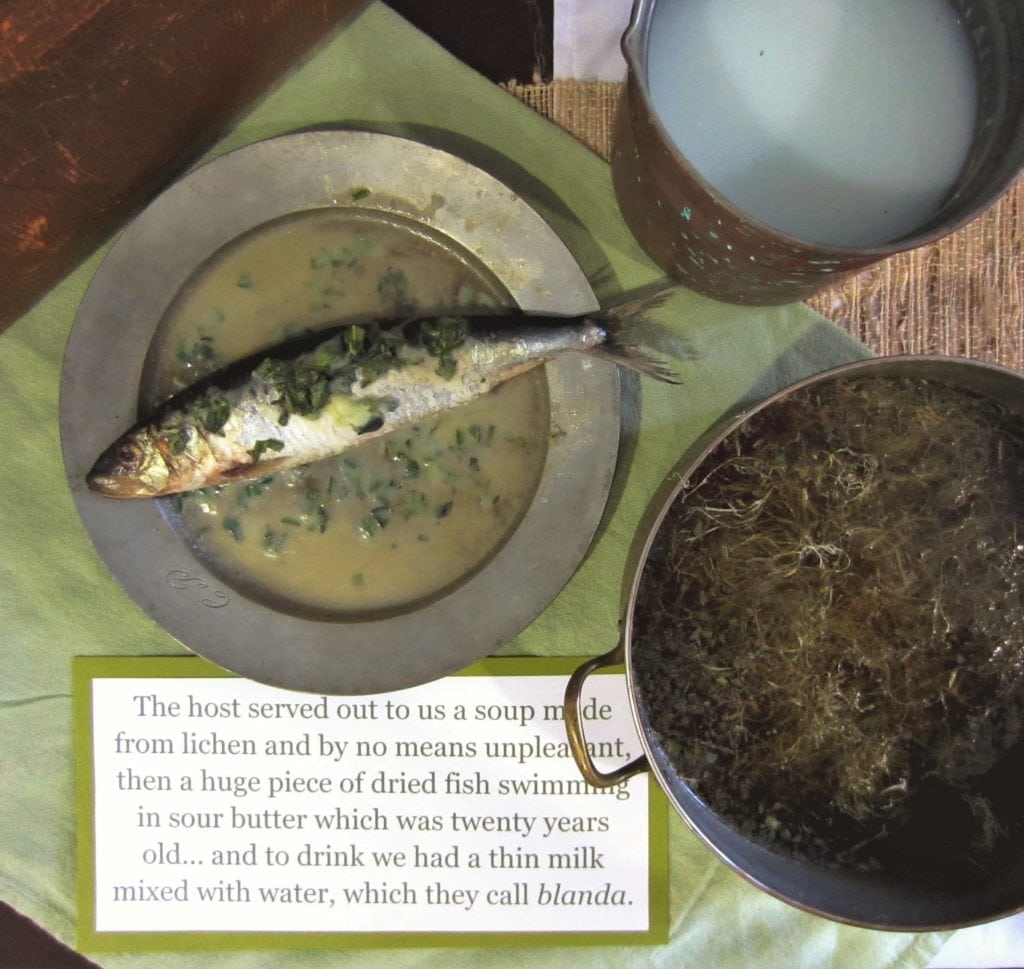
They were definitely relieved, though, when we told them they were really having another “last meal” of jerky and biscuits instead, with water bottled directly from the source — the Hansbach! We told them we'd gone down the volcano to fill their bottles, and their eyes opened wide. They're pretty sure we’ll go to any lengths (depths) for authenticity's sake.
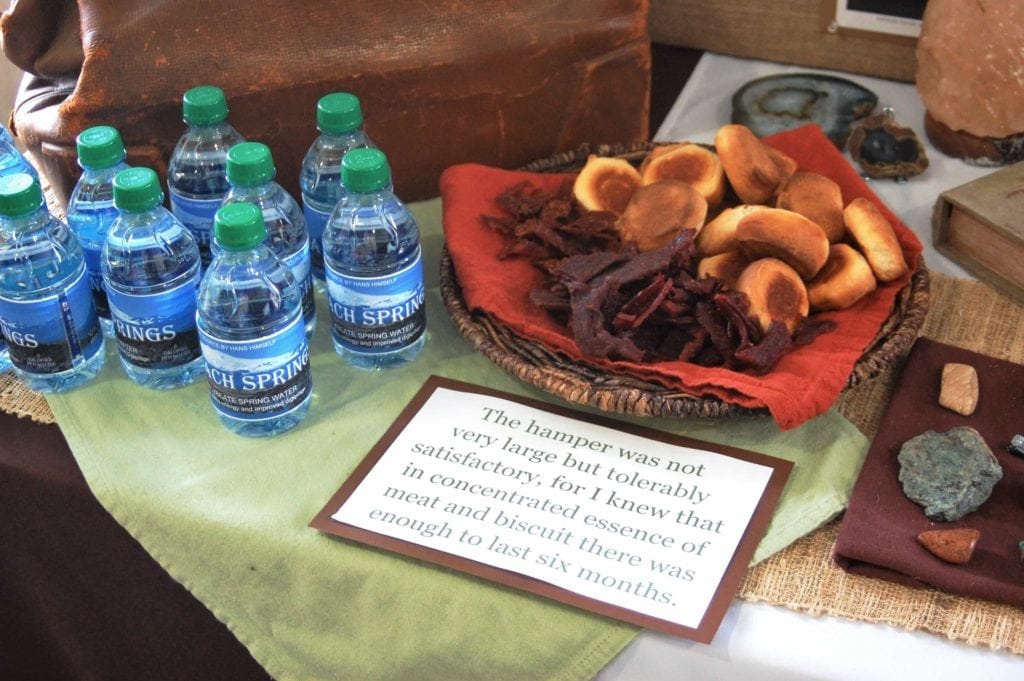
While the kids ate and sipped their rations, we listened to Icelandic folk music and shared a few fun facts about Iceland.
INSPIRATION
Jerky and biscuits
“Eat what is left to the last crumb, and recruit our fading strength. This meal will be our last, perhaps: so let it be! But at any rate we shall once more be men, and not exhausted, empty bags.”
“Well, let us consume it then,” I cried.
My uncle took the piece of meat and the few biscuits which had escaped from the general destruction. He divided them into three equal portions and gave one to each. This made about a pound of nourishment for each. The Professor ate his greedily, with a kind of feverish rage. I ate without pleasure, almost with disgust; Hans quietly, moderately, masticating his small mouthfuls without any noise, and relishing them with the calmness of a man above all anxiety about the future. – Ch. 42
Water
“Nothing could be better for the digestion,” said my uncle. “It is highly impregnated with iron. It will be as good for us as going to the Spa, or to Töplitz.”
“Well, it is delicious!”
“Of course it is, water should be, found six miles underground. It has an inky flavour, which is not at all unpleasant. What a capital source of strength Hans has found for us here. We will call it after his name.”
“Agreed,” I cried.
And Hansbach it was from that moment. – Ch. 23
You'll find the Hansbach water labels in our printables. Save the empty bottles for the volcano project, if you’re doing that.
A LitWits activity from the Rising Action
Put old-fashioned characters in modern situations, and guess what — they still act the same! They might have to adapt their tone or slang to suit the situation, but they’ll still be who they are.
This activity naturally gets kids thinking about the craft of characterization, and gives them a chance to “show not tell” (another craft skill). It also emphasizes the point that your words and actions create certain expectations of you!
It also gives the kids a chance to act. We’re always surprised by how many kids love to ham it up on a stage. In this photo, the passionate Professor has just been told, after standing in line forever, that the Lava Mountain ride is being shut down for maintenance.

DIRECTIONS
Tell the kids they’re going to act like a character who has journeyed through time and must deal with a modern situation. Have them decide which character they’re going to be – Axel, Otto, Hans, or Grauben – and write that name on a piece of paper. Then, when the prompt is read to them, they should respond to the prompt as that character would. Everyone else will guess the character’s identity.
A LitWits activity from the Climax
Your kids will love creating a miniature landscape around an ominous volcanic mountain, then watching it blow its top with multi-colored lava and “tephra,” the pyroclastic volcanic bombs the Icelanders call “sting.”
Update: there's now a volcano template in our printables set.
INSPIRATION
Before: “What!” I shouted. “Are we being taken up in an eruption? Our fate has flung us here among burning lavas, molten rocks, boiling waters, and all kinds of volcanic matter; we are going to be pitched out, expelled, tossed up, vomited, spit out high into the air, along with fragments of rock, showers of ashes and scoria, in the midst of a towering rush of smoke and flames; and it is the best thing that could happen to us!”
“Yes,” replied the Professor, eyeing me over his spectacles, “I don’t see any other way of reaching the surface of the earth.” – Ch. 48
During: I have a confused impression left of continuous explosions, loud detonations, a general shaking of the rocks all around us, and of a spinning movement with which our raft was once whirled helplessly round. It rocked upon the lava torrent, amidst a dense fall of ashes. Snorting flames darted their fiery tongues at us. There were wild, fierce puffs of stormy wind from below, resembling the blasts of vast iron furnaces blowing all at one time; and I caught a glimpse of the figure of Hans lighted up by the fire; and all the feeling I had left was just what I imagine must be the feeling of an unhappy criminal doomed to be blown away alive from the mouth of a cannon, just before the trigger is pulled . . . – Ch. 53
After: Above our heads, at a height of five hundred feet or more, we saw the crater of a volcano, through which, at intervals of fifteen minutes or so, there issued with loud explosions lofty columns of fire, mingled with pumice stones, ashes, and flowing lava. I could feel the heaving of the mountain, which seemed to breathe like a huge whale, and puff out fire and wind from its vast blowholes. Beneath, down a pretty steep declivity, ran streams of lava for eight or nine hundred feet, giving the mountain a height of about 1,300 or 1,400 feet. But the base of the mountain was hidden in a perfect bower of rich verdure . . . – Ch. 54
SUPPLIES for each child
air dry clay in red or white, or salt dough - or just use the volcano template in our printables
foliage (assorted mosses, twigs, leaves etc.) for "the perfect bower of rich verdure")
small empty plastic water bottle
lava mix (or you can just send the formula home with the kids): : DRY ingredients: 2 T baking soda and 20 marshmallow bits (for pyroclastic bombs). WET ingredients: 1/2 cup vinegar, a few drops of liquid dish soap, and a few drops of food coloring.
DIRECTIONS
Gather supplies and, if possible, head outside for construction and eruption. Have kids use the clay to build a volcanic mountain around the empty water bottle and around the base. Don’t cover the hole or drop clay into it. Decorate with pebbles and shrubbery to create a miniature doomed landscape.
Place dry ingredients in volcano.
Read the inspiration for the project, above. Then distribute wet ingredients in paper cup.
Pour the cup of goo into the volcano and be mesmerized by the effects!
As an alternative to clay, wrap our template around a small bottle, then add baking soda.
THE EXPLANATION
Vinegar and baking soda react with each other because baking soda is a base and vinegar is an acid. When they meet up with each other, a new compound (fizzy carbon dioxide) is formed through the exchange of atoms. Here are several thorough explanations of this process.

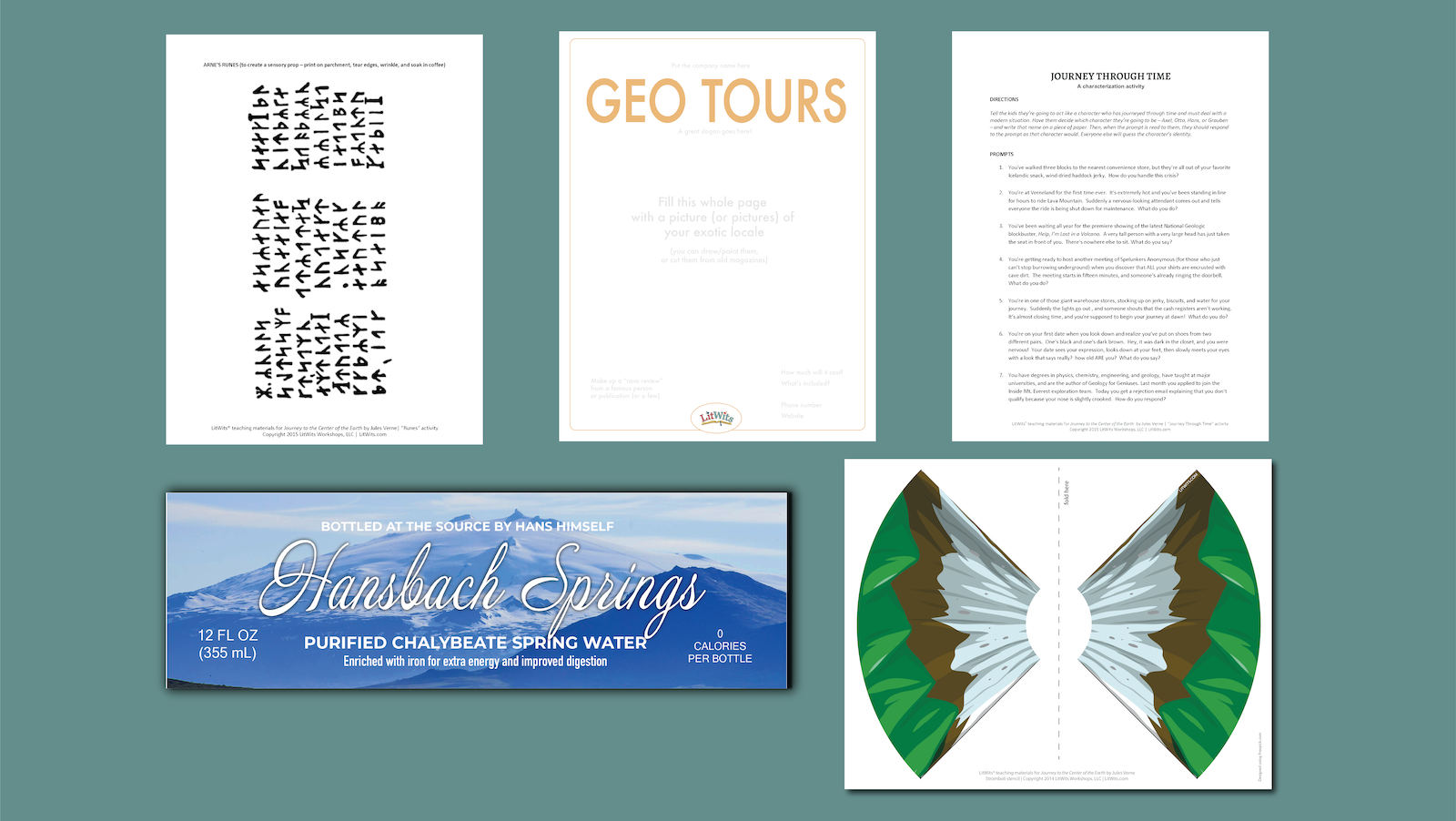
The worksheets and printables used for our activities are sold as a complete set.

Common Core State Standards Alignment for the comprehensive use of our teaching ideas and materials is also included for grades 3, 4, 5 and 6.
%20banner%20copy.jpg)

Takeaway 1

Takeaway 2
Whether we’re looking at a closed door, a wrapped gift, or a sealed mine entrance, it’s a human characteristic to want to know “what’s inside” — especially if the answer seems forbidden. In this book even the professor himself isn’t absolutely sure it’s safe to go to the core, but he wants to do it anyway. Jules Verne makes his fantastic underworld scenes seem realistic--but what really lies beneath the surface of the earth, and is it possible to get to the core? Here's a great chance to peel back the layers of the earth, talk about volcanic processes, and crack open a thunderegg (or watch someone else do it) to give kids a look inside a mysterious sphere.
Hands-on connections in this guide: rock and mineral props, “Discovering What's Inside” activity, “Stromboli Erupts” project, geology handout
Takeaway 3
Whether it’s a secret message, a classical allusion, or someone’s actions, this book is loaded with translation opportunities. We're just as intrigued as Axel and the professor about that cryptogram! Names in this book can be cryptic, too — what’s an axle, anyway? (The part that keeps the wheels on and drives the whole thing forward!) Behavior and tone are up for translation as well, and parallels and symbols in literature have us making some interesting interpretations. The cryptogram tucked in the old book isn't the only hidden message in THIS book! And then there's the whole subject of the many translations OF this book, and of the power that translators have over an author's intent.
Hands-on connections in this guide: “Arne’s Runes” activity, “Journey through Time” activity, encoding handout, runes prop
Explore these links to supplement your reading experience, research points of interest, and prompt tangential learning opportunities.
About the Book & Author
Jules Verne bio - Britannica
Jules Verne bio – Biography.com
Jules Verne bio – Goodreads
"Jules Verne: The Father of Science Fiction?" - The New Atlantis
"Jules Verne: The Failed Stockbroker Who Foretold The Future" - Later Blooomer
Online text of Journey to the Center of the Earth - most authentic translation - Project Gutenberg
Reviews – Goodreads
Review - Common Sense Media
Illustrations in 1867 edition - Wikicommons
Jules Verne titles with links to all editions - JulesVerne.ca
8 Jules Verne Inventions that Came True - Nat Geo
"The impossible voyages of Jules Verne" - about two of his lesser-known but fantastic books - The Guardian
Story Supplements
"Stairway to Heaven at Vor Frelsers Kirke" (a personal experience of the Copenhagen church with the spiral staircase) - Wandering Off Somewhere blog
"The Ultimate Guide to Iceland’s Snæfellsnes Peninsula" - Capture the Atlas
"The Geology Of Jules Verne's Journey To The Center of the Earth" - Forbes
Structure of the Earth - NatGeo Kids
Video about the depths and layers of the earth - The Good and the Beautiful Homeschool Science
Basic facts about the earth’s structure, for kids - Kidsgeo.com)
The rock cycle, for kids – scroll down - Kidsgeo.com
Geodes, for kids - Wonderopolis.com
Fascinating history of Icelandic runes - GuideToIceland.com
Geology lessons and charts based on this book- Purdue University
Geology overview and handouts for this book, in comic book format - Walden Media
Caves of Iceland -Guide To Iceland
The midnight sun as seen from Snaeffels’ summit in the story - Guide to Iceland
A mineralogist at Besançon had just sent us a collection of siliceous nodules, which I had to classify: so I set to work; I sorted, labelled, and arranged in their own glass case all these hollow specimens, in the cavity of each of which was a nest of little crystals. - Ch. 4