Creative Teaching Ideas for

MY SIDE OF THE MOUNTAIN

by Jean Craighead George (1959)


ON THIS PAGE: LitWits hands-on activity ideas and instructions, teaching topics, learning links, and more. Scroll on!

About the story


Sam Gribley, who dreams of living in the wild alone, runs away to the Catskill Mountains. There he uses his wits, trial-and-error, the local library, and a wandering professor to gain survival skills. As he creates a home in a hollow hemlock, catches or finds his own food, keeps a journal on bark, and trains a peregrine falcon, he also strengthens his inner self-reliance. Newbery Honor winner My Side of the Mountain  indulges almost every child’s fantasy of living independently (at least for awhile)!

Read reviews / buy the book here
We make a small commission on anything you buy through our Amazon affiliate links.

Hands-on Fun

Making a plan . . .


There are many ideas in this Hands-on Fun section—don't feel you have to do them all! Go with whatever works best for you and your kids. If you want to focus on a particular teaching point, our Takeaway Topics section can help you narrow down the activity options. And you can enhance discussions during any activity with audiovisual aids from Learning Links or story objects from Prop Ideas.

In our workshops, we do all the activities on this page, in order of the story's narrative arc. You might find our narrative arc discussion guide helpful for sequencing your activities, teaching the important concept of the arc, and helping kids learn how Jean Craighead George put My Side of the Mountain together.

Sam's Sketches

A LitWits activity from the Rising Action

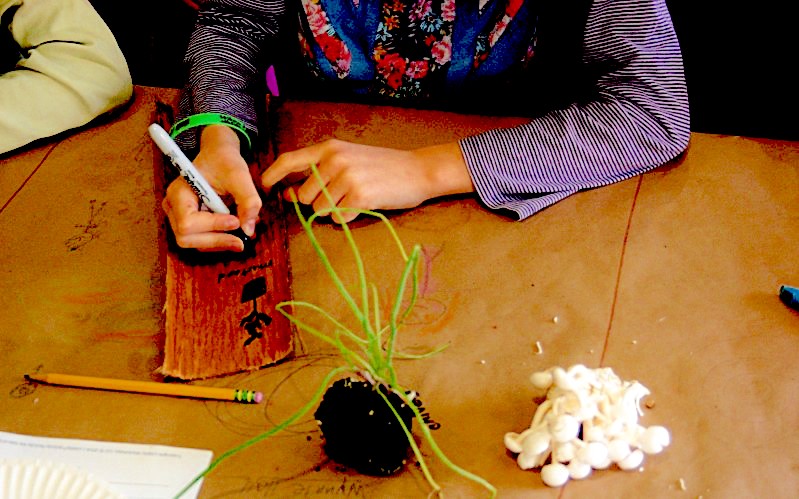
This activity lets kids become botanists, identifying plants and sketching them on birch bark, just like Sam! Botany is another word for the scientific study of plants. Careful observation, noticing what makes one plant different from another, is an important part of that study, and can even be the difference between life and death in a situation such as Sam's. We especially love this project because it combines art and science in a truly beautiful way.


SUPPLIES

  • live models:  watercress, wild garlic, borage, dandelion, mint, or other living plants, single or in six-packs
  • large pieces of birch bark or sycamore, eucalyptus or other bark found on the ground in woods, parks, back yards, or local parks (or available in bulk here)
  • black felt-tip markers

DIRECTIONS

We're going to record our observations like Sam did, through drawings of one or two of the plants of our environments.  But first, let's take a good look at the birch bark, which already has art on one side. 

  • What do you notice about it? (No two pieces are the same!)  
  • What are the textures and colors?
  • What do you think are the purposes for these features of the bark?
 
Now let's look at the sketches in your My Side of the Mountain  book. Notice how simple these drawings are. You don't have to be an amazing artist to do botanical sketches. Just practice noticing the shape of the leaves and what the blossoms or stems are doing! 

Now we'll try it ourselves. If you haven't already collected some plants to sketch, take five minutes to go outside and gather two specimens of botany. A weed, a flower on a stem, or a twig with a couple of leaves on it. You might take some clippers or scissors with you. Make sure that what you gather isn't poison oak, or a flower you're not supposed to pick. You might even choose a houseplant, and bring the whole thing back to the table.


Use the marker to draw the basic outline of the plants, in Sam's style, on the smooth (in)side of your birch bark. The important skill here isn't artistry, but observation. Notice what makes the plant you're drawing look like the real plant. Follow the line of the leaf, stem, bud. 

If you know the name, label your drawing. If you don't, do some research later to learn the name of your specimen. When you're done, put it somewhere where the mice won't make nests in it! These make nice art pieces and should be displayed.

Falcon Tack

A LitWits activity from the Rising Action

A jess (plural "jesses") allows a falconer to keep control of a bird. It's a thin strap, traditionally made from leather, used to tether a hawk or falcon in falconry.

You may not yet have a falcon like Sam does, but in the meantime, this jess will make a great bookmark—or chicken leash!

You might want to show a falconry video while the kids are working, such as "Sport of Kings - Award winning Falconry Video Project" by Project Upland or “The Art of Falconry: Roaming the Countryside with Trained Birds of Prey,” from England.

SUPPLIES

scissors
small feather, any kind, for decor (available in bulk here)
1/8" Leather lace (approx. 12"/child)
1/4" Leather strap (approx 3"/child)
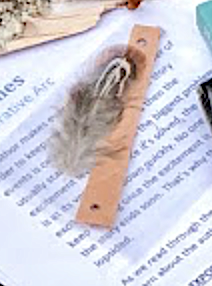
Teacher prep: use a leather-punch or X-acto knife to poke a hole or slit in each end of the 3" strap, like this:

DIRECTIONS

  1. Tie a simple knot in the very end of the long leather lace (leash). Before tightening it completely, tuck the bottom end of the feather into the knot, for decoration. Then finish tightening.

  2. Use scissors to cut the other end of the leather leash at an angle, to make it "sharper." 

  3. Poke the angled end of the long leather leash through one of the holes in the short strap, then the next, so that the strap forms a closed U-shape. If necessary, enlarge the hole/s with the tip of a pencil. 

  4. Draw the leather leash all the way through the holes in the strap until stopped by the knot. That's it! 

Bando's Pots

A LitWits activity from the Rising Action

In Chapter 12, Sam and Bando dig clay from the bank of the stream to make pottery—“not Wedgwood,” as Bando remarks, “but containers.”  His looked "like flower pots with lids." After drying their pots in the sun they bake them in handy Bando’s other invention, a clay oven. Our jam pot project aligns with this story point, and emphasizes the value of adults to Sam.  

SUPPLIES: Pottery clay (or Sculpey®) in chunks on paper plates


DIRECTIONS

Distribute chunks of clay on paper plates, warn the kids not to wipe their hands on their clothes, and suggest that they make the bottom of the pot first—and the pot before the lid. The pots are made by “pinching” the clay into shape.

We didn’t have a kiln to fire our clay pots, or a Bando to build one, but we found that several hours (or less, if using Sculpey®) in a warm oven hardened the clay enough to preserve our keepsakes.

Here's a video from Art for Kids Hub of a man showing a boy how to make a pinch pot—we thought this was a lot like Sam and Bando!  While the kids are watching, have them start working the clay with their hands. It may start off quite hard, and need the warmth of little hands to get it soft enough to mold.


It's not mentioned in the video, but kids should reserve about a quarter or a third of their clay to make into a lid, to keep the mice and bugs out . :)

FOR DISCUSSION

We asked the kids why, when Bando went into town for sugar, he didn’t think to bring back some jam jars as well. After all, if it wasn’t cheating to buy sugar, why not go ahead and buy some jars and lids?  Of course, the author is giving the duo something creative to do, for the reader's sake.  It's our job as readers to "suspend disbelief"—just go with it, for the fun of the story.  We talked about the concept of  suspending disbelief, and how enjoyable it is to put your logic on hold for a while.  

After all, if Bando had done the logical thing, we wouldn't be making jam-pots, would we! 

Being Sam

A LitWits activity from the Rising Action

By imagining and acting out what Sam would do in some modern scenarios, kids get “under his skin”—and understand what makes him Sam.  And they get a big kick out of the silly situations we’ve put him in!  This activity gives you a chance to talk about character  as a person’s known (and expected) qualities.

SUPPLIES & DIRECTIONS

Prep:  If you create a hemlock hideout, “Sam” can hang out inside until summoned. Just hang a brown sheet over an open closet door and cut a slit, from the ground up, in the center.

We've written prompts of super fun scenarios we think your kids will like—they're available in our printables. (You could always come up with your own modern-day situations to put Sam into—just be creative!) After reading each prompt quite dramatically, invite a volunteer to “be Sam” and respond as he would. Other students can play the supporting roles so “Sam” has someone with whom to interact.

Ask the kids why  Sam might respond that way, and how they knew that. What does that say about the kind of person he is?  What are his traits, or tendencies?  Tell the kids that character traits help us predict what someone might do in a particular situation — in books, and in life. You might ask them, “What do you want people to come to expect of you?”

BookBites

Mountain Munchies

A LitWits activity from the Rising Action

BookBites is the part of our literary experience when we get to “taste the story.”  We choose a food right out of the book, and it has to meet at least one criterion:

  • it’s important to a plot point
  • it has thematic significance
  • it’s unfamiliar for reasons of culture, era, or location
 
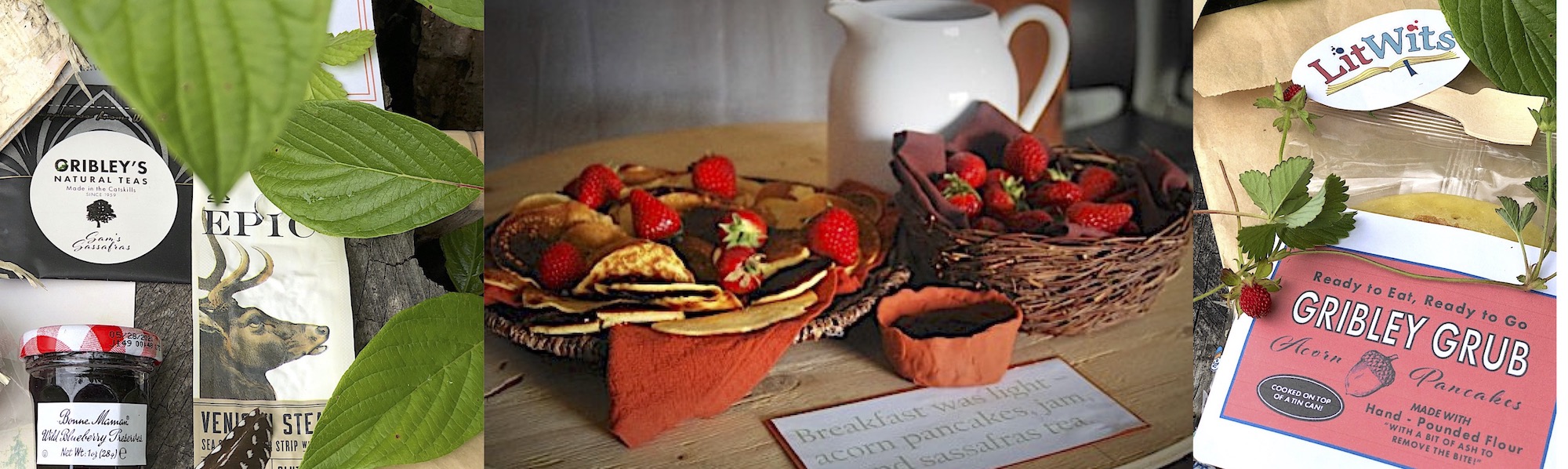
We pretended we were going to serve that awful possum stew with lousewort, lichen, and snakeweed, but the kids didn’t fall for it. They were good sports about nibbling the dandelion greens, but thanks to Sam’s constant references to pancakes, they knew something better was coming!  Sure enough, we served much more delicious fare from several chapters, per the quotes in italics below:


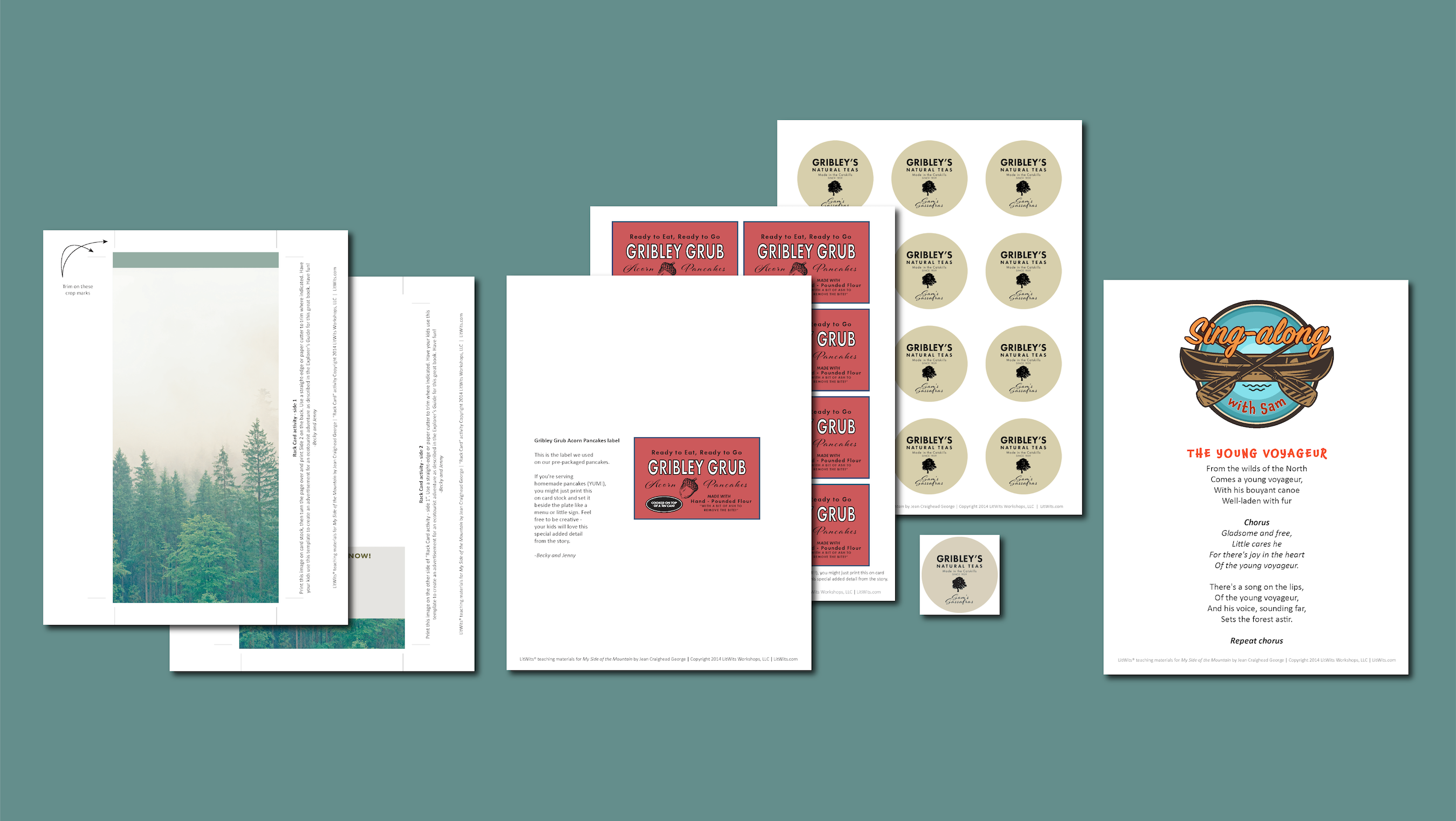
While the kids were enjoying the tastes of the book, we sang “The Young Voyageur,” the song that brings Sam and Bando to tears in Chapter 2.  The title is from an 1884 story about boys from the southern US trying to make it to the far north of Canada.  Try to get everyone to sing or whistle along between mouthfuls of pancake! It’s especially fun when everyone makes up their own tune. The lyrics are included in our printables.

FOR DISCUSSION
 
Read the passage describing this meal, in the chapter “I Learn About Birds and People.”  Ask the kids if Bando and Sam's dad treat him as a child or a man. What do they do for him?  There are many adults who help Sam in this story—you might ask the kids to name some, and how they helped him—but these two important men show up to applaud, encourage, and contribute in small ways without taking over. They believe in Sam and admire him, and step back with confidence in him, allowing Sam to learn and grow. 

Ask the kids to name some of the other adults who helped Sam, and describe how they helped without taking over, so he could "do it himself."  This is important for Sam as a person, and also for us as readers.  We like our heroes to figure things out for themselves.

These are the Voyageurs

A LitWits activity from the Rising Action

Time for a concert celebrating Sam’s reunion with civilization—which he secretly wanted, after all.  No more travels for this “Young Voyageur”—until he’s 18! 

Does it really sound sad, like it says in the book? Play this instrumental-only recording for the kids, and ask what they think! Then see if they can play the tune on their very own slide whistles! (We thought about having our kids carve their own willow whistles, but decided that level of authenticity just wasn't worth the risk.)  If they'd like to sing along, there's a lyrics sheet in our printables. 
You can choose to do this activity during BookBites—we did that, because Sam, his dad, and Bando played music after their Christmas breakfast.
The Hemlock Hotel

A LitWits activity from (AFTER) the Falling Action

Sam takes one look at that giant hollow hemlock tree and knows it’s home.  But in the end, his family brings civilization to the woods, and the tree becomes a tourist attraction—something he’s not too happy about. For this project, though, we embraced that development, and had fun with a words-and-pictures “what if” activity.

If you have the kids do the setting worksheet first (in our printables), they'll have a better idea of the geographical context for this activity.

SUPPLIES

  • Colored pencils and/or markers, crayons
  • Rack card template from our printables collection*

SETUP & DIRECTIONS

Let's take the story a few steps into the future, and imagine Sam as the successful owner of an EcoTourism business. By now, people are paying lots of money to come stay in his hollowed-out hemlock trees and eat his acorn pancakes. 

A national travel agency has gotten wind of this exciting adventure and wants to book trips to the campsite.  They’re offering a free trip to the artist who designs the best rack card!

You may have seen rack cards at an airport or a Visitor Center. Businesses make them to tell tourists about "fun things to do" (for a price) in the area, like an amusement park, or a ropes course, or surfing lessons. They're basically ads you can take with you.
 
Here's your chance to design an advertisement for the Gribleys’ business. What would it be called? What features would draw people to his unique vacation destination? What might be some slogans?  What do YOU think would be the most appealing aspect of a vacation with Sam in his Catskills getaway? 

Here are some items your card might include:
 
An invitation or slogan 
            Come visit "My Side of the Mountain"

A list of features
            "Sleep in a tree!"
            “Bathe in a stump!”
            "Hunt with a falcon!"
            “Savor forest-to-table dining!”
            "Play with a racoon!" 

Endorsement/s (quotes from a pretend newspaper, celebrity or fellow tourist) 
            "Totally worth the flight. I'll be returning every year.”  —Migra Torie Byrd
            “I’ve never eaten so well!” – Chef Beau R. Dee
            “Rustic elegance by an artisanal designer.” —Conde Nest Magazine
            “Sure to inspire a new niche in the travel industry.” —The Glamping Gazette

Costs/length of each tour or stay
            per person/double occupancy
            extra charges for . . .  (feather pillows? picnic baskets packed with pokeweed punch and possum sop?)

Contact information for reserving your tree
            website, phone number, email


*Alternative:  Instead of a rack card, one of our kids designed a travel poster out of white card stock and colored pencils, as shown below. 

The Character Inside You

A LitWits activity

Jean Craighead George used “creative license” to make us believe unbelievable things, but she did it so well, we gladly suspend disbelief.  We talked about this concept before setting the kids out on a storymaking journey of their own.

FOR DISCUSSION

First, we asked them to imagine they found My Side of the Mountain  on the nonfiction shelf, and began to read it thinking it was true. What parts would strike them as odd or impossible, if any?  Would they ever handle wild animals without worrying about bites or rabies? If they suddenly started eating only weird new foods, wouldn’t they probably get a stomachache? Many plants are poisonous to eat or touch. (Remind them never to eat wild foods or approach wild animals without adult supervision.)  Have they ever had poison ivy?  Ugh!

Ask the kids what their parents would do if they disappeared into the woods for a year. Of course, they’d use cell phone tracking, aerial surveillance, search-and-rescue teams with dogs, infrared cameras, social media and website postings on the Internet, televised pleas, and more!  In real life, parents would stop at nothing to find a missing child. But if Sam had been found too soon, or his parents hadn't allowed his adventure in the first place, the story would have been over before it started! 

We talked about how a good story has a mix of credible and incredible elements, so it sounds just realistic enough—but we don't have to believe every single thing could really happen.

Then we got the kids thinking about who their own alter-ego problem-solver might be, and how they might plan out their very own  narrative arc. (Because we begin each workshop with our narrative arc worksheet, the concept was already familiar.)

DIRECTIONS

Read aloud the intro to the  "Character Inside You" writing worksheet, emphasizing that the point is to have an imaginary character act out their fantasies—just as Jean Craighead George did.
 
Have them draft their own narrative arc (page 1) for 5-7 minutes—this time limit prevents over-thinking.  Then, at the signal, they should start writing a story.  Tell them it’s okay if they only outlined and wrote two plot points!  Many will be inspired to keep on going long after the workshop/class is over.  

After 10 minutes, invite writers to share aloud. (For us, this is entirely voluntary). Some may only want to share a few points of their narrative arc, which is perfectly fine.   Encourage them to continue, and maybe even write a whole book—after all, there's a Jean Craighead George inside all of them, too!

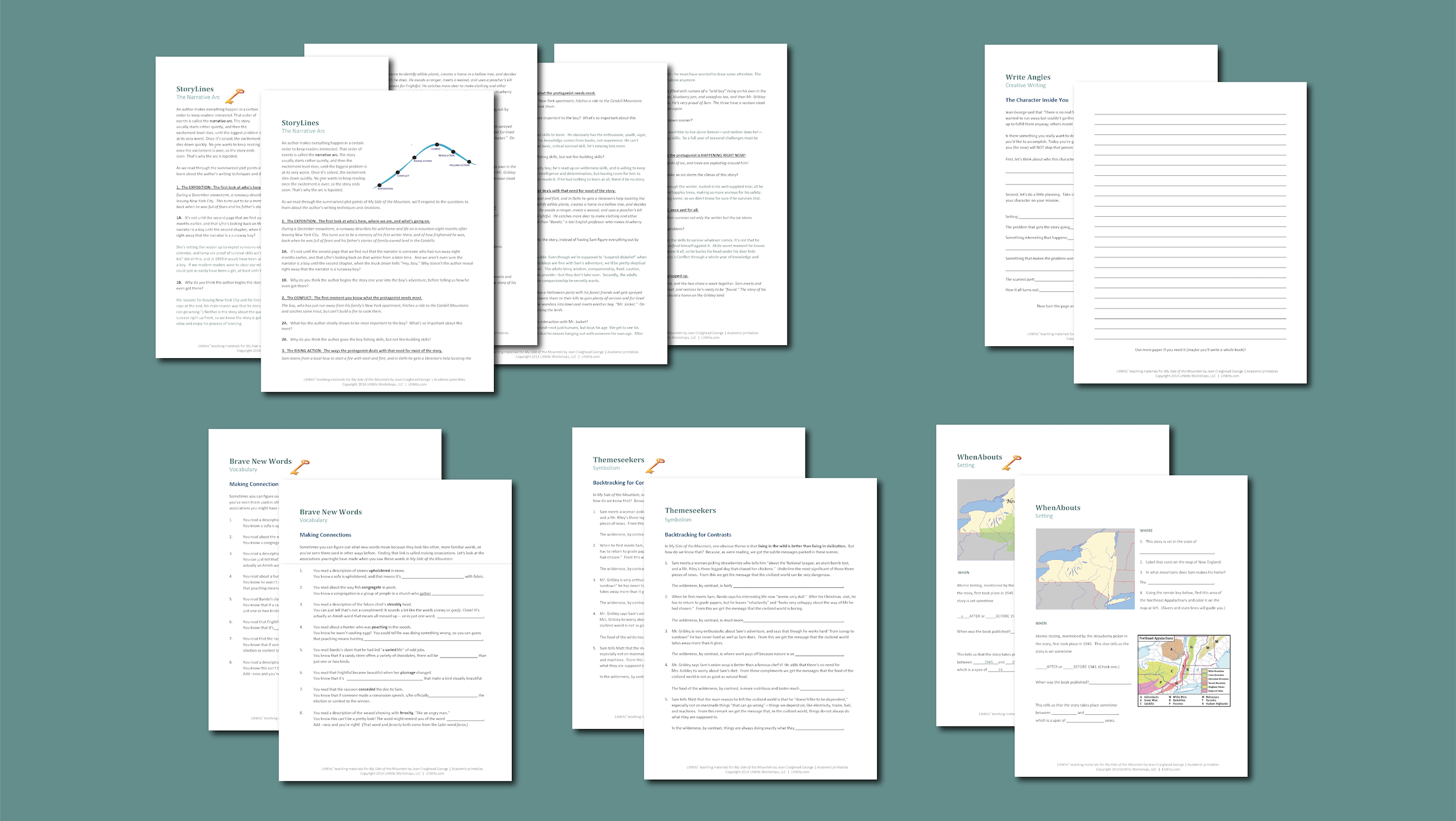
Printables Previews

The worksheets and printables used for our activities are sold as a complete set.

Common Core State Standards Alignment for the comprehensive use of our teaching ideas and materials is also included for grades 3, 4, 5 and 6.

The LitWits Kit

Pack up for the field trip!

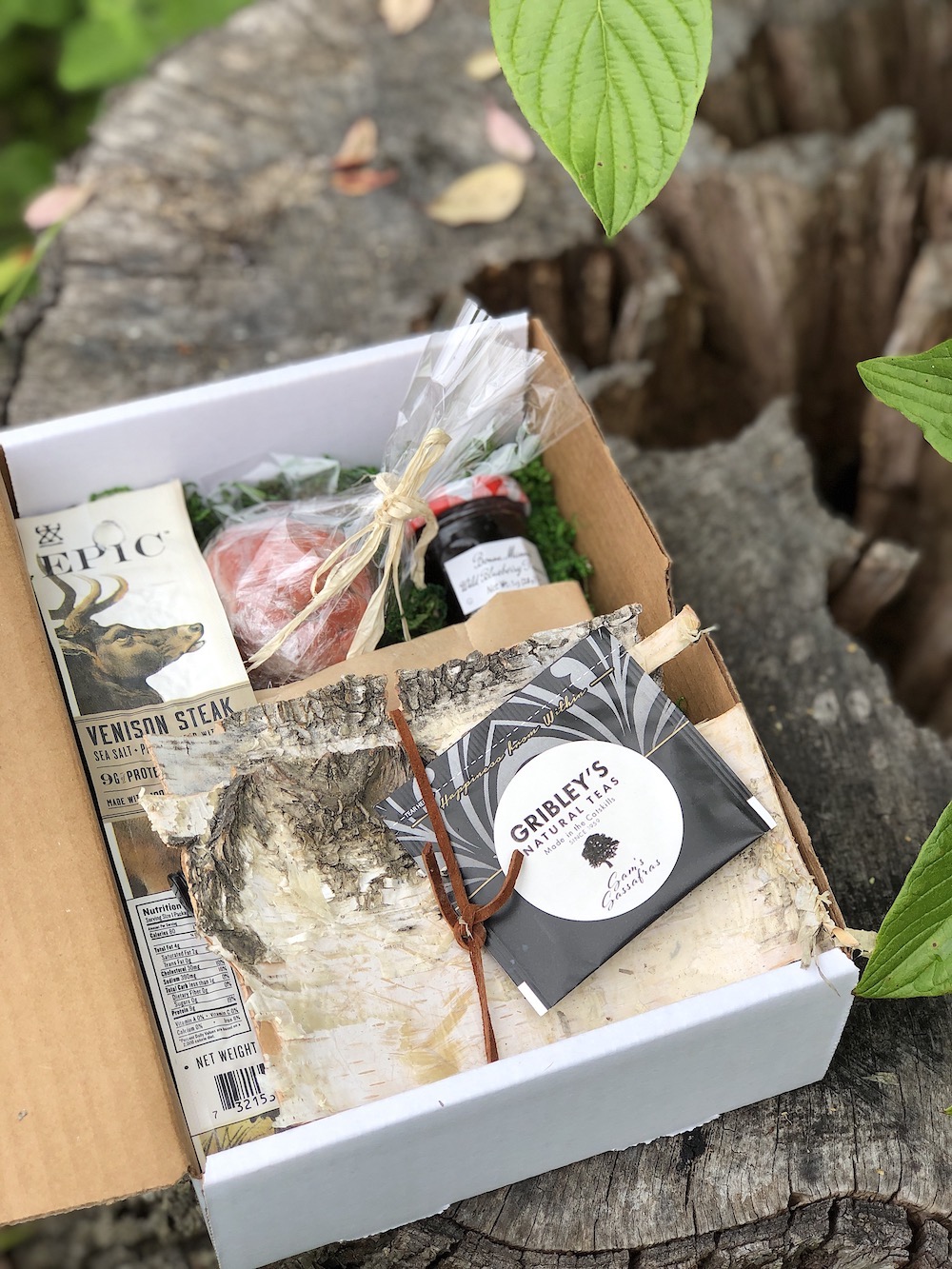
A LitWits Kit is a bag or box of supplies you pack up and give to each child right before you begin your "field trip" through the story.  You might be doing one-off projects as you read through the book together, or you might do everything in this guide from top to bottom after the book has been read. However you explore this book in LitWitty ways, kids love the anticipation of opening their kit.

If you'd like to build LitWits Kits for your kids, you could easily arrange the items in a bag, basket, or story-relevant container.  Honestly, it's just as much fun to create a kit as it is to open one.

To make it all the more fun, our printables for many books include special "story packaging" for certain activity supplies.
Our printables for My Side of the Mountain  include the BookBites labels, double-sided rack card, and worksheets shown at left, as well as additional activity templates and worksheets. The kit pictured here was shipped to the kids three weeks prior to our Zoom workshop.

Takeaway Topics

Why we chose this book for a "field trip"
We had a wonderful childhood, but we still wanted to run away and live in the woods, like Sam. As kids we were mesmerized by the idea of full-time camping, and this book had us believing that we could do anything Sam did (including catch ourselves a personal falcon). And it's packed with great "takeaway topics," which we're sharing below.

So we chose it for one of our experiential workshops, where we made these teaching points tangible, meaningful, and memorable in the kids' hands. It's amazing how much kids can learn while they're "just" having fun!
 
Happy teaching!
Becky and Jenny

Takeaway 1

Suspending Disbelief

This story is so credible and well-plotted that it's easy to suspend disbelief—to put aside our natural “oh, come ON!” reactions to certain parts. Seriously, could anyone really live inside a tree?  Would parents really let their kid go live in the woods for a year? Doesn't Sam know about RABIES? This story, and its author's use of creative license, gives us an  opportunity to talk about why we're willing to set aside our logical, that-can't-happen thought processes.  Not just why kids love to read  this  escapist story, but how they too might write a credible one someday themselves.

Hands-on connections in this guide:  "Bando's Pots" project, “Hemlock Hotel” project, narrative arc and creative writing worksheets

Takeaway 2

Reliance

Everyone, at one time or another, has fantasized about running away and being self-reliant. Sam Gribley's living that dream, but he doesn't do it all on his own. The truck driver gives him a ride, Bill shows him how to start a fire, the librarian helps him find the Gribley farm, the strawberry-picker gives him news, Bando brings him companionship, music, food, and storage, and hunters provide him with deer. Even the animals help him, in different ways; Frightful brings him food and Jesse James (and others) their companionship. It's a great message to pull out for kids: no matter how self-reliant we are, we all rely on others—and others rely on us.

Hands-on connections in this guide:  “Sam’s Sketches” project, “Bando’s Pots” project, “Being Sam” activity, all props that relate to living in the wild, creative writing worksheet, theme worksheet

Takeaway 3

Allusions

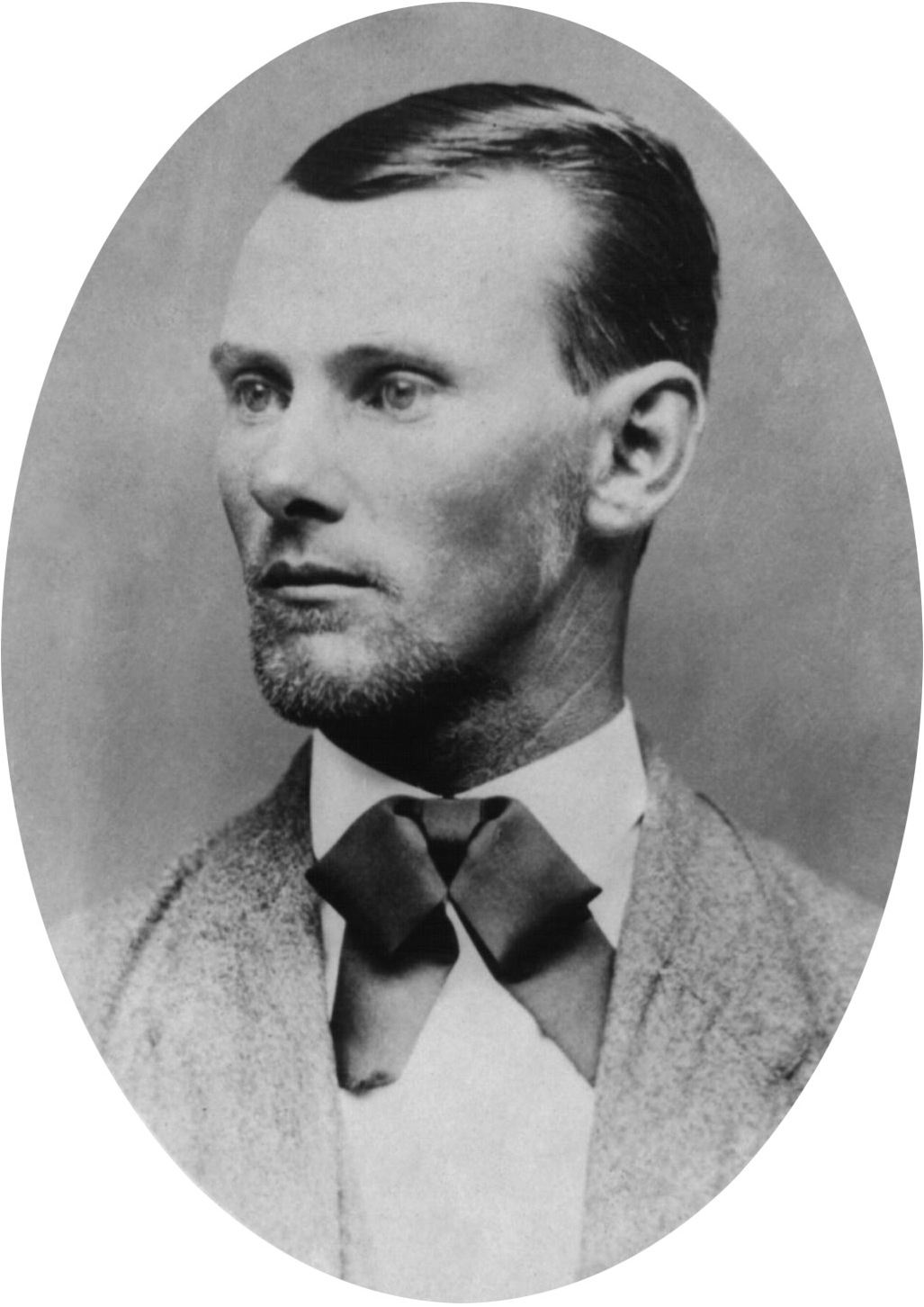
This story's references to Jesse James, Bando, and Thoreau give us a chance to define and discuss allusions, as well as talk about some literature and history. That Bando calls Sam "Thoreau," alluding  to Henry David Thoreau, is especially rich territory, since Sam and Thoreau are both naturalists who remove themselves from society to live off the land. They also both do what they think is right, never mind what others expect of them.  Lots to talk about there!  (Photo: Wikimedia Commons)

Hands-on connections in this guide:  audiovisual aids, learning links, theme worksheet

Takeaway 4

Jean Craighead George

As in any book, there are many events, characteristics, and ideas in the story that relate to its author’s life. Finding those connections helps us understand why the characters do what they do, and what they're supposed to learn by doing them. Which is why have kids learn those same lessons by doing those same things!  Jean Craighead George grew up loving wild land and creatures, and her childhood experiences are woven all through this book.

Hands-on connections in this guide:  audiovisual aids,  "The Character in You" creative writing worksheet, props from the author's childhood.

My Side of the Mountain  is chock-full of other subjects to explore, too—from wildlife biology and botany to Catskills geography and basic survival skills.  Scroll down to see our curated Learning Links for more tangential teaching opportunities, and to see how we brought this book and its ideas to life. 

Learning Links

Explore these links to supplement your reading experience, research points of interest, and prompt tangential learning opportunities.

About the Book & Author


Story Supplements

Video:  A 1956 tour of New York
Visitors site for the Catskill Mountains
Information about the Borscht Belt (Jewish resort area where many young Jewish stand-up comics got their start)
Video: Overview of old Catskills hotels, art, landmarks
Map of the Catskills in New York
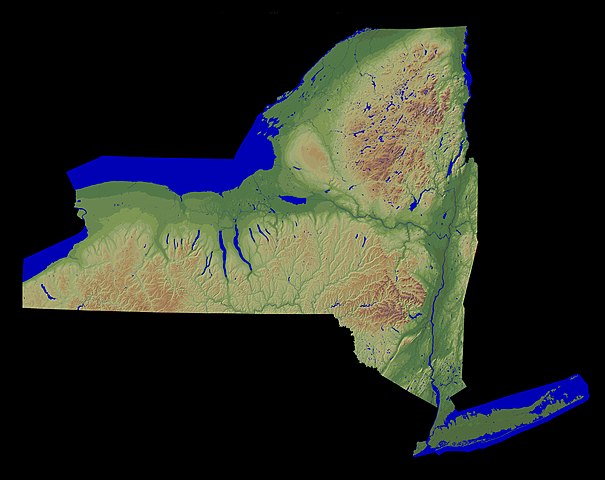
Terrain map of New York
Map of Catskills within New York

Nature
Audio of wind through a forest
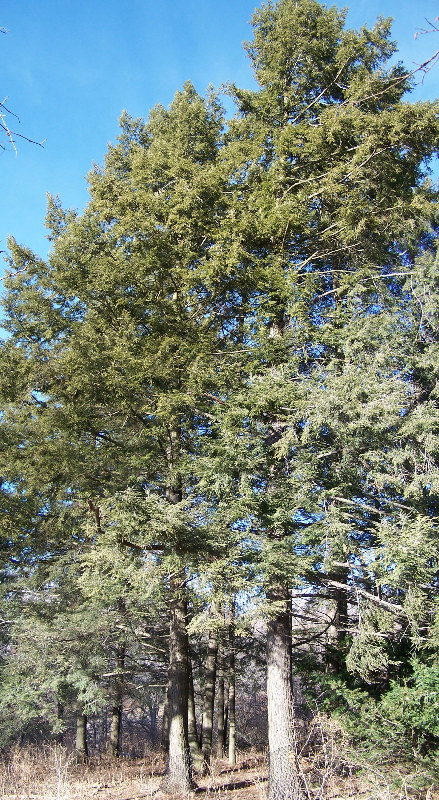
Image of a hemlock tree
Video of baby falcons
Image and audio of night cries of whippoorwill
Image and audio of catbird
Image of dogtooth violets
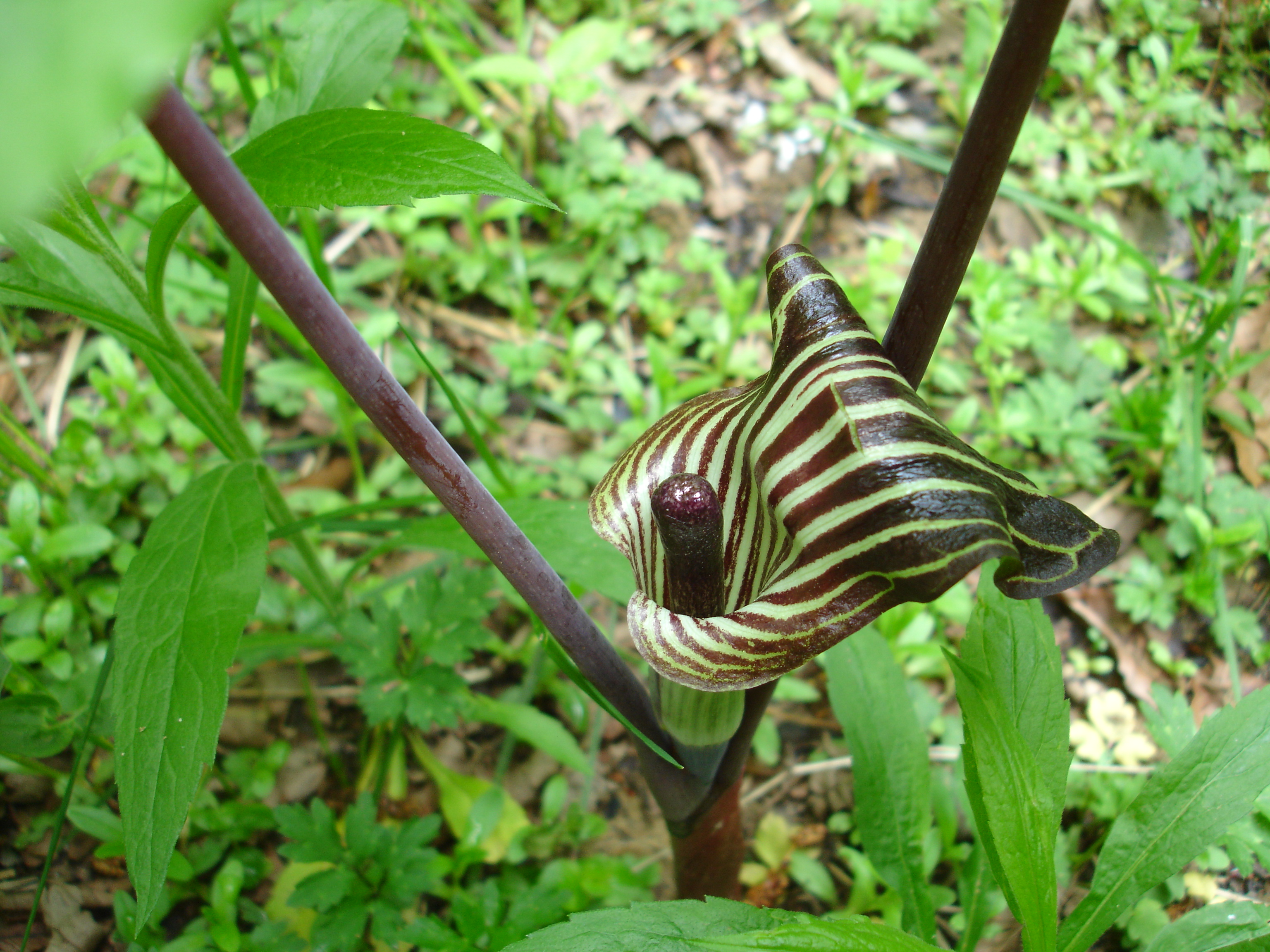
Image of jack-in-the-pulpit
Image of ice storm effect on a tree
Image of raccoon
Image of weasel
Audio of falcon cry, beating wings
Audio of crickets
Scent of skunk - The Pee Mart (for purchase)

Real-life people and events
Image of 1954 atom bomb test
Image of Jesse James
Image of Henry Thoreau

Music
Image of willow whistle
Video of willow whistle ensemble "like wind in the top of the hemlocks"
Song “The Young Voyageur”
1950s New York jazz from Stan Getz. Contrast with:
 Wind in a forest nature sounds (sample or buy)

Activities
Video demo:  watch a grown up Sam Gribley (not really) demonstrate how to use a flint and steel to start a fire, including how to make char cloth.
Video demo: how to make a pinch pot bowl out of clay
Video demo:  how to carve a willow whistle
Wooden slide whistles (for purchase)

Beyond the Book

Prop Ideas

When choosing props for our live workshops, we always try to focus on two important categories: props that are unique to the setting, because they help kids understand “what that was like,” and props that are symbolic of themes, because they make big ideas visual and tangible. Both kinds of props generate those wide-eyed, “aha!” moments.

Below is an overview of the display we put together for our live workshop, and under that we've given more details. You could easily have your kids contribute items to a table over time, as the book is being read.


Sometimes we create a printable prop; click the button to check the list for this book.

"Willow" whistle

Bando asked for the willow whistles. I got them for him, and after running up and down the scales several times, he said "Let us serenade the ingenuity of the American newspaperman. Then let us serenade the conservationists who have protected the American wilderness..."  Rather than carve whistles, we bought slide whistles of real wood.

Bark sketches

We used our project models as props and then added the kids' own after they did the "Sam's Sketches" activity.  These are supposed to be on birch bark, but eucalyptus was closer to home. And free.

Twine, flint & steel

A rustic ball of twine and a tin holding flint and steel—Sam's minimal tools when he sets off on his adventure.

Bird's nest

A real nest we found (but you can buy a faux nest that comes with 3 crows), faux eggs, and feathers, along with some ferns and watercress (or watercressish) greens.

Crow

A faux crow, we've discovered,  comes in handy ALL THE TIME.  Especially if he can double as a raven. Here he's perched on a birch branch from a neighbor's yard trimmings pile. Here's a set of three that comes with a faux nest

Mushrooms & pine cones

We found exotic-looking mushrooms and veggies at our local grocery store, and set them among pine cones we found.  If you don't live near pines, you can buy cones here.

Feathers

We found these wild turkey feathers near the family farm, but you can buy similar-looking pheasant feathers.  

Gribley greens

"Wild" onions and chives from the grocery store, "rusticated" in baskets and dishcloths.

Deer skull & berries

Deer provide much of what Sam needs to survive. We found this skull in the orchard, probably the victim of a mountain lion. You can buy a resin deer skull with a full set of antlers, if you're so inclined. 

LitWitty Shareables


Great Quotes

“See that falcon? Hear those white-throated sparrows? Smell that skunk? Well, the falcon takes the sky, the white-throated sparrow takes the low bushes, the skunk takes the earth...I take the woods.” 
*
I am well and healthy. The food is good. Sometimes I eat turtle soup, and I know how to make acorn pancakes. I keep my supplies in the wall of the tree in wooden pockets that I chopped myself.
*
I must say this now about that first fire. It was magic. Out of dead tinder and grass and sticks came a live warm light. It cracked and snapped and smoked and filled the woods with brightness. It lighted the trees and made them warm and friendly. It stood tall and bright and held back the night.
*
Fortunately, the sun has a wonderfully glorious habit of rising every morning. When the sky lightened, when the birds awoke, I knew I would never again see anything so splendid as the round red sun coming up over the earth.
*
I don't know why, but this seemed like one of the nicest things I had learned in the woods
that earthworms, lowly, confined to the darkness of the earth, could make just a little stir in the world. 
*
“Let’s face it, Thoreau; you can’t live in America today and be quietly different. If you are going to be different, you are going to stand out, and people are going to hear about you; and in your case, if they hear about you, they will remove you to the city or move to you and you won’t be different anymore.” 
*
“Won’t everything be all right if she’s free?” 
*
It seemed marvelous to see life pump through that strange little body of feathers, wordless noises, milk eyes—much as life pumped through me.

We're glad you're here!

You're literally on our page about inspiring kids to love great books.  YAY! We're eager to share our passion for LitWitting and the work we've done for over a decade.

We're also eager to keep doing it! :)  So if you foundnd this guide-page inspiring and useful,* please share it with your social world. And if you buy our printables for this book, thank you.  We appreciate you helping us keep the lights on at LitWits! 

Happy teaching,
Becky and Jenny
Sisters, best friends, and partners
*We hope we've inspired you!  If you're feeling a little overwhelmed (we hear that sometimes), remember, you're LitWitting whether you do a lot or a little. You can't go wrong!  The learning is happening, trust us. Just take the pressure off and do what works for your kids, time, and budget. It's all about inspiring kids to read for fun, so they want to read more—because kids who read more great books learn more great things.

Now get ready for a bunch of wide-eyed kids having “aha!” moments . . . and you, grinning ear to ear because your kids are happily engaged with a great book.

Terms of Use

The Becky & Jenny version:  Feel free to print pages for teaching use, and make copies of printables for your students. Please don’t use our name, ideas, or materials commercially or share our printables, though we'd love for you to share these free pages with your fellow educators.

The blah legal version: You are granted exclusive use of our products in download or print version as follows: You have the right of reproduction that is limited to your use only in whatever quantity is necessary to meet your needs and those of your student participants. This right is unlimited and extends for as long as you need the materials during which time they cannot be given to or shared with any other person(s) through any means of delivery, materially or digitally via the Internet. As such you have the right to store the product(s) on the hard drive of your computer or as hard copy in your resource file.  Any misuse of these rights is in violation of copyright law.

LitWits® is a registered trademark of LitWits Workshops, LLC.

LitWits teaching ideas and materials for My Side of the Mountain  by Jean Craighead George
Copyright 2014 by LitWits Workshops, LLC.  All Rights Reserved.

Want ideas for more great books?