Creative Teaching Ideas for

THE WONDERFUL WIZARD OF OZ

by L. Frank Baum (1900)


ON THIS PAGE: LitWits hands-on activity ideas and instructions, teaching topics, learning links, and more. Scroll on!

About the story

After a Kansas tornado deposits little Dorothy and her dog in the magical land of Oz, she picks up with a scarecrow who thinks he lacks brains, a tin woodman who thinks he lacks a heart, and a lion who thinks he lacks courage. Together they journey the Yellow Brick Road to the Emerald City to seek the Wizard of Oz, who, exposed as a humbug, pretends to give them all what they want.

The Wonderful Wizard of Oz  is an adventure with a message of personal discovery, a story where the quest comes full circle:  not only does Dorothy get what she already has, but she ends up right where she started. (Maybe she never even left! Maybe there’s literally no place like home!)

Read reviews / buy the book on Amazon
We make a small commission on anything you buy through our Amazon affiliate links. 

Hands-on Fun

Making a plan . . .


There are many ideas in this Hands-on Fun section—don't feel you have to do them all! Go with whatever works best for you and your kids. If you want to focus on a particular teaching point, our Takeaway Topics section can help you narrow down the activity options. And you can enhance discussions during any activity with audiovisual aids from Learning Links or story objects from Prop Ideas.

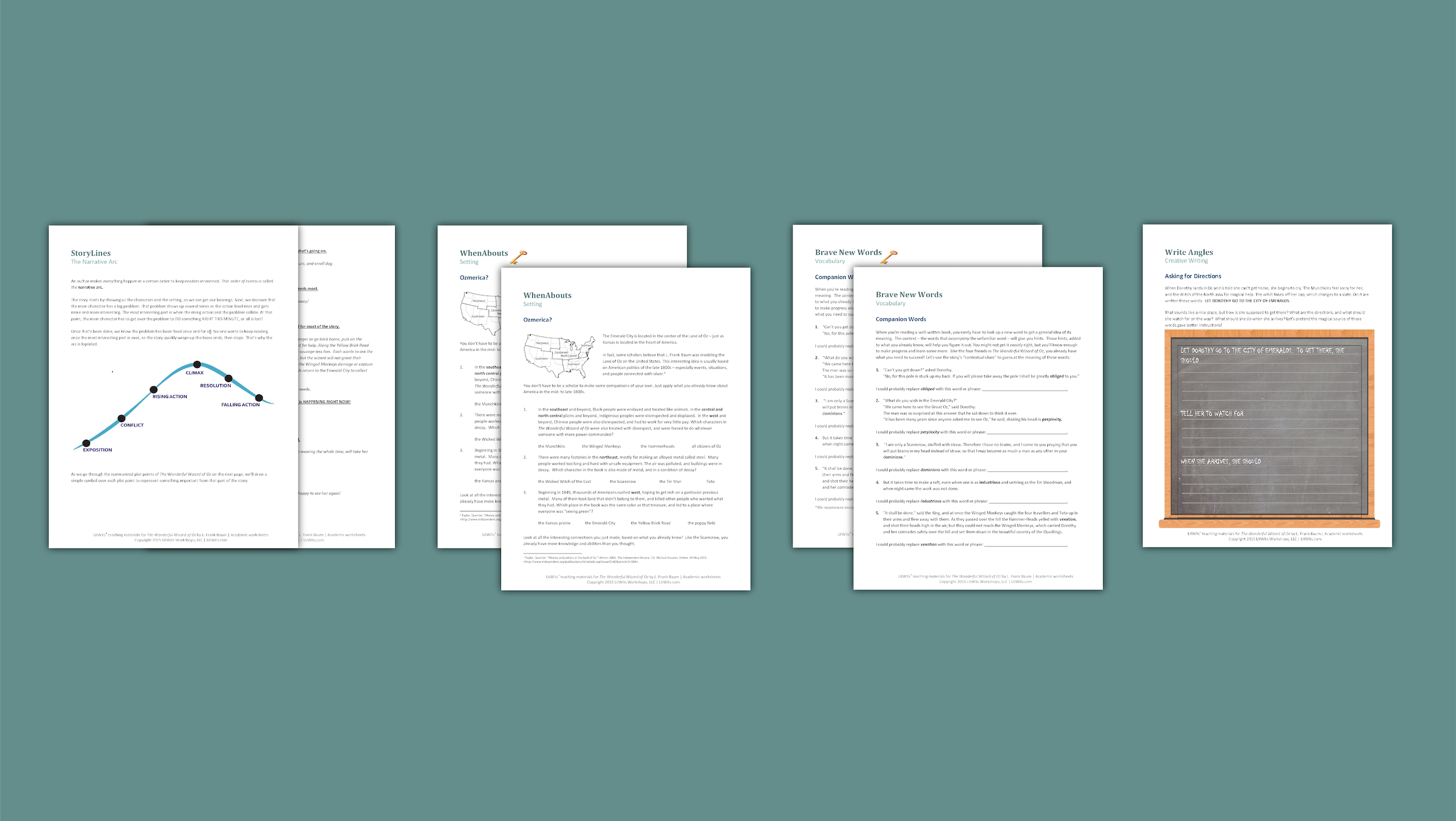
You might find our narrative arc worksheet helpful for sequencing your activities, teaching the important concept of the arc, and helping kids learn how L. Frank Baum put the story together.

Canned Tornados

A LitWits activity from the Exposition & Conflict

Even people who’ve never read (or watched) this story know there’s a tornado involved, so a tornado (a nice safe mini-version trapped in a jar)  just HAD to be our first "straight-from-the-story" experience!  Besides, this project lets kids recreate a powerful plot point, and  gives you a chance to talk about one of nature’s most powerful forces.

SUPPLIES

SETUP & INSPIRATION

Tell the kids:  First, let's get into Dorothy's shoes for a minute. Be very quiet and close your eyes. Now imagine you're out in the middle of a prairie, a wide flat space with nowhere to hide. Everything is very still, until this moment:

From the far north they heard a low wail of the wind, and Uncle Henry and Dorothy could see where the long grass bowed in waves before the coming storm. There now came a sharp whistling in the air from the south, and as they turned their eyes that way they saw ripples in the grass coming from that direction also. – Ch. 1

WOW!  Now let’s see what a real Kansas tornado would like coming at you.  Aren’t you glad you’re not REALLY in the story?  But since a tornado literally gets this story off the ground, let's recreate a personal version--one we can take it home in a jar!

DIRECTIONS

Have the kids fill the jars 2/3 full with water, then add a good squirt of dishwashing soap and a building.  Then tell them to put the lid on tight and swirl, using the same arm motion as if stirring stiff cookie batter.

While the kids are twirling their twisters, you might play Hollywood’s take on Ozian music.

Explain that the tornado in the jar is formed by the friction of the water against the glass. What makes this simple activity extra enthralling is the green soap that makes the tornado more visible, and the miniature houses or barns that swirl about.

Witch Way?

A LitWits activity from the Rising Action
 
Almost as soon as Dorothy lands in Oz, the Good Witch of the North's magic slate decrees LET DOROTHY GO TO THE CITY OF EMERALDS.  Unfortunately, it leaves out a LOT of basic information Dorothy needs to know, like how to get there, and a heads-up that there’s a big ditch, some monsters, a wide river, and a poisonous poppy field ahead—it’s a good thing she’s got that kiss-mark, right?  Also, it doesn’t tell her why  she should go to the city.  It sure would’ve been helpful to know a little more ahead of time! 
 
This activity turns kids into magic slates who are a little more helpful with their advice. 
 
In our workshop, some kids decided that if the slate was really magic, it should tell Dorothy how to get all the way home instead. (After all, she'd just been given the silver shoes, so the answer was right behind her in the house, sitting on the kitchen table!) This gave us a chance to talk about a story's need for rising action, and the importance of the journey--in stories and life.

Tinothy Crowlion

A LitWits activity from the Rising Action

This story is about Dorothy, but we can identify with each of the characters, can’t we? From the Lion’s need for bravery to the Tin Man’s desire for a real heart, they all, like us, struggle to gain what they think they don't have. It seemed to us that all four were really more like one — in fact, like everyone.

Our “character mashup” represented each of the characters (and each of us), reminding us of these hungers and attributes we all have in common. It got kids' hands on character aspects, symbols, and themes, and, most importantly, on one big idea: that we all feel inadequate sometimes, and that we all have more courage, intelligence, and compassion than we might think. And that, like Dorothy, we can go the distance and reach our goals.

“That is a first-rate idea,” said the Lion. “One would almost suspect you had brains in your head, instead of straw.” – Ch  7

SUPPLIES

  • scissors and glue
  • pocket folders, if gluing project on top (we used these folders for worksheets)
  • white cardstock (torso)
  • aluminum foil (Tin Man) - standing beside it, with an uplifted axe in his hands, was a man made entirely of tin. - Ch. 5
  • burlap (Scarecrow) -  Its head was a small sack stuffed with straw, with eyes, nose, and mouth painted on it to represent a face. - Ch. 3
  • excelsior or raffia (Scarecrow) - ...the rest of the figure was a blue suit of clothes, worn and faded, which had also been stuffed with straw. - Ch. 3
  • buttons (Scarecrow) - or paint on the eyes, as in the story
  • red felt (Tin Man) – “But is it a kind heart?” / “Oh, very!” answered Oz. – Ch. 16
  • blue gingham scraps (Dorothy) - It was gingham, with checks of white and blue; and although the blue was somewhat faded with many washings, it was still a pretty frock. - Ch. 3
  • yellow yarn (Lion) – he “whisked his tail from side to side in pure joy” – Ch. 17
  • tufts of faux fur (Lion) “he wiped his eyes so often with the tip of his tail that it became quite wet” – Ch. 13
  • green glitter (Lion) – “Well,” answered Oz, “if it were inside of you, it would be courage.” – Ch. 16
  • bran or sawdust mixed with safety pins (Scarecrow) – “That is proof that he is sharp,” remarked the Lion. – Ch 16
  • frame template (in our printables) printed on blue cardstock
  • parts template (in our printables) printed on white cardstock
DIRECTIONS

We showed the kids a model of this project, and read them the excerpts in the supplies list above, to help them understand which elements stand for which character.  

Then we told them to cut out a torso and face first, but otherwise we “let them loose.” It was so much fun watching their all-in-one characters come into being!  They had a blast coming up with names: Leo Dottinstraw,  the Dorolion Crowman, Tinothy Lionscare.

While they created, we talked about what each characters’s strengths were — and the fact that they had what they wanted, or the means to get it, all along. As do we all! 

Seeing Green

A LitWits activity from the Rising Action

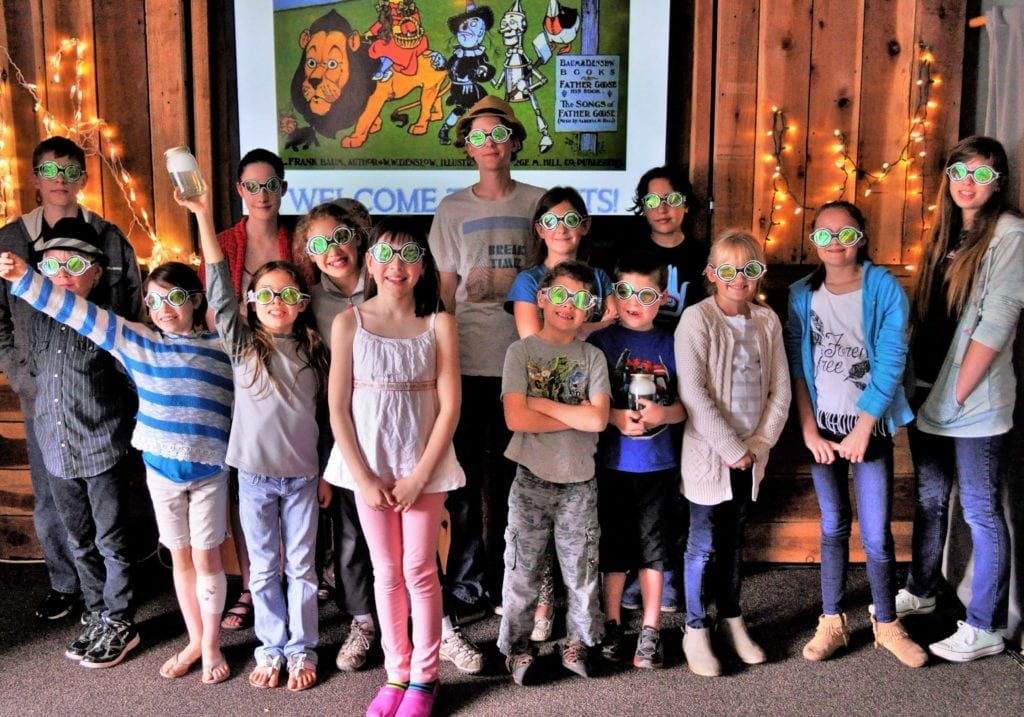
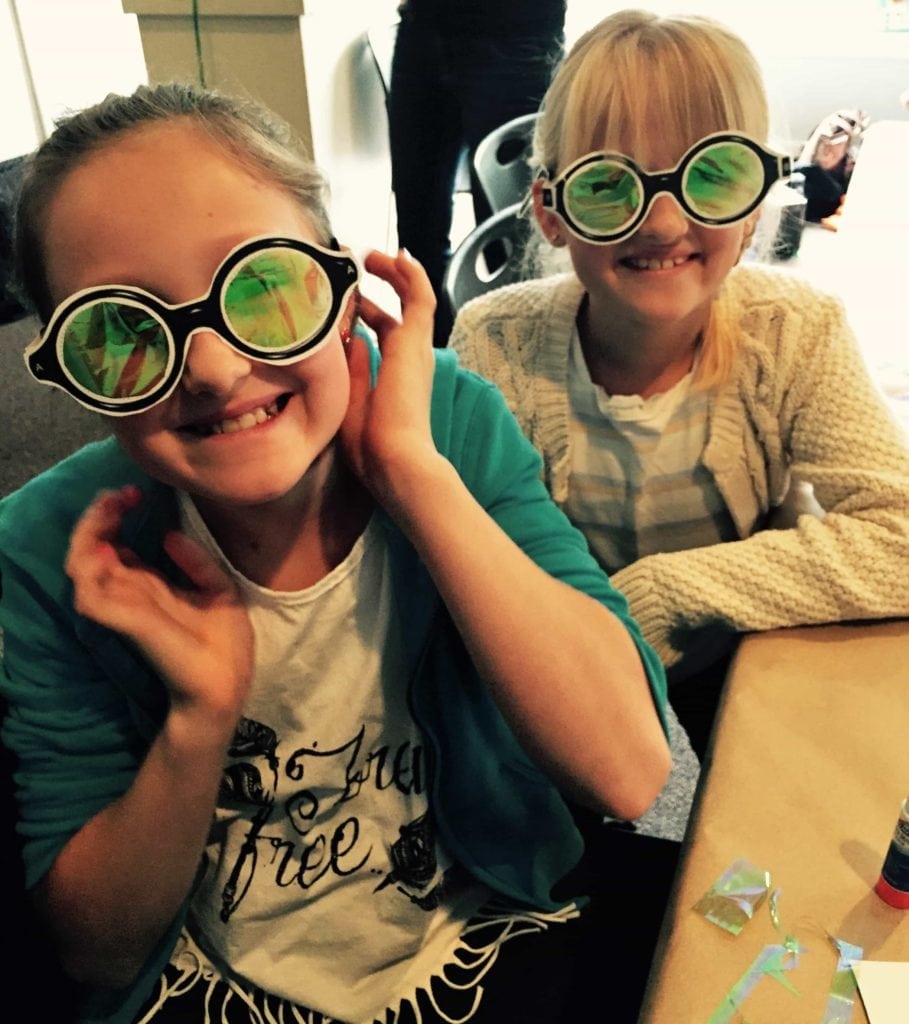
By the time Dorothy and the gang figure out that the wizard is a fraud and that all the green is just in their glasses, they've learned a LOT about perspective, clarity, and deception...AND about the impact of fashionable eyewear! All fun things we talked about while making our own green-lensed spectacles.

This project lets kids envision the world, at least for the moment, as the characters did. And it gets their hands (and eyes) on the lesson that we believe certain things because we’re looking through a certain lens.
Looking OZ-some!

INSPIRATION
 
“Because if you did not wear spectacles the brightness and glory of the Emerald City would blind you. Even those who live in the City must wear spectacles night and day. They are all locked on, for Oz so ordered it when the City was first built, and I have the only key that will unlock them.” –Ch 10 

SUPPLIES

  • scissors and tape
  • green cellophane in squares slightly larger than each lens on the template
  • copies of the template (in our printables)

DIRECTIONS

Have the kids cut out the spectacles, then lay the cellophane over each eyepiece. Tell them to then trim away the excess cellophane, and tape the lens to the frame.

DISCUSSION

While they’re cutting, ask why Oz might have wanted the residents of Oz to see green. What about the author? What did green mean to him, perhaps? To explore this idea, talk about his life and his issues with money, and his journalism work that made him very aware of current events.

  • Could the color green represent money in this story?
  • If so, what point might the author be making? 
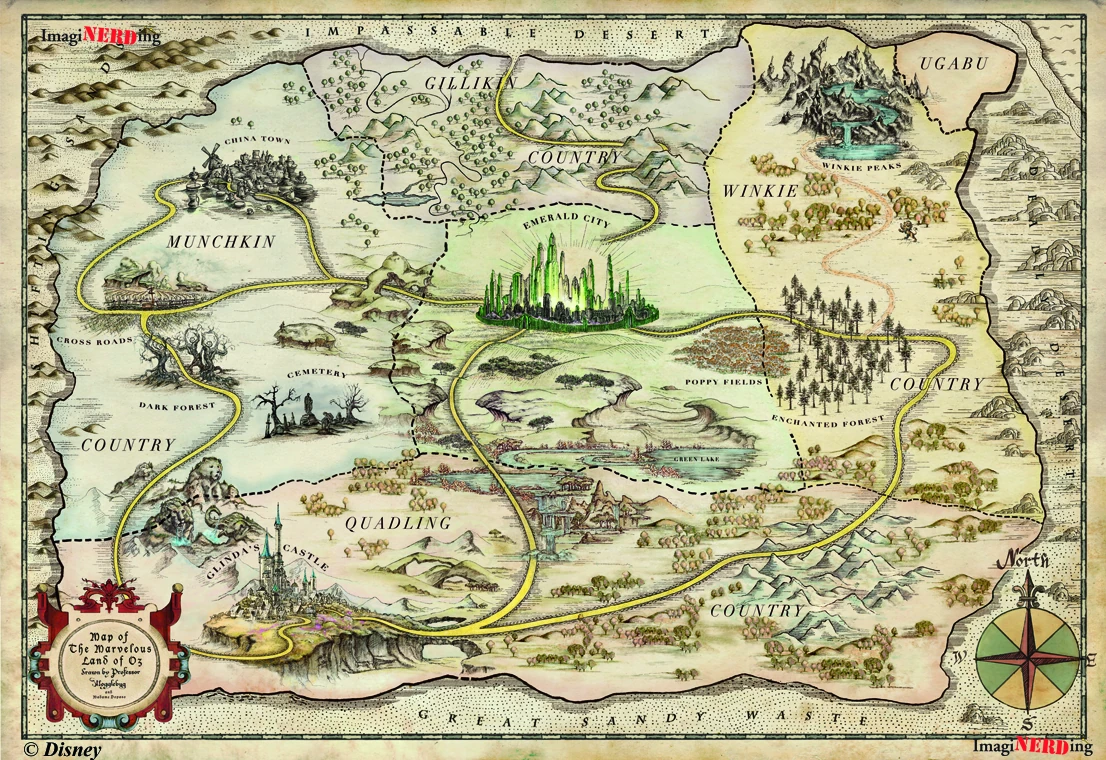
  • What's in the center of these maps of Oz and America?
  • What comparisons can be made between them?  Encourage sheer speculation as a starting point.

Emerald City Tours

Who wouldn't want to visit Oz, if they could? And who says you can't? In this not-quite-straight-from-the-story activity, we imagine that the Emerald City has been encouraging tourism for over a century. In fact, we're pretty sure Dorothy must have seen tourism ads in the Emerald City "lobby," where the guardian gave them their green specs.

INSPIRATION

In front of them, and at the end of the road of yellow brick, was a big gate, all studded with emeralds [. . .]. There was a bell beside the gate, and Dorothy pushed the button and heard a silvery tinkle sound within. Then the big gate swung slowly open, and they all passed through and found themselves in a high arched room, the walls of which glistened with countless emeralds.   - Ch. 10

SETUP

Tell the kids:  Of course, this is the perfect spot to display ads for Emerald City businesses that would appeal to tourists--you know, like those rack cards you see at an airport or a Visitor Center. Businesses make them to tell tourists about "fun things to do" (for a price) in the area, like an amusement park, or a ropes course, or surfing lessons. They're basically ads you can take with you.
 
Here's your chance to come up with a rack card for Emerald City Tours. What would it be called? What features would draw people to this unique vacation destination? What might be some slogans?  What do YOU think would be the most appealing aspect of a vacation in the Emerald City? 

SUPPLIES
  • Pens, markers, pencil
  • copies of the template (in our printables), printed on card stock, OR your kids can freehand their design on card stock
DIRECTIONS

Have the kids design a tourism rack-card advertising get-away trips to Oz. Make sure they include details like price, website, special features and slogans!

BookBites: Travel Fare

A LitWits activity from the Rising Action

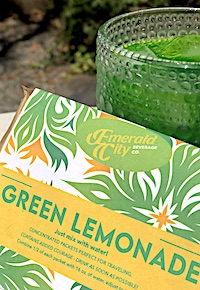
BookBites is the part of our literary experience when we get to “taste the story.”  To sustain us on our trip through Oz, we dined on Dorothy’s journey-fare of fresh juicy peaches and bread, washed down with the green lemonade sold in Oz.

INSPIRATION  

At one place a man was selling green lemonade . . .  – Ch. 11

The green lemonade also represents the courage the Lion drinks:

“Well,” answered Oz, “if it were inside of you, it would be courage. You know, of course, that courage is always inside one; so that this really cannot be called courage until you have swallowed it.” - Ch. 16

Our Emerald City Lemonade labels are made so that you can either cut them to wrap around single-serving packets of powdered lemonade (and add green food coloring), or fold them to wrap around a pitcher-serving packet of green lemon-lime drink mix.


Earlier:

She took a little basket and filled it with bread from the cupboard, laying a white cloth over the top. – Ch. 3

Our little party of travelers awakened the next morning refreshed and full of hope, and Dorothy breakfasted like a princess off peaches and plums from the trees beside the river. – Ch. 8

While the kids ate “like a princess” and drank courageously, we talked about the journey itself — and why it took Dorothy so long to find her way home.

Before & After

A LitWits activity from the Resolution & Falling Action

In this simple art activity,  kids literally see  how L. Frank Baum used color and imagery to show the effect of Dorothy's challenge-filled trip to Oz. It's an artsy lesson in descriptive writing and character growth. It's also a visual reminder of the way our own life journeys color our world.

SETUP & INSPIRATION

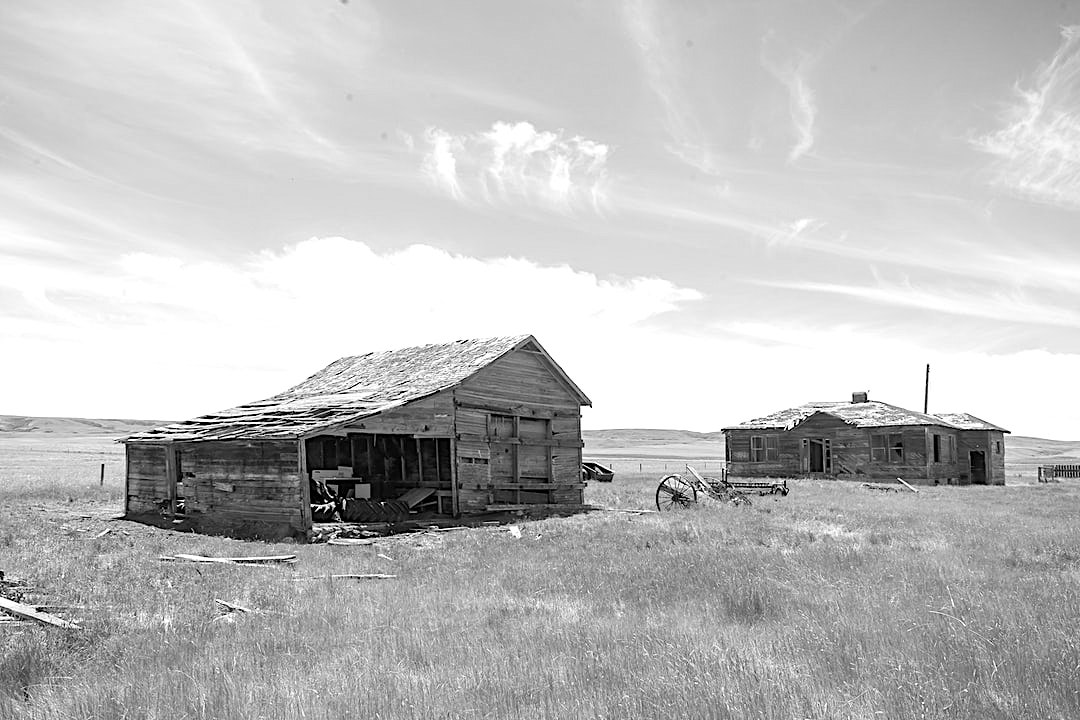
In the first few paragraphs of the story, everything is gray, dry, and barren--even though Uncle Henry and Aunt Em are farmers, which we usually associate with green, moisture, and fertility. There are LOTS of negative, bummer words and images, like baked, burned, blistered, and dull.  Yet Dorothy misses it immediately. As she told the Scarecrow: 
 
 “No matter how dreary and grey our homes are, we people of flesh and blood would rather live there than in any other country, be it ever so beautiful. There is no place like home.”  - Ch. 4

By the end, Dorothy’s fantastic adventures have taken her from the boring, colorless plains of Kansas to the place she most wants to be – right back on the boring, colorless plains of Kansas.

But when she finally gets home, there’s a new view, and it’s not half so dry and gray as when she left. There’s a brand new barn. The cows survived the tornado and are giving milk. There are cabbages growing in the garden. And Auntie Em is full of happy tears and hugs, and calls her “my darling child.”  There’s color and joy and smiles! 

Wow, everything looks better after a storm.  And the grass is always greener on the other side of the fence. And what goes around comes around. And yes, there’s no place like home. We could go on and on!

DIRECTIONS

Have the kids draw a line down the middle of a blank piece of paper, and write "The Beginning" at the top or bottom of the left side, and "The Ending" on the right.

Read aloud the description of the farm in Chapter 1 while they use pencil to draw the first view of the farm, on the left.

Read the description of the farm at the very end of Chapter 23 and all of Chapter 24, while they draw and COLOR the last view of the farm, on the right.

DISCUSSION

Talk about what happened to change the view. That's a very open-ended question that can apply to the many levels of the story--and to life.

Printables Previews

The worksheets and printables used for our activities are sold as a complete set.

Common Core State Standards Alignment for the comprehensive use of our teaching ideas and materials is also included for grades 3, 4, 5 and 6. 

The LitWits Kit

Pack up for the field trip!

A LitWits Kit is a bag or box of supplies you pack up and give to each child right before you begin your "field trip" through the story.  You might be doing one-off projects as you read through the book together, or you might do everything in this guide from top to bottom after the book has been read. However you explore this book in LitWitty ways, kids love the anticipation of opening their kit.

If you'd like to build LitWits Kits for your kids, you could easily arrange the items in a bag, basket, or story-relevant container.  Honestly, it's just as much fun to create a kit as it is to open one!

To make it all the more fun, our printables for many books include special "story packaging" for certain activity supplies, including BookBites--for this book, as you can see in the previews, we've made a special green lemonade label. 

Takeaway Topics

Why we chose this book for a "field trip"
Our first memory of this story is of watching the Judy Garland movie in black and white at a friend's home, when we were little. We didn't have a TV at our house, so our experience of Hollywood effects was limited, and we were terrified by the tornado, the witch, and the wild monkeys. But we were also mesmerized by the Tin Man, Lion, and Scarecrow, and later when we read the book, we could better see, between the lines, that they had always had what they wanted, all along. 

That powerful message, packed into a fantastic adventure, made this book an easy choice for one of our experiential workshops. And it's packed with great takeaway topics, which we're sharing below. In our workshops, we did our best to make these teaching points tangible, meaningful, and memorable in the kids' hands. It's amazing how much kids can learn while they're "just" having fun!
 
Happy reading,
Becky & Jenny

Takeaway 1

Finding What You Already Have

Every act of courage by the Lion, every act of compassion by the Tin Man, and every intelligent decision made by the Scarecrow proves that each had what they thought they lacked. Dorothy, too, either has or receives what she needs, long before she meets the “wizard” of Oz. The silver shoes she puts on in Chapter 3 "fitted her as well as if they had been made for her," and when she finds the Golden Cap in Chapter 13, she “tried it on her own head and found that it fitted her exactly.” Her desire is to go home, but it’s as if she had always been destined (and able) to get there — or perhaps she had been home all along.  This story reinforces our need to trust ourselves--to find out we "have what it takes!" 

Hands-on connections in this guide: “Tinothy Crowlion” activity; "Seeing Green" activity;  "Before & After" activity;vocabulary worksheet, props representing what was supposedly “missing” (heart, brains, courage, the way back home)

Takeaway 2

American Oz

 Over the last century there have been some very interesting hypotheses connecting this story to politics and economics of the late 1800s:  the argument over using the gold or silver standard; industrialization in the northeast, agricultural expansion in the midwest, slavery and reconstruction in the south, and the rush for gold in the west. Many scholars posit that the story's all about the debate over the gold vs. silver standard. Could the Tin Man represent the effects of industrialization? Could the Scarecrow be “standing” for farmers? Does the color green represent money? These connections may or may not have been intended by L. Frank Baum, but they’re fascinating to explore and discuss — and they get the kids excited about the “buried treasure” inside great books. And digging up such ideas and adding their own thoughts will help them write interesting theses someday.

Hands-on connections in this guide“Seeing Green” activity; "Emerald City Tours" activity; setting worksheet, props that support allegory

Takeaway 3

The Journey Home

Dorothy’s fantastic adventures take her from the boring, colorless plains of Kansas to the place she most wants to be – right back on the boring, colorless plains of Kansas.  Why would Dorothy want to leave the lush and lovely land of Oz, where color and riches abound? What’s so great about the little gray house on the prairie? The answer's in these famous lines from Chapter 4:  “No matter how dreary and grey our homes are, we people of flesh and blood would rather live there than in any other country, be it ever so beautiful. There is no place like home.”  But wait--didn't her house go with  her?  This is a great way in to what makes a home home.

Hands-on connections in this guide:  “Canned Tornadoes” activity; "Before & After" activity; setting and creative writing worksheets, props that convey the idea of obstacles/interruptions/distractions
The Wonderful Wizard of Oz is chock-full of other subjects to explore, toofrom the Dust Bowl to 19th-century cons to the invention of hot air balloons. Scroll down to see our curated Learning Links for more tangential teaching opportunities, and to see how we brought this book and its ideas to life. 

Learning Links

Explore these links to supplement your reading experience, research points of interest, and prompt tangential learning opportunities.


About the Book & Author

  • At Christmas times in his later youth, Frank played Santa Claus for family and friends. With the Christmas tree in the front parlor, he would speak to them as Santa from behind the drapes, though they never could manage to see him. 
  • In 1871, a fifteen-year-old Baum may have witnessed a famous hot-air balloon launch, where the balloon got tangled in wires before sailing over the beautiful emerald green hills of upstate New York. 
  • After experiencing some business failures, L. Frank Baum and his wife, Maud, settled in South Dakota where they experienced a severe drought and witnessed the struggles of midwestern homesteaders. 
  • So the family headed to Chicago, where the World’s Fair was being held, and visited the Columbian exhibition: a city built entirely of cheap plywood covered with white paint. The spectacular fake city became known as “The White City.” 

Story Supplements


Beyond the Book

Prop Ideas

When choosing props for our live workshops, we always try to focus on two important categories: props that are unique to the setting, because they help kids understand “what that was like,” and props that are symbolic of themes, because they make big ideas visual and tangible. Both kinds of props generate those wide-eyed, “aha!” moments.

Below is an overview of the display we put together for our live workshop, and under that we've given more details. You could easily have your kids contribute items to a table over time, as the book is being read.

Sometimes we create a printable prop; click the button to see the list for this book.
PROP LIST

“That is the end of her. But the silver shoes are yours, and you shall have them to wear.” She reached down and picked up the shoes, and after shaking the dust out of them handed them to Dorothy.  - Ch. 2 / She took off her old leather shoes and tried on the silver ones, which fitted her as well as if they had been made for her.  - Ch. 3

At once the cap changed to a slate, on which was written in big, white chalk marks:  “LET DOROTHY GO TO THE CITY OF EMERALDS”   - Ch. 2

Dorothy had only one other dress but that happened to be clean and was hanging on a peg beside her bed. It was gingham with checks of white and blue. - Ch 3

An old, pointed blue hat, that had belonged to some Munchkin, was perched on his head . . . - Ch. 3 (We substituted a straw hat to represent the Scarecrow.)

At noon they sat down by the roadside, near a little brook, and Dorothy opened her basket and got out some bread. - Ch. 4

“You will find an oil-can on a shelf in my cottage.”  - Ch. 5

But Dorothy did not know this, nor could she get away from the bright red flowers that were everywhere about; so presently her eyes grew heavy and she felt she must sit down to rest and to sleep. - Ch. 8

Even with eyes protected by the green spectacles, Dorothy and her friends were at first dazzled by the brilliancy of the wonderful City.  - Ch. 11

Then, going to a chest of drawers, [Oz] took out a pretty heart, made entirely of silk and stuffed with sawdust. / “Isn’t it a beauty?” he asked. - Ch. 16

There were milkmaids and shepherdesses with brightly colored bodices and golden spots all over their gowns . . . these people were all made of china even to their clothes. - Ch. 20

Then the beasts bowed down to the Lion as their King, and he promised to come back and rule over them as soon as Dorothy was safely on her way to Kansas.  - Ch. 21 (We used a crown to symbolize the Lion's rule.)
[Oz] went to a cupboard and reaching up to a high shelf took down a square green bottle, the contents of which he poured into a green-gold dish, beautifully carved. Placing this before the Cowardly Lion, who sniffed at it as if he did not like it, the Wizard said: “Drink.” - Ch. 16 (We used the Green Gauze of Courage.)
[Oz] entered the back room and took up a measure of bran which he mixed with a great many pins and needles. - Ch. 16 – the Scarecrow’s brains

LitWitty Shareables


Great Quotes

“No matter how dreary and grey our homes are, we people of flesh and blood would rather live there than in any other country, be it ever so beautiful. There is no place like home.”  - Dorothy, Ch. 4

“It must be inconvenient to be made of flesh,” said the Scarecrow, thoughtfully, “for you must sleep, and eat and drink. However, you have brains, and it is worth a lot of bother to be able to think properly.” - the Scarecrow, Ch. 5 

“I have always thought myself very big and terrible; yet such little things as flowers came near to killing me, and such small animals as mice have saved my life.”  - the Lion, Ch. 10

“What are those needles and pins sticking out of your head?” asked the Tin Woodman. / “That is proof that he is sharp,” remarked the Lion. -  Ch. 11

“We dare not harm this little girl,” he said to them, “for she is protected by the Power of Good, and that is greater than the Power of Evil.” - the leader of the Winged Monkeys, Ch. 12

“Oh, no, my dear; I’m really a very good man; but I’m a very bad Wizard, I must admit.”  - the Wizard, Ch. 15

“Experience is the only thing that brings knowledge, and the longer you are on earth the more experience you are sure to get.” - the Wizard, Ch. 15

“You have plenty of courage, I am sure,” answered Oz. “All you need is confidence in yourself. There is no living thing that is not afraid when it faces danger. True courage is in facing danger when you are afraid, and that kind of courage you have in plenty.” - the Wizard, Ch. 15
Thanks for being here!

You're literally on our page about inspiring kids to love great books.  YAY! We're eager to share our passion for LitWitting and the work we've done for over a decade.

We're also eager to keep doing it! :)  So if you find this guide-page inspiring* and useful, please share it with your social world. And if you buy our printables for this book, thank you. We appreciate you helping us keep the lights on at LitWits! 

Happy teaching,
Becky and Jenny
Sisters, best friends, and partners
*We hope  we've inspired you!  If you're feeling a little overwhelmed (we hear that sometimes), remember, you're LitWitting whether you do a lot or a little. You can't go wrong!  The learning is happening, trust us. Just take the pressure off and do what works for your kids, time, and budget. It's all about inspiring kids to read for fun, so they want to read more—because kids who read more great books learn more great things.

Now get ready for a bunch of wide-eyed kids having “aha!” moments . . . and you, grinning ear to ear because your kids are happily engaged with a great book.

Terms of Use

The Becky & Jenny version:  Feel free to print pages for teaching use, and make copies of printables for your students. Please don’t use our name, ideas, or materials commercially or share our printables, though we'd love for you to share these free pages with your fellow educators.

The blah legal version: You are granted exclusive use of our products in download or print version as follows: You have the right of reproduction that is limited to your use only in whatever quantity is necessary to meet your needs and those of your student participants. This right is unlimited and extends for as long as you need the materials during which time they cannot be given to or shared with any other person(s) through any means of delivery, materially or digitally via the Internet. As such you have the right to store the product(s) on the hard drive of your computer or as hard copy in your resource file.  Any misuse of these rights is in violation of copyright law.

LitWits® is a registered trademark of LitWits Workshops, LLC.

LitWits teaching ideas and materials for The Wonderful Wizard of Oz by L. Frank Baum 
Copyright 2015 by LitWits Workshops, LLC.  All Rights Reserved.

Want more ideas for more great books?